
News 9/8/11

September 7, 2011 News Comments Off on News 9/8/11

McKesson reports that 30 physician practices are now using its Horizon Practice Plus practice management product to meet ANSI 5010 standards.
9-7-2011 3-49-02 PM

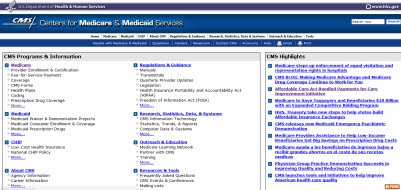
The AMA applauds the recent changes made by CMS to its e-prescribing program, but is concerned that providers will have insufficient time to file apply for the November 1 exemption deadline to avoid 2012 penalties. Since I was skeptical that it could really be that hard to file an exemption, I searched the CMS Web site for instructions. I have finally concluded that either the exemption information is well hidden on the difficult-to-navigate CMS Web site or the instructions have not been posted yet. Perhaps the AMA’s concern is valid.

9-7-2011 3-51-07 PM

Comprehensive Medical Center (MI) selects meridianEMR for its 44-provider practice.

9-7-2011 3-56-33 PM

Comanche County Memorial Hospital (OK) chooses eClinicalWorks EHR for its employed and non-affiliated community physicians.

9-7-2011 3-58-23 PM

Mid Hudson Medical Group (NY) implements Humedica MinedShare clinical analytic solution to benchmark population health using data from Mid Hudson’s GE Centricity EHR.

9-7-2011 4-02-27 PM

Medical Faculty Associates (DC) selects DigiView’s Digisonics PACS and structured reporting solution, which will be integrated into the practice’s Allscripts EMR.

Twelve Community Health Centers in Puerto Rico choose SuccessEHS EHR/PM for their 190 providers and 26 sites.

9-5-2011 12-48-29 PM

MGMA’s annual conference is coming up in about six weeks, with 25 HIStalk/HIStalk Practice sponsors exhibiting. I am already working on our “Must See Vendors” list, which we’ll publish the week before the meeting. If you you are attending, you’ll definitely want to peruse the list. Overachievers might even want to memorize it in order to sound intelligent and in-the-know while sipping cool drinks at the various networking receptions. If you plan to attend, let me know your recommendations for sessions or exhibits.

9-7-2011 1-44-01 PM

CPU Medical Management Systems wins approval for meeting Medicare 5010 standards in Michigan and Missouri, as well as two clearinghouses.
9-7-2011 4-03-46 PM

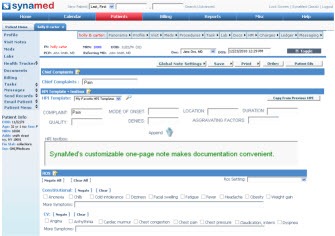
BayScribe announces the integration of its Clinical Documentation System with the SynaMed EMR, giving users the ability to populate structured, coded data into discrete data fields with the EMR from dictated and transcribed reports.

Three-fourths of physicians believe the AMA no longer represents their views, thus indicating the need for another voice.  Physicians who are dropping their AMA membership note these top concerns: (a) the AMA does not speak for practicing physicians (72%); (b) the CPT code business is a conflict of interest (53%); and (c) the AMA supported last year’s health reform legislation (47%).

9-7-2011 4-08-01 PM

An increasing number of physicians are seeking MBAs, giving them career options beyond the practicing of medicine. Many use the business training to run their practices more efficiently, while others seek leadership roles in hospitals or insurance companies. Still other physicians are becoming involved in entrepreneurial activities that leverage both their medical and business skills. Since the late 1990s, the number of joint MD/MBA degree programs has grown from about five to 65.


Inga large

E-mail Inga.

From the Consultant’s Corner 9/5/11

September 5, 2011 News Comments Off on From the Consultant’s Corner 9/5/11

Implementing an EHR: Mitigating the Risks of Physician Productivity Loss

No one really argues the value of electronic health records (EHRs), yet many physician practices are still reluctant to implement the technology. Software training and go-live processes typically involve a one- to three-week period of reduced patient volume, in addition to a lot of other operational and clinical workflow adjustments. Though practices eventually ramp up to normal productivity levels—and most exceed it—at some point following implementation, the anticipated loss in physician productivity is daunting.

A temporary drop in patient throughput during EHR implementation is no reason to avoid EHR technology, especially with government incentives for adoption and looming penalties for non-compliance. According to several industry studies, practices that deploy an EHR can expect to enhance the quality of patient care as well as provide more cost-effective care delivery. And with some careful planning of the implementation, training and workflows, the impact on physician productivity at go-live can be mitigated.

Proactive strategies minimize productivity loss

The first step is to examine existing workflow processes, both clinical and administrative. Any time new technology is implemented is an ideal opportunity to step back and look for ways to improve efficiency. Begin, for example, by making sure all clinicians are functioning at the top of their license levels. Allowing a nurse or physician’s assistant to take patient vital signs frees up physicians to diagnose, prescribe, and perform procedures, for instance. Optimizing staff resources in advance of an EHR implementation will minimize lost productivity.

Once you’ve fine-tuned workflow, don’t rely exclusively on online tutorials or videos for your staff training. Training is critical to the success or failure of an implementation, so be wary of cutting corners. It should be about workflow efficiencies, not just which buttons to click. The EHR is a challenge — make sure your staff has access to face-to-face instruction. Adequate training will remove the fear factor, build comfort levels, and reduce anxiety.

We also recommend that physicians take at least 30 sample charts and enter four or five relevant data items from each in the system before going live. In this way, they become familiar with system navigation on their own time and at their own pace. They can develop shortcuts and templates to enhance efficiency, and they have an opportunity to ask questions before using the system with patients in the room.

The more efficiently your providers use the EHR, the faster the opportunity to begin making up for initial lost productivity. Following EHR implementation, many physicians report shorter patient visits without compromising quality of care. With this outcome in mind, have a strategy in place for leveraging reduced appointment times. Perhaps you could add an extra appointment slot or two each day, for example.

If you don’t measure it, you can’t manage it

Plan to monitor key metrics as soon as the EHR goes live. Generate daily reports on patient volume, charges and open encounters; compare them with pre-EHR levels. Evaluation and management (E&M) coding reports are especially important. In a paper-based system, coders or charge entry clerks often key in E&M codes, but it typically becomes the physician’s responsibility with an EHR. Track your E&M coding trends to make sure your practice isn’t over-coding and opening itself to compliance risk, or under-coding and losing income.

Depending on practice size, specialty, complexity, and other factors, the time between EHR implementation and patient throughput gains will vary. Some practices regain or exceed productivity levels within 30 days of EHR implementation; others may take a year. But initial productivity declines can be mitigated. And once a practice is up to speed, the long-range benefits of EHR — standard care delivery processes, reduced medical error, and accelerated reimbursement — far outweigh any temporary reduction in physician productivity.

Rob Culbert is founder and president of Culbert Healthcare Solutions, a professional services firm serving healthcare organizations in the areas of operations management, revenue cycle, clinical transformation and information technology.

Platinum Sponsors


Gold Sponsors


Subscribe to Updates


Search All HIStalk Sites


Recent Comments

  1. The article about Pediatric Associates in CA has a nugget with a potentially outsized impact: the implication that VFC vaccines…

  2. Re: Walmart Health: Just had a great dental visit this morning, which was preceded by helpful reminders from Epic, and…

  3. NextGen announcement on Rusty makes me wonder why he was asked to leave abruptly. Knowing him, I can think of…

  4. "New Haven, CT-based medical billing and patient communications startup Inbox Health..." What you're literally saying here is that the firm…

  5. RE: Josephine County Public Health department in Oregon administer COVID-19 vaccines to fellow stranded motorists. "Hey, you guys over there…