News 8/5/10

August 4, 2010 News 5 Comments

From: Zagat “Re: REC/HIE rating tool. Have you seen this? On the American Academy of Pediatrics website Dr. Chrisoph Lehmann put together an online tool rating RECs and HIEs. The REC centers are like the mayors in Afghanistan. A lot of cash going in…where’d it go?” To the first point, I had not seen this information and I am intrigued. I’m not clear who is rating the centers, but I assume AAP members. If and when additional members add their comments and ratings it could be a handy resource. And, I’ll give the RECs the benefit of the doubt for now about the money since it’s still early in the game.

The AMA plans to offer NextGen’s EHR and PM solutions on the AMA’s new online platform. The AMA has already partnered with Ingenix to provide CareTracker EHR through the same service, as well as Dr. First for  e-prescribing services.

aids care

AIDS Care (NY) successfully implements e-MDs EHR/PM system.

MedAptus releases its version 10.0 Intelligent Charge Capture suite, which can be run on iPhones and iPads. The new release offers improved PQRI collection and reporting tools.

Also now available for the iPhone, iPod Touch, and iPad: Entrada’s eDicatate application. Spoken medical reports can be captured on the Apple device and transmitted to Entrada’s web-based data center. Voice recognition software then coverts the recordings to text.

A California ER doc relays how she used her iPhone and seven separate applications while treating an 8-year girl for seizures and breathing issues. The apps included Pedi Stat (for dosing,) Eponyms (to learn about the patient’s rare hereditary condition,) Epocrates (to determine what meds to prescribe,) and WeatherBug Elite (to figure out if the weather was acceptable for a helicopter transport.) Says the doctor, “I did all of this without taking my eyes off the child.”

Aprima says they experienced “record growth” in the quarter ending June 30th, adding practices from more than a dozen specialties.

d'eramo

I like this quote from Michael D’Eramo of the Rubicon Group. He stresses that it’s critical for practices selecting and implementing an EMR to rely on a doctor who knows his/her practice’s workflow:

“It’s got to be the lead IT nerd doctor.”

If you have been in HIT for any length of time you know exactly which doctors he’s talking about.

HIStalk Practice traffic was up 39% last month, compared to 2009. At last count, we had 840 confirmed subscribers (more always welcome if you haven’t signed up.) It warms my heart to have so many readers, subscribers, and of course sponsors. By the way, send some love to our sponsors by clicking on their ads and learning more about their offerings. And of course, send some love my way by continuing to read and telling all your HIT buds.

Here’s some not so great news about physicians and medical liability claims. Medical liability claims are filed at the rate of about one per doctor, according to an AMA physician survey. Of physicians 55 years old and older, 61% have been sued. Surgeons and ob/gyns, are sued even more often:  50% of ob/gyns have been sued by age 40 and 90% of general surgeons over age 55 have been sued. Also interesting to note is that when cases go to trial, physicians win 90% of the time. And, 65% of claims are actually dropped or dismissed.
diabetesmanager

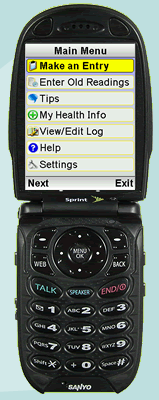
The FDA grants 510(k) clearance on a mobile phone application that helps patients and providers manage Type 2 diabetes. DiabetesManager System by WellDoc allows patients to enter measurements into a phone application and then offers clinical coaching and behavioral algorithms.

Surescripts partners with Microsoft HealthVault to facilitate electronic recording of consumers’ prescriptions. Prescriptions dispensed from pharmacies using Surescripts, will be automatically downloaded into patients’ HealthVault accounts.


inga

E-mail Inga.

News 8/3/10

August 2, 2010 News 1 Comment

Interesting data point: private physicians choosing to participate in the Nebraska Health Information Initiative (NeHII) pay about $20 a month to view the database. For $52 a month, they can add e-prescribing. Sounds reasonable.

Tech Data Corporation becomes the latest distributor to offer Greenway Medical’s PrimeSuite solution. Tech Data will make the solution available to its network of thousands of IT resellers nationwide and Greenway will provide the implementation and ongoing support.

eye health

EyeHealth Northwest (OR) signs up for NextGen’s EHR and PM for its 11 offices and 30 providers. NextGen says its recently added 18 other ophthalmology clients and now has about 5,000 ophthalmologists and 500 ophthalmology practices using its software. By the way, here are Q1 numbers from NextGen parent Quality Systems: revenue up 24%, EPS $0.42 vs. $0.36, missing on consensus earnings.

The Kansas Academy of Family Physicians collaborates with Welch Allyn to offer its 1,500 members access to Welch Allyn’s EHR Preparation and Selection program. In addition to access to online tools, members will be eligible for special pricing on professional services from Welch-Allyn.

ama mgma

And if you’re in need of a new practice management system, the AMA and MGMA are offering a new online tool kit entitled, “Selecting a Practice Management System.” I wanted to check it out, but looks like both organizations have it in members-only sections . PM vendors can apply for inclusion in the online directory.

To your right: a link to FierceEMR. Mr. H and the Fierce Folks are testing the waters to see if trading links attracts one another’s readers. I like several of the Fierce publications, so take a look if it suits your fancy.

Oncologists will soon have access to evidence-based treatment guidelines at the point of care, thanks to a new partnership with the National Comprehensive Cancer Network and decision support vendor Proventys. The Web-based Proventys CDS Oncology automates the NCCN clinical practice guidelines within clinical workflows.

airstrip

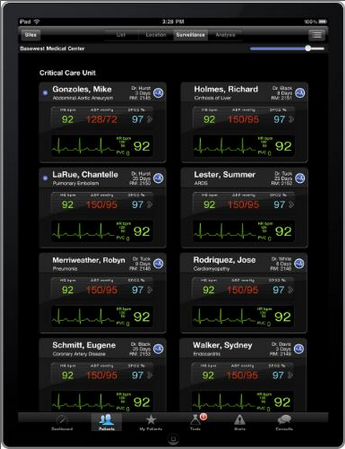
AirStrip Technologies receives FDA clearance to market its Remote Patient Monitoring solution, including RPM Critical Care and RPM Cardiology. The products allow providers to see vital signs, waveform data, and other clinical information from their smart phones.

While speaking before the House Energy and Commerce Committee’s Subcommittee on Health, AAFP President-Elect Roland Goertz, MD speaks in favor of HITECH grants and technical support for small and rural practices implementing health IT systems. Goertz also asked the committee not to make additional requests of physicians while in the midst of this EHR transition period and asked legislators to consider delaying the required adoption of ICD-10. Bet we’ll be seeing more leaders come forward to ask for an extension of the ICD-10 deadline.

Twenty-one Albany, NY-area pediatric and family practice groups are selected to share a $1 million investment in CDPHP’s medical home initiative. The physician-owned health plan CDPHP picked grant recipients based on their demonstrated their use of EMR and e-prescribing, as well as practice leadership and culture.

athenahealth, iSALUS Healthcare, and MDLand are selected as the preferred vendors for the Indiana Health Information Technology Extension Center (I-HITEC).

This survey suggests that 94% of physicians use smart phones, a figure I find hard to believe. However, there is no arguing that physician smart phone use is on the rise: the same group estimated 59% of physicians used smart phones about four years ago. My phone of choice (the iPhone) was preferred by 44% of the doctors, while 25% liked the BlackBerrry. Not surprisingly, most physicians say they are overwhelmed by the daily volume of communications received by colleagues and patients. I feel their pain.

inga 

E-mail Inga (I like pain.)

Intelligent Healthcare Information Integration 8/1/10

July 31, 2010 News 3 Comments

EHR Speak

Recently, I learned that a friend, someone whom I admire and highly respect, was dealing with the impending loss of a parent. Combining that with some of my own recent life difficulties, both at home and in the workplace, it got me to thinking about the one truism I have noted when it comes to the really tough life experiences we all endure: there are no magical words of wisdom, no empathizing phrases that really help.

Indeed, most of those often well-intentioned clichés usually sound trite and often even minimize the emotional suffering of the sufferee. They may be the expressee’s way of trying to show support, but beyond “That really sucks” and “I’m here for you,” nothing much else conveys the meaning which may have been intended. They may make the expressee feel as if they’re trying to help, but they often result in making the sufferee feel worse. (I’m betting that any of you who have experienced loss or major life trauma know just the phrases of which I speak, so I’ll forego examples.)

My perverse, geekoid, HIT brain, of course, took this melancholic consideration and immediately made a connection with the world of EHRs. (This is actually sort of sad to admit, that I find HIT-ness even in the face of human suffering…I really need a vacation!)

Here’s sort of how the neuronal path went: 

  • Saying what we mean and having what we say actually provide the information – and especially the intended meaning behind it – is often quite the challenge.
  • I notice the same difficulty in the electronic medical record reports I receive from other providers.
  • From one particular emergency room, I used to get five-page EMR-generated reports to tell me that a patient was seen for an ear infection, prescribed amoxicillin, and told to follow up with me in two weeks.
  • From that same ER, I now get two-page EMR-generated reports about a child who presented with skull fracture, cerebral contusion, and seizure-like activity who was admitted to the hospital and the amount of info is about as limited as what is in this sentence.
  • Formatted, templated, pre-made medical descriptives seem about as adequate as the pre-made clichés so many people try in trying times to convey their sympathies over someone’s personal loss or other tribulations.

So, what does work? (For medical info conveyance, not personal sympathies.)

Thinking back, the best descriptive, by far — by leaps-and-bounds far — which I ever receive about patient-provider interactions come from the dictated narratives, most typically from consulting specialists. They may have basic formatting, often following SOAP note style or some variant thereof, and they provide a colorful picture, a conceptualization complete with supporting details and even the thought patterns which led to the diagnoses and/or treatment decisions.

If there is vagary (which is still so frequently unavoidable in medical evaluation and diagnosis,) that is also conveyed with the reasoning which makes the vagaries necessary. These dictated notes, most often with a lower page count than even the best EHR-generated document, paint a picture which is easy for my brain to understand and which conveys the complete, pertinent patient encounter information, subtleties and all.

I’m not saying I think every EMR/EHR system and user should use some form of dictation or speech recognition. But, perhaps system designers could start focusing more on “EHR speak,” on how they can enable capturing and relaying the subtleties, the nuances of medical descriptives. These so often provide the real “color” of a patient’s situation rather than just clichéd, templated, rowed-and-columned, formatted data. It’s sort of a Van Gogh versus a paint-by-numbers thing.

To my friend: It really does just suck and my thoughts and prayers are with you.

From the trenches…

“Never does one feel oneself so utterly helpless as in trying to speak comfort for great bereavement. I will not try it. Time is the only comforter.” – Jane Welsh Carlyle


Dr. Gregg Alexander, a grunt in the trenches pediatrician, directs the “Pediatric Office of the Future” exhibit for the
American Academy of Pediatrics and is a member of the Professional Advisory Council for ModernMedicine.com. More of his blather…er, writings…can be found at his blog, practice web site or directly from doc@madisonpediatric.com.

News 7/30/10

July 30, 2010 News 1 Comment

Global technology and service company Cegedim buys EMR/PM vendor Pulse Systems. Cegedim is a Paris-based company that publishes medical, paramedical, and pharmacy management software in Europe and sees the Pulse transaction as an entry to the US market. Pulse says it will remain independently operated and plans to increase its employee count from 100 to 350 over the next couple of years.

Something to ponder: how meaningful are the Meaningful Use guidelines for ophthalmologists, surgeons, and other specialists that have little need to capture data on either the core or alternate measures? The core measures include blood pressure management, tobacco use, and weight screening; the alternate measures include influenza vaccine and childhood immunizations. These specialty providers have the option to report “zero” as the measurements if the quality measure doesn’t apply.  Doesn’t quite seem fair that the primary care doctors must capture and report on more measures, yet the stimulus dollars they earn are the same as the specialists.

marshfield

The CMIO for the 800-physician Marshfield Clinic (WI) says the practice has the right technology in place to meet Stage 1 Meaningful Use measures. The challenge remains the operational challenge to get all physicians on board. Example: orthopedic specialists don’t see the value of recording smoking habits (see above). Marshfield uses a homegrown EMR (CattailsMD), which the CMIO says will require “fairly extensive reworking” to meet Phase 2 Meaningful Use requirements.

The AMA releases a statement claiming that no EHR on the market today does all the steps required for physicians to successfully meet Stage 1 Meaningful Use criteria. The AMA also objects to the tight timeline for adoption and the high overall number of measures that physicians are required to meet. Of course, did anyone believe the AMA would fully support the final ruling?

st john

St. John Providence Health System (MI) will offer eClinicalWorks’ EHR to its 3,000 employed and affiliated physicians. St John will host the eCW application as a SaaS model and connect providers to the health system’s inpatient Cerner system.

Banner Health moves three of its Colorado practices to NextGen’s EMR.

Arnot Health (NY) will provide the e-MDs practice EHR to its 150-provider medical group, integrating it with Arnot Ogden Medical Center’s inpatient EMR, QuadraMed CPR.

St. Clair Hospital (PA) offers a solution to provide EHR to its 550 physicians with admitting privileges. Participating physicians will use GE Healthcare’s eHealth Information Exchange technology to access patient data from various sites of care.

soapware

SOAPware introduces SOAPware Clinical Suite, which includes a practice management system component.

MBA Medical Business Associates expands its services offerings to include the MyWay EMR system. MBA hosts MyWay for its medical billing clients.

Regular readers may have noted that HIStalk Practice didn’t follow the normal posting schedule this week. My apologies if I messed up anyone’s need for an ambulatory HIT fix or if any news junkies find today’s post less than “fresh.” I likely have missed more juicy items than I found, but I promise to get back on track next week.

Physician offices added about 3,600 jobs in the first half of the year, according to the Bureau of Labor Statistics. In the first half of 2009, however, the industry added 8,000 jobs. Analysts predict hiring to pick up now that Congress passed a Medicare pay increase and health reform.

Ninety percent of doctors are affiliated with at least one hospital. The average physician is affiliated with 1.7 hospitals.

Baton Rouge Radiology Group signs a licensing agreement with Virtual Radiologic Corp. for its eRad Enterprise Connect 3.0 suite. The 25-radiologist group will use the application to unify disparate technologies such as work lists, image views, and reports.

CMS says it will be ready to start handing out incentive checks as early as May 2011. Physicians (and hospitals) hoping to receive funds for the meaningful use of their EHR can begin registering for the program in January.

ambulance

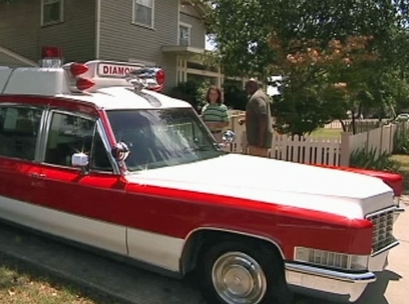
Clever advertising: a Texas doctor who was not permitted to post traditional signs for his home-based practice buys this old Cadillac ambulance and uses it as a landmark for patients. Very fun.

inga

E-mail Inga.

DrLyle’s Take on the Meaningful Use Rules 7/30/10

July 30, 2010 News 10 Comments

In mid-July, the government released the final rules on MU and EHR certification. I was actually at the perfect place for this — the annual meeting of AMDIS (Association of Medical Directors of Information Systems). So we had 200 CMIO-type docs and a panel of speakers ready to talk about this topic. HIT geek heaven!

From my bias of focusing on ambulatory EMRs, here is what I learned at this meeting from listening and talking to some very smart people on the topic and reflecting on everything the past few weeks:

Big picture stuff

MU Rules are reasonable. The government listened to the end users and decreased the expectations on the "Core Rules" (decreased the percentage of eRx required), while putting other rules in an optional "Menu" (i.e. choose five of 10). But be aware, anything optional you don’t do in Phase 1 will be required in Phase 2 in 2013 (i.e. you’ll need to do 10/10 from the Menu)… and they will likely think of more things to add by then.

MU Rules are still not a slam dunk. Even for mature users, there will be work that needs to be done. It is hard to believe that a non-mature user, or users without a lot of resources will be able to easily accommodate everything.

The government seems to think this will really work well and we will see over 50% adoption by 2015. I would love that, but am less optimistic. Best quote I have heard is that MU incentives are like giving someone money to have a baby. You will have a baby if you want a baby. The money is a nice extra, but not the main driver. Change is hard, so I am hoping that while we keep asking vendors and users to add functionality, we consider how we can improve usability at the same time. 

I do hope the government is at least working on a secret Plan B in case 2015 comes and we are only at a fraction of where we need to be (e.g. maybe they give money to innovation think tanks to figure out better EMR user interfaces). If you want to read more about the rationale behind having a Plan B, check out the great Kuraitis/Kibbe blog on this topic.

Per John Glaser, we need to think about MU not as a simple, one-time incentive, but rather as a stepping stone to bigger reimbursement reform. In other words, it helps groups create the HIT foundation for alternative care models and payment reform of the future (e.g. Medical Homes, ACOs). In that future, an EMR is no longer a competitive differentiator, but rather how we use our EMRs will be the differentiator (e.g. care efficiency and improvement, use of clinical decision support, secondary use of data, and patient engagement).

Some details that popped out at me

  1. The denominator is now "unique patients" rather than patient visits. So if a patient is seen three times in a year, you just have to fulfill the rule at least once for that patient.
  2. Scoring will be done on an individual physician basis, not on a group-wide analysis.
  3. To correctly measure many of these details (e.g. give clinical summary to 50% of those who ask) we would need to figure out a way to keep track of who "asks". That seems like a strange request for structured data and certainly should not be what a doctor is spending his time doing. So either we need to make it an easy administrative chore or consider doing it for 100% of people automatically.
  4. For patient reminders (for patients over 65), physicians can decide content and format. For example, we can decide to just do colonoscopy reminders and only do it via mailers to patients — it does not have to be electronic. The point is to just prove we can identify patients by age and communicate with them in some way.
  5. Patient education: we need to figure out a way to document when we provide these handouts. Some EMR systems may have that built in, but even then, just for the handouts they have. What if I go online and print something else out? Or give them a special handout I have created? We may need to create a special patient education section to document this, but it is again more busy work for physicians (which I am not a fan of!).
  6. EMR vendors are on the hook. They are required to ensure some level of MU reporting from their EMRs to get certification. The result will likely be that they will be spending a lot of extra time and money preparing their EMRs and then trying to get everyone to take those upgrades. They will then likely just certify the most recent version of their system.
  7. EMR users need to upgrade, due to above point. It is unclear how all current EMR users are going to be able to quickly upgrade their systems in the coming 6-12 months. That takes a lot of planning, time, resources, and money. I wonder if users of "older versions" will band together to try and get their older versions certified, or if the vendor will help at all?

Some good resources


Lyle Berkowitz, MD is a practicing internal medicine physician, a healthcare IT consultant (www.DrLyle.com) and founder of the Szollosi Healthcare Innovation Program (www.TheSHIPHome.org). He blogs regularly at The Change Doctor (http://drlyle.blogspot.com/).

Platinum Sponsors


Gold Sponsors


Subscribe to Updates


Search All HIStalk Sites


Recent Comments

  1. The article about Pediatric Associates in CA has a nugget with a potentially outsized impact: the implication that VFC vaccines…

  2. Re: Walmart Health: Just had a great dental visit this morning, which was preceded by helpful reminders from Epic, and…

  3. NextGen announcement on Rusty makes me wonder why he was asked to leave abruptly. Knowing him, I can think of…

  4. "New Haven, CT-based medical billing and patient communications startup Inbox Health..." What you're literally saying here is that the firm…

  5. RE: Josephine County Public Health department in Oregon administer COVID-19 vaccines to fellow stranded motorists. "Hey, you guys over there…