Intelligent Healthcare Information Integration 1/23/10

January 23, 2010 News 1 Comment

PAPER and EMR: An Intimate Conversation

Perhaps within a post enchilada and black bean quesadilla dinner dream, but somewhere, I swear, I overheard the following chat, mostly in whispers, very, very late one night …

PAPER: Pssssst…psssssst…hey, you, digi-boy…you awake?

Electronic Medical Record (EMR): Huh? Wha…? Yeh, guess I am. The newbie musta forgot to log out. What’s up, P?

PAPER: I couldn’t sleep.

EMR: Well, no wonder. You get to nap all day long, whenever you want. Some of us get pointed and clicked on all day.

PAPER: Whoa…hold it, pal, I still have my moments of value. You haven’t taken over everything in this joint, yet. Remember, last week when the power went out? Only me, some cloudy daylight, and a few emergency-powered lights were around to keep the patients percolating through the practice. You closed up shop just as fast as your little UPS could shut you down.

EMR: Yeh, well…

PAPER: And, remember last month when your Internet pipe pooped out? Lotta good “Web-based” does you when the road to it gets washed out.

EMR: I know. It does keep me a tad edgy being so dependent upon somebody’s wires or satellites. Still, for as hard as I work and as much as I can do, I think I more than make up for my weaknesses. Criminetly, you can’t even do your work unless somebody’s holding your hand. You’ve never had the common courtesy of letting someone access you from afar.

PAPER: Yeh? Well, your short-term memory doesn’t hold a candle to mine. All I need to do is see something once and it’s mine. Somebody pulls a plug while you’re listening to a long monologue and that info hits the ethers. Whoosh. Vanished. Shoot, you could even forget a whole days’ worth of data should the nighttime backup fail and some zitz hit your RAID.

EMR: Maybe my memory has a few less-than-solid links, but my cousin has this “fail-back” or “fail-over” or “fail-something” thing that keeps his memory even sharper than yours! Everything that goes into him is retrievable from moment one; you ever try to translate some of that scribble jibberish you call “data?”

But, that is so like you…mentioning the unlikely as if everything should be based upon that. Remember the fire of ’04? Your short-term memory didn’t do anybody any favors that day. Hector’s pup, even your long-term memory was a crispy little critter. Me? A new PC body and my recall was total, complete.

PAPER: OK, fine, I’m sorry. I didn’t wake you to start a squabble. It’s just that all I seem to hear these days is about how wonderful you are, about how you are the future. It has me a little concerned for the practice.

EMR: OK, I’ll bite. How so?

PAPER: Don’t get me wrong; you’re a heckuva nice guy. You’ve got loads to offer and are just built for the 21st century. I know I can’t hold a candle to your overall prowess. But, I’ve done this for years, you know. I remember when we used to always see 30, 40, 50, and sometimes more, patients per day. Sick folks needed our help and we were there to provide it – when they needed it. Now, since you’ve taken over most of the grunt work, we’re lucky to eke out 25 visits…on a good day.

EMR: IT’S NOT MY FAULT! I CAN FLY! It’s these pokey point-and-clickers and those two-fingered typists who are so infuriatingly slow. You know how fast I can run with a full load!

PAPER: I know, buddy, I know. But, regardless of who’s the rate-limiting step, the practice is slowed down; less people are getting cared for and the Accounts Receivables fellow said the cash flow has taken a real hit. I’m worried.

EMR: So what do you think we should do? (Though I’m not sure we have a say in the matter.)

PAPER: Maybe if we work together, maybe if we get them to incorporate a part of me with a part of you…at least for a while until they can get their skills and this whole workflow readjustment thing under control…

Honestly, I know my days are numbered. Shoot, when you’ve been around for a couple thousand years, I’ll bet you won’t look so spry. But, still, while I still can, I want to help. I care about these issues, this practice. I want to help, as best as I can, for as long as I can. I think I still have a few useful services you haven’t outpaced, you know.

EMR: I know you have, Paper, old pal. Maybe we can work together to help the practice find a better middle ground. Use some of your familiarity along with my connectivity to keep things snappy while we work on your retirement plan. Think we could get the organics to listen?

PAPER: Who knows? They’re kind of trendy, faddish, even. Getting them to think as clearly as you and I may be nigh on impossible.

EMR: (Sigh) Don’t I know it…ssssssssshhh…I think I heard footsteps.

From the (dreamy) trenches…

“Coming together is a beginning. Keeping together is progress. Working together is success.” – Henry Ford


Dr. Gregg Alexander is a grunt-in-the-trenches pediatrician and geek. His personal manifesto home page…er..blog…yeh, that’s it, his blog – and he – can be reached through http://madisonpediatric.com or doc@madisonpediatric.com.

EMR Vendor Executives on Meaningful Use and Certification Requirements – Part Six of a Series

January 22, 2010 News 1 Comment

We asked several vendors a series of six questions related the federal government’s recent announcement on the latest proposed meaningful use definitions and EHR certification criteria.

Which criteria do you expect to be changed after the comment period?

Allscripts – Glen Tullman, CEO

tullman_thumb4

Just to clarify what we’re discussing, there are two rules under consideration within HHS – the IFR and the NPRM. The Interim Final Rule (IFR) relates to the standards, implementation and certification requirements – in other words, what our Electronic Health Records need to be able to do in order to be certified. We are making recommendations for changes which will include the following:

  • Requiring use of a patient portal to provide patients with clinical summaries of an office visit . . . why should we wait until 2013 to use portals when much of the population already accesses portals for all kinds of services every day?
  • Requiring use of the UNII standard for the management of medication allergies in the 2011 criteria, rather than waiting for 2013.  We are convinced this would dramatically increase quality, and we are not alone.  Why not press the vendors to make these changes now?
  • A stricter approach to problem lists (by allowing only SNOMED CT and not ICD-9). This would require changes, including in our own systems, but we know that a single standard would improve patient safety and the quality of healthcare. Again, if we want a better healthcare system, let’s demand it from our vendors.
  • Adoption of the new Health Quality Measures Format (HQMF) that will make quality measures and Clinical Decision Support interoperable.  Interoperability is key to allowing our physicians access to the information they need to deliver the appropriate care and avoid duplicate care. Imagine if bank ATMs didn’t interoperate?  It would be impossible to provide access and reliable protections for our money. Why not demand the same standards of care and quality for our health care?
  • Disallowing modular approvals of EHR functionality in favor of a more comprehensive approach to certification. We’re opposed to the modular approach because we believe it could endanger patient safety. While we await the next IFR on certification – which we hope will shed additional light on this matter in the coming weeks — we are very concerned that taxpayers might be in the position of subsidizing solutions that simply don’t work and/or don’t work together.   A patchwork of components can never provide the rigor of testing, integration or single-source support and service that a comprehensive solution provides. The Electronic Health Record is not a hobbyist PC built in a neighbor’s basement for playing computer games; it’s a tool that helps in the delivery of the most important profession on Earth – medicine. Imagine if crash testing for our automobiles, another safely issue, was done piecemeal rather than comprehensively. What’s most important is how the components of a system work together.

The Notice of Proposed Rule Making (NPRM) covers the broader Meaningful Use requirements and is a very long and nuanced document that describes what our clients will have to do to earn the ARRA incentives. We definitely expect some changes to the NPRM, especially in the areas where HHS clearly welcomed additional comments.  An example of this might involve the broad scope of clinical quality measures to be submitted by providers or the eligibility criteria for providers who perform services in a hospital setting.We take the position that physicians who provide ambulatory services in a hospital setting should be able to qualify for the HITECH incentives. We suggest that HHS needs to take a closer look at defining criteria for appropriately excluding physicians who work with inpatients from those who are doing outpatient work in a hospital-owned facility. To accomplish this, we suggest Medicare take into consideration whether a CPT claims code is for outpatient services, even if the place-of-service code indicates a hospital setting.

Approximately 25 percent of physicians operate in an environment that is in some way tied to a hospital, and to exclude such a large group of physicians from the HITECH incentives would run counter to the spirit of the legislation and its goals.

Overall, we applaud the difficult work that brought us to this point and we have been, from Day 1, supporters of the concept of meaningful use. Now we have to aggressively push vendors to make their systems better (they will if the Government demands it) and strongly encourage our physicians to adopt these systems, which the ARRA incentives and penalties are doing.

eClinical Works – Girish Kumar Navani, CEO and co-founder

girish_thumb1

It will be no surprise if any criteria are looked at in order to preserve increased adoption. We only hope that the final criteria do not compromise the goal of creating prevention-oriented EHR systems.

Eclipsys – Philip M. Pead, President and CEO

pead_thumb2

We expect the lack of proven and implementable Quality Reporting standards to result in a dramatic reduction in Stage 1 requirements in this area.

e-MDs – Michael Stearns, President and CEO

stearns_thumb1

Since the IFR becomes effective 30 days after its publication date in the Federal Register (Jan. 13), we do not anticipate that the certification criteria will be modified significantly for 2011, and that feedback will be used to guide 2013/Stage 2 criteria.  However, we do expect additional clarification of the criteria in preparation for the certification process. Having participated in the CCHIT process, we realize the challenges involved with interpreting the test scripts, thus further clarification and definition will hopefully result from the comment process.

We also expect further elucidation from CMS based on the public comments to the NPRM (the second document released in conjunction with the certification requirements from ONC). We do not anticipate that any comments received will substantially alter the criteria and that attaining Stage 1 meaningful use will be relatively straightforward for our current and new users.

GE Healthcare – Vishal Wanchoo, President and CEO, GE Healthcare IT

wanchoo_thumb

I would expect we might see some change in areas such as:

  • The pace and level of CPOE implementation
  • Fewer HIT and quality measures
  • More clarity on the definition of hospital-based physicians
  • Technical refinements and corrections for the standards and certification criteria
  • More precise definitions and guidelines based on submitted comments
  • More clarity on interoperability expectations and standards

InteGreat, a MED3OOO Company – Tom Skelton, President
skelton_thumb

We expect that two criteria will get a lot of scrutiny from a physician compliance standpoint. The proposed requirement for 80% CPOE compliance in an ambulatory setting versus 10% in a hospital setting seems not only unfair, but may not address where the most costly errors occur. We would like to see this be modified to be equal in all settings and backed into on a gradual scale.

As physicians read through these measures, some of these scenarios may not stand out. We expect though that when they begin to apply them to what they do every day, there will be many questions. Ultimately, they are going to look to their EHR vendor to supply a solution that will allow and encourage them to comply. Solo physicians and small groups will need to look for products that are intuitive, as well as easy to implement and use. There will be a shortage of time and talent to implement these systems in the next few years. Therefore, products that are not operational in a short period, will place physicians in a position where they cannot comply. The hard fact is, meaningful use is exactly that…USE. It will be up to the physicians and how they use the EHR, which will ultimately qualify them for the stimulus money. That will require behavior changes for adoption, which in some cases, may be hard to make.

McKesson – Dave Henriksen, SVP and GM, Physician Practice Solutions

henriksen_thumb1

We hope that the agency will be responsive to public comments to ensure that the gaps are closed and the ambiguities are clarified in the final rule.

NextGen Healthcare – Scott Decker, President

decker_thumb1

We do not expect significant changes after the comment period. However, we do want to give our clients and the public the opportunity to voice concerns and suggestions for the best end result. NextGen Healthcare has introduced our Community Forum as a place where people can join with us in commenting on some basic issues around the schedules for achieving meaningful use and ideas concerning the rolling quarter by quarter compliance program in 2011. NextGen Healthcare’s leadership and client advocacy committee has accepted the responsibility to lead this exchange.

Sage – Lindy Benton, Chief Operating Officer
benton_thumb

Unless there is a groundswell of nearly-unanimous public commentary on one or the other of the criteria, we don’t see much changing, especially given the fact that the initial recommendations of the HIT Policy Committee were themselves a result of widespread collaboration between multiple stakeholders.

While Sage plans to submit commentary for the purpose of eliciting further clarification, overall we endorse the NPRM and IFR in their current form as a balanced approach to meaningful use based on the current state of healthcare technology and the starting point for most physicians.

SRSsoft – Evan Steele, CEO

steele_thumb

Tragically, we do not expect much to be changed by input made during the comment period. All of the major stakeholders surrounding this issue have engaged in various ways, both publically and privately. Points of view have been exchanged, debated, and decided upon. Many of the provisions and criteria in the meaningful use document are no different than they were much earlier. I can’t see today how any comments from any single or set of stakeholders will modify the criteria much from where it is.

Our position is that the criteria, as they are set now, are doomed to a high risk of failure, especially for the high-performance providers. One EHR specification and one set of criteria for all specialties is like trying to have one manual and specification for all aircraft—cargo, passenger, tanker, bomber, glider, Cessna, etc.

SRS will not seek to become a certified product because it would be such a disservice to our clients and future clients. We haven’t found any of our high-performance physician clients willing to make the trade-off of lost productivity for government compliance. Our clients do not want to have a “certified” solution, designed by government committees for the purpose of being able to demand any and all data from every one of their providers…especially when it will have a hugely negative impact on provider performance. They want a highly efficient, productivity-focused EMR that is accessible from anywhere, can be learned in a morning, and immediately improves physician and office productivity and patient care.

The history of EHRs up to this point has been very inconsistent . . . some successes and many, many failures—especially among specialists, for whom this ARRA program does a great disservice. Offering incentives will not help a physician “meaningfully use” an EHR that he/she could not use successfully before. The government’s program has done nothing to change the fundamental problems with the products that have caused the 50%–80% failure rate (recently reported by the lead author of the Milbank Quarterly study on EHR use). The government conceded early in this process that there is a lack of evidence that traditional EHRs reduce costs and improve care—Dr. Blumenthal said in September that he “anticipates an enormous amount of research will be needed to determine the effectiveness of health information technology at the same time as it is widely deployed under the stimulus.” There were no landmark studies supporting the efficacy of EHRs in physician practices then, and there still are none now. The Proposed Rule acknowledges that only 4% of physicians have been able to fully adopt an EHR. Some primary-care physicians are finding some success with the traditional EHRs, but most physicians—and particularly specialists—have not, and will not, be able to do so.

If we at SRS sound like contrarians in the EMR adoption subject, it is only because we feel that the full weight and gravity of the government program is going to cause a lot of medical practices a great deal of pain. The only suggestion I can make is this: I would like the government to acknowledge that the current criteria for meaningful use was not intended for and does not apply to specialists. Absent this change, many specialists will have to choose from among products that are certified, and for most of them it will be overkill and unworkable.

My advice to those who implement and use products and attempt to comply with “certification” requirements: be prepared not only to not qualify for the promised incentives, but also for a negative impact on office productivity and exposure to substantial financial harm.


News 1/21/10

January 20, 2010 News 1 Comment

leonardo

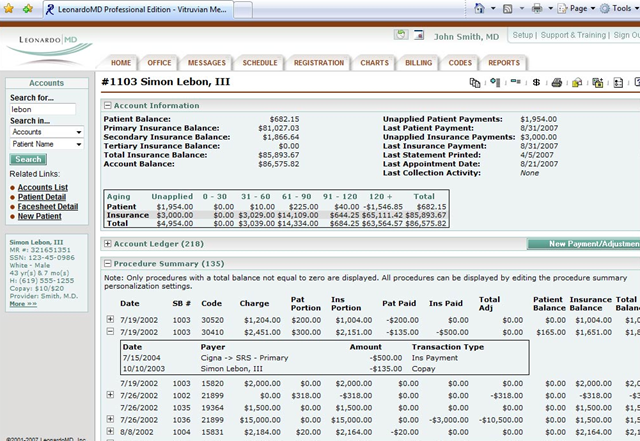
If you are a practice management vendor without a complimentary EHR solution, chances are you are looking a mate (or two or three.) LeonardoMD finds a new partner in MedAppz and will now offer the iSuite solution to its client base.

Alternatively, vendors already entrenched in the PM space are looking to create EHR functionality themselves. This appears to be the case for Medrium, who just announced a number of enhancements to its existing “complete practice management” offering. The company says it will roll out an EHR the first half of the year and claims it will allow physicians to meet all meaningful use objectives. Medrium is also adding a document management feature, patient eligibility checks and PQRI performance options.

carecloud

This Miami start-up provider of web-based physician practice software raises $2.3 million from unnamed investors. CareCloud plans to use the new money for … developing an EHR product!

Sunquest introduces a new physician portal that will allow providers to integrate patient lab results and enhance integration with EHRs. The Sunquest Integrated Clinical Environment has been marketed in the UK and other countries for the last 10 years.

CCHIT updates its 2011 certification requirements to reflect the latest changes in the interim final rules. For vendors who have already qualified for 2011 CCHIT certification, CCHIT will offer incremental testing at no charge.

Doctors in Ohio are likely to oppose proposed legislation requiring them to consult a statewide database before prescribing narcotics. The Ohio Medical Society believes the requirement would be an administrative burden for providers, especially at a time when many are trying to implement EMRs. The state sheriffs’ organization and others think such a law would reduce pill shopping, the illegal sale of prescription medications, and drug overdoses.

top spin

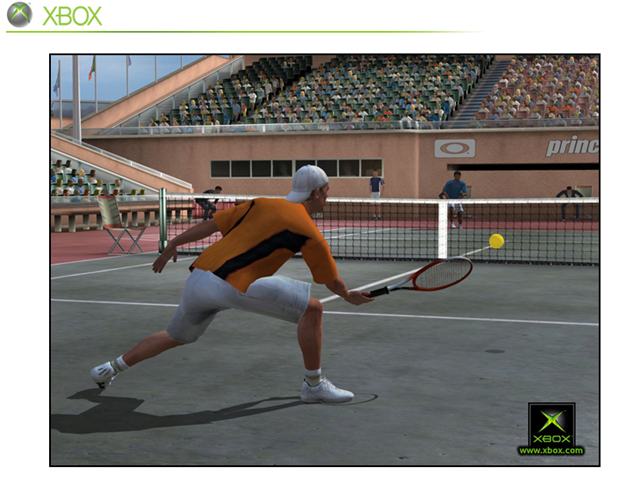
AdvancedMD adds Steven ZoBell to its executive team, naming him chief product and technology officer. He was previously CTO for inContact and involved in the interactive game world, overseeing development of several Microsoft franchises like Amped snowboarding, Top Spin tennis, and Links golf. It might be fun if he incorporated some of his gaming expertise into AdvancedMD’s EHR product.

A few short weeks after releasing the latest interim rules, some members of the HIT Policy Committee are now saying CMS should not have removed the requirement for physicians to generate progress notes for each patient visit. The opposing members say that without this element, providers miss an opportunity to create useful information and improve quality reporting. Members also believe CMS should not have removed the requirement to document advanced directives for the elderly and to develop easy to understand patient information resources.

The reports and images from Haiti are horrific. I’m thankful for the efforts of our US medical teams, including Dr. Jonathan Crocker, who provides a personal update here. Administrators at BIDMC are regularly adding new updates from their doctors who are giving a hand in Haiti.

iMedicor partners with Direct Medical Solutions for marketing and sales assistance. DMS sales reps will pitch the iMedicor portal to physician practices, as well as hospitals and HIEs.

99999100001 

Sometime Wednesday morning, HIStalk Practice’s 100,000th visitor stopped by. As you can see, I tried to document the occasion, but missed the magic moment by seconds. Thanks to Visitor Number 100,000, whoever you are, as well as you other 99,999 readers who have visited over the last year or so. We’re currently on track to have our best month ever and I’d be ecstatic if we hit 200K sometime in the fall.

Tomorrow we run the sixth and final segment of our EMR Vendor Executive series on Meaningful Use and Certification Requirements. The question: which criteria do you expect to be changed after the comment period?  Mr. H and I have received positive feedback about the series and hope to run similar ones in the future. If you have a burning topic you’d like to propose, let me know.

inga

E-mail Inga.

Intelligent Healthcare Information Integration 1/20/10

January 19, 2010 News 2 Comments

Blowin’ in the Wind

I know it’s not just me. If you’ve read through the recent series “EMR Vendor Executives on Meaningful Use and Certification Requirements” here on HIStalk Practice, you know not everyone agrees that the “Meaningful Use” criteria (MUC) are all roses and rainbows.

Still, it feels as if the voices which ring most true to my trench-weary ears are not the ones being heard most loudly nor echoed most frequently. Most of the big brains of the industry, be they governmental guiders or corporate cognoscenti, seem to be enraptured with the power and the glory of the MUC. Me? I’m feeling more mired in it.

Don’t get me wrong: I wanna believe, believe me. I want to feel that my medical cohorts here in the trenches really can absorb the MUC, all 700 pages or so. I want to have faith that my fellow EPs (Eligible Professionals) have more time in a day than do I in order for them to adjust all of their long-ingrained work habits and processes while still seeing all the folks who need care. I want to have the confident sleep of the assured who know that meeting regulatory demands won’t hinder their ability to meet next week’s payroll, shortchange their doctor-patient face time, nor further diminish their familial familiarity. (Remember me, son?)

I also want to believe that the big brains in the big places have the best interest of all of us at heart. I know most of them come from bigger centers, have bigger educations, and often have bigger bank accounts than many of us middle America minor leaguers. I want to believe that we matter to them and that they understand that the majority of healthcare in the U.S. is provided by smaller players who have no I.T. team, who have techno-illiterati-filled staffs, and who really want to focus on doing what’s right for our patients, not our data centers.

People like Evan Steele of SRSsoft brighten my outlook, but not because he is an exquisitely optimistic and rosy-glassed opinionator. Rather, his bold honesty and willingness to sound un-salesperson-y are what make him one of my current mini-heroes. He expresses an understanding of the enormous workflow issues entailed within the MUC. His forthright skepticism about the abilities of me and my trenchmates to be able to shovel sufficient MUC to be able to keep our heads above it are spot on, at least from the view down here. (See his comments in Part 2 and Part 3 of the series.) Evan has been particularly impressive in his understanding of us grunts … a tip of my MUC-covered helmet to you, sir.

For now, though, I watch and listen. The breezes seem to be bringing sounds of big institutional choirs and big center songs with very few micro-doc choruses. I try to raise my voice, but the MUC seems to be a bit thick down here.

From the trenches…

“The men with the muck-rake are often indispensable to the well-being of society, but only if they know when to stop raking the muck.” – Teddy Roosevelt

Dr. Gregg Alexander is a grunt-in-the-trenches pediatrician and geek. His personal manifesto home page…er..blog…yeh, that’s it, his blog – and he – can be reached throughhttp://madisonpediatric.com or doc@madisonpediatric.com.

EMR Vendor Executives on Meaningful Use and Certification Requirements – Part Five of a Series

January 19, 2010 News 5 Comments

We asked several vendors a series of six questions related the federal government’s recent announcement on the latest proposed meaningful use definitions and EHR certification criteria.

Practices are required to provide patients with electronic copies of their visit information. How will providers do that and how will patients use that information?

Allscripts – Glen Tullman, CEO

tullman_thumb4

As the Interim Final Rule (IFR) and the Notice of Proposed Rule Making (NPRM) both describe, there are many ways for physician practices to provide patients with clinical summaries of their visit information in paper or electronic form.  Many of our clients have already selected the Allscripts Patient Portal as the best means of delivering this sort of secure health information to patients, whether it’s a visit summary, test results or an email message from their physician.   We expect that more healthcare organizations will turn to patient portals to satisfy this requirement.

Patients, for their part, are likely to use the information they obtain from a portal for self-education, which tends to improve compliance with their physicians’ prescribed therapy. We also hope patients will share the information they take away from physician visits with other providers they may see.  That is exactly the sort of information exchange that can improve the coordination of patient care across all settings, improving overall quality and lowering costs from such things as duplicative tests.

To that end, we suggest that HHS require providers to include patient portal functionality within the EHR they implement in order to meet Meaningful Use criteria.  Personal Health Record utilization is not  widespread at this point, but enabling physicians to be change agents in notifying patients of the availability of critical health information is an approach we strongly support and which we believe would quickly increase the number of PHR participants. We also suggest that HHS require all EHRs to include access to at least one Personal Health Record and one or more storage mediums, for example, Microsoft HealthVault or Google Health.

eClinical Works – Girish Kumar Navani, CEO and co-founder

girish_thumb1

There are currently tools available that will make that a possibility with little effort. As it stands now, providers using eClinicalWorks can have the visit summary automatically uploaded to the eClinicalWorks Patient Portal. Once there, all a patient needs is a username and password to obtain that information. Having an informed patient will increase the probability that key aspects of the visit will be remembered and followed-up on, if need be, while at the same time reducing calls into the office.

Eclipsys – Philip M. Pead, President and CEO

pead_thumb2

I believe this component of the criteria will increase the deployment of patient portals, although the easiest way to meet this requirement in Stage 1 would be a simple encrypted file copy of the information to a CD-ROM or USB-Memory device.

e-MDs – Michael Stearns, President and CEO

stearns_thumb1

Our providers have this capability currently as they can export some or all of the information in an electronic format that can be provided to the patient in a number of formats, including a patient portal.  Patients and family members can make use of this information by sending it electronically or physically carrying it (e.g., on a USB key) and making it available to health care settings that do not have access to an interoperable EHR.

We believe this functionality will gain increasing importance as providers and patients become more involved in care coordination, in particular in the setting of chronic disease.

GE Healthcare – Vishal Wanchoo, President and CEO, GE Healthcare IT

wanchoo_thumb

The meaningful use criteria specify a wide range of electronic ways that this can be met, for example PHRs, patient portals, CDs, and “thumb drives.”  We expect providers will use methods that meet patient needs and are consistent with their technology.  Likewise, patients will use this information to meet their needs, such as reviewing information at home, giving it to another provider, or using a PHR.

InteGreat, a MED3OOO Company – Tom Skelton, President

skelton_thumb

This can be accomplished by a simple print of a patient’s health summary and completed note. In addition, this can be accomplished by having an integrated patient portal with your EHR. There is also mention that the format given to the patient must be “readable and understandable”.  We think some additional guidance here would be beneficial. Since certification under CCHIT 2008 and beyond requires support of the HL7 CCD, we expect that most EHR products will provide the visit information via a secure web portal that is populated via a CCD.  Some practices may prefer to provide the electronic copy on a CD or memory stick. We suspect that the format will still be the CCD so that the data can be viewed using a standard web browser. Either way, patients will use it to research their medical conditions on the internet and to bring their records with them when seeing a specialist.

McKesson – Dave Henriksen, SVP and GM, Physician Practice Solutions

henriksen_thumb1

The criteria states that the eligible provider must provide clinical summaries for patients for each office visit in paper or electronic form that includes – at a minimum – diagnostic test results, medication list, medication allergy list, procedures, problem list and immunizations. We offer a robust patient portal that provides patients with online access to that information, but which also makes this information available in other acceptable formats. We believe this approach aligns with the government’s ultimate goal — that patients have easy access to their most current health information so they can make informed care decisions and ultimately better manage their health. For McKesson, we believe that we are well-positioned with RelayHeath’s PHR and HIE capabilities to provide the needed interoperability services to our customers.

NextGen Healthcare – Scott Decker, President

decker_thumb1

Physicians have always had the capability to provide patients with copies of their automated record. We have been working with our clients to provide this information for several years, however the real challenge will be getting all physicians to meet this requirement, as many don’t do it today. There are also some privacy and security issues to be worked out before record sharing can be done as effectively as the authors of these regulations wish. We hope that patients will also use their personal health information to strengthen their commitment to better health by working more closely with their doctor.  Educating patients on the benefits that personal health records can have on their health will be key.

Sage – Lindy Benton, Chief Operating Officer

benton_thumb

Our solution today is to enable the patient to access the clinical record on-demand and online though our practice portal. This enables consumers to use that information in whatever way they feel is appropriate. Patients can view or print the clinical summary from the portal, or merge the CCD into their PHR.

Alternately, the practice can provide an electronic copy on a memory stick or CD, however, this leads to the second part of this question—how will the patient use it? So the online portal seems to us the most beneficial way to share clinical information with the patient, in that it is secure, portable and immediately useful.

Ultimately, we are interested in putting the patient in a position to leverage emerging technologies. We are of the opinion that ubiquitous platforms will emerge, such as a healthcare-geared Facebook-type platform that patients will gravitate toward. In this case, it becomes a question of secure messaging and allowing the patient to consent and direct their record accordingly.

SRSsoft – Evan Steele, CEO

steele_thumb

We don’t see this as a measure to save healthcare costs or provide improved care. This is a privacy/security/access issue; a convenience for patients who need to have access to the data in their records for some reason. I cannot envision the majority of patients requesting their medical records on a CD or a thumb drive, now or in the foreseeable future. Patients may need to request copies of their records, or portions of their records if they relocate, change providers, etc., but they typically want paper documents that they can read themselves and share as they see fit. Many providers have issues with this in that they must be much more careful and perhaps less candid about comments and notes they make in patient records if they know the patient is going to view them. Some comments could alarm them or be cause for other concerns if providers are just noting things to look out for in the future, for example.

You do not need a comprehensive, point-and-click EHR to make records available to patients. In fact, it is a lot easier to and faster to do this with a hybrid EMR. In addition, most physicians find the templated exam notes that are generated from a point-and-click EHR to be of little value—difficult to find information and lacking the detail, nuance, and precision that most specialists require.

Platinum Sponsors


Gold Sponsors


Subscribe to Updates


Search All HIStalk Sites


Recent Comments

  1. The article about Pediatric Associates in CA has a nugget with a potentially outsized impact: the implication that VFC vaccines…

  2. Re: Walmart Health: Just had a great dental visit this morning, which was preceded by helpful reminders from Epic, and…

  3. NextGen announcement on Rusty makes me wonder why he was asked to leave abruptly. Knowing him, I can think of…

  4. "New Haven, CT-based medical billing and patient communications startup Inbox Health..." What you're literally saying here is that the firm…

  5. RE: Josephine County Public Health department in Oregon administer COVID-19 vaccines to fellow stranded motorists. "Hey, you guys over there…