Recent Articles:

Bowtie Confidential 6/7/13

June 7, 2013 Guest articles Comments Off on Bowtie Confidential 6/7/13

Healthcare Data Governance and Data Stewardship

There is a wealth of articles about data governance, including one that I wrote earlier for HIStalk. It is becoming clear that in today’s complex healthcare environment, data governance and ownership are emerging disciplines with evolving definitions.

As the data-driven healthcare environment provides benefits (e.g., data aggregation enables more efficient care delivery, decision support systems, etc.) and the potential for risk/harm (e.g., incorrect data entry), the industry is realizing the importance of accurate healthcare data, which is dependent on technology.

Through data governance, organizations exercise control over the processes and methods used to input, aggregate, use and re-use data. Data stewardship is an evolving role in this space. The disciplines need to be seen as more than an IT responsibility and as the responsibility of end users as well.

To realize data’s full benefits and minimize potential risk, care providers and others with access to health data must follow sound data stewardship policies and procedures which address the security and privacy of patient data and the quality and integrity of data collected, stored and currently (and prospectively) used.

The data stewardship role is responsible for working with and managing data in terms of integration, consistent definitions, structures, metrics, derivations, etc. – strategic and tactical views of data that will enhance quality, metrics/reporting and efficiencies and effectiveness in delivering care. Both identifiable and de-identifiable data is included within this context. Healthcare environments will need different operations and solutions. However, the presence of data stewardship (an owner or custodian with authority and accountability for the use of health data) is needed.

What is data stewardship?

Healthcare data stewardship’s main objective is the management of the organization’s data assets to improve usability, accessibility, and quality. The data steward works with technology database administrators, data warehouse staff and others to:

  • Assist with approval of clinical and business naming standards
  • Develop consistent data definitions
  • Determine data aliases
  • Develop standard calculations and derivations
  • Document the business rules of the corporation
  • Monitor the data quality in the data warehouse
  • Define security requirements

As the demand for data warehouses (with reliable and “quality” data) has grown, so has the need for a data stewardship function. An integrated, enterprise-level view of the data provides the foundation for the shared data that is so critical in the data warehouse.

A typical healthcare organization should consider assigning one data steward to each major clinical/business / operational data subject area. These subject areas include business office, registration (admitting), radiology, laboratory, pharmacy, cardiology, etc. The size of the organization will dictate the number of data stewards needed. A small practice may need just one to oversee all of the data.

The data steward usually works with a select group of employees representing the assigned subject area. This “committee of peers” is responsible for resolving integration issues concerning their subject area. The results of the committee’s work are passed on to the data administrator for implementation into the corporate data models, meta-data repository, and ultimately, the data warehouse construct.

Just as there is a data architect in most data administration functions, there should be a "lead" data steward responsible for the work of the individual data stewards. The lead’s responsibility is to clearly establish each data steward’s domain.

With data stewardship and enhanced governance, an organization can improve data quality, protect sensitive data, promote efficient information sharing, provide trusted business-critical data, and manage information throughout its lifecycle. The data stewardship program enables organizations to develop a strategic approach to utilizing data as an asset to ensure the security and privacy of the data for/of their patients. The program can improve financial performance, increase operational effectiveness and efficiency, and allow full compliance with regulatory requirements.

Of course, it is not about data alone. Data stewards must work with businesses to map collection needs and, where possible, find better or more efficient sources. Then, the steward can create appropriate use policies to limit the collection of unnecessary data and, later on, audit data practices to ensure business compliance.

Data stewardship enables organizations to improve financial performance, increase operational effectiveness and efficiency, and allow full compliance with regulatory requirements.

Rob Drewniak is vice president, strategic and advisory services, for Hayes Management Consulting.

News 6/6/13

June 5, 2013 News Comments Off on News 6/6/13


6-5-2013 11-43-33 AM

Thirty-five percent of physician groups plan to purchase, replace, or upgrade their ambulatory EHR according to a HIMSS Analytics/CapSite report on ambulatory EHRs and PMs. Other key findings from the survey of over 800 practices:

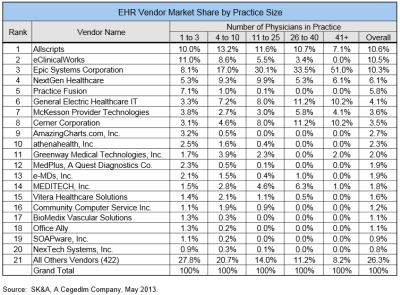
  • eClinicalWorks, Allscripts, and NextGen are the dominant EHR providers for free-standing practices; Epic, Allscripts, and Cerner are the market leaders for hospital-owned practices.
  • The most important driver for EHR purchases is increased practice efficiency, followed by increased quality delivered and easier data sharing between facilities.
  • Allscripts, NextGen, and eClinicalworks have the largest market penetration for PM systems in free-standing clinics; Epic, GE, and Meditech lead in hospital-owned practices.
  • Forty-six percent of physicians groups plan to join an HIE.

6-5-2013 4-11-42 PM

Henry Schein will add dashboardMD’s healthcare dashboards and BI tools into its MicroMD PM and EMR systems.

HIT sales and services firm Sterling Computer Corporation acquires Wide River Technology Extension Center, the HIT consulting division of CIMRO of Nebraska. CIMRO is the REC for Nebraska and will continue to serve in that capacity. According to the press release, the REC’s grant money is scheduled to end in February, 2014. Sterling’s acquisition of Wide River allows the HIT consulting business to continue, even after the grant money runs out.

At least 122 EHR vendors claim they will offer a fully functional mobile access and/or iPad native version of their EHRs by the end of this year, and another 135 vendors report having mobile apps on their near-term strategic horizons. Hospitalists, primary care providers, and internal medicine physicians have the strongest preference for EHRs on mobile devices; surgeons express the lowest interest. According to a Black Book survey of over 1,400 practices, drChrono offers the iPad EHR application with the highest customer satisfaction scores.

6-5-2013 3-06-21 PM

Greenway Medical announces the grand opening of its new corporate headquarters.

US News & World Report and Doximity will offer a free online directory of over 700,000 practicing US physicians. The information will be available to consumers but physicians can control whether certain information is shared publically by maintaining an online profile on doximity.com. That’s a clever way for Doximity to increase its number of physician “users.”

6-5-2013 4-13-54 PM

The 182-physician Covenant Medical Group (TX) adopts the PerfectServe clinical communications platform to provide secure and streamlined communications between clinicians.

6-5-2013 3-46-50 PM

Athenahealth announces it will guarantee the ICD-10 transition for new clients who are live before June 30, 2014 and will waive its fees on services if it is not ICD-10 compliant by the government’s Oct. 1, 2014 deadline.  In addition, athenahealth will backstop the revenue cycle for independent practices by providing a cash advance against submitted claims, if those claims are delayed by payers in the ICD-10 transition period.

6-5-2013 4-06-14 PM

Drchrono will offer its paid EHR subscribers access to online patient education resources developed by Mayo Clinic.

Inga large

E-mail Inga.

News 6/4/13

June 3, 2013 News Comments Off on News 6/4/13

CMS releases data on 30 types of outpatient procedures from across the county for such services as clinic visits, echocardiograms, and endoscopies. Average submitted charges for a Level 4 hospital clinic visit ranged from $111 (Charleston, SC) to $2,000 (St. Petersburg, FL); payments ranged from $48 (Sidney, OH) to $178 (San Jose, CA).

CMS also posted a de-identified list of over 146,000 EPs working with RECs that includes a breakdown by EHR vendor, implementation status, and specialty. Since RECs cater to smaller primary care practices and rural healthcare providers, I intend to take some time soon to crunch the numbers to better understand which vendors are dominating this segment.

6-3-2013 5-15-34 PM

Robert Tennant, MGMA’s government affairs senior policy advisor, discusses the need to protect patients and practices from HIPAA risk, including suggestions to mitigate problems should a provider lose his/her mobile device. Other risks addressed: the use of computer screens that might be visible to patients and visitors and  complications from a down server.

6-3-2013 1-56-35 PM

The local paper profiles Marietta, GA-based Nuesoft Technologies and its president and CEO Massoud Alibakhsh, who founded the company in 1993. Alibakhsh reports the company has historically grown 18 to 20 percent per year, but believes it may need to double its staff of 140 over the next two years as a result of its recent designation as a Practice Fusion billing partner.

Hayes Management Consulting expands its clinical and revenue cycle optimization service lines to include increased focus on measuring outcomes and outcome-driven operational improvement services.

6-3-2013 5-17-14 PM

I noticed on Hayes’ Website a blog post that offered some great recommendations for successful EMR physician training, including offering providers CME credits and engaging physicians as super-users.

6-3-2013 5-29-22 PM

Twitter is a popular and generally reliable source for health information, according to a University of Texas at Austin study of 9,510 vaccine-related tweets. Researchers conclude that healthcare providers and other stake holders should consider social media channels to address patient education in accessible and understandable ways.

iPads and iPhones are the top choices for physicians interacting with EHRs and staff, with 59 percent of office-based physicians saying they already integrate or are integrating tablets into their operations. Sixty-eight percent prefer iPhones over Androids or other platforms.

6-3-2013 4-23-27 PM

A study in Annals of Family Medicine looks at some of the ways innovative clinics are redesigning workflow to improve physician satisfaction. Included in the fixes: using MAs as scribes to create electronic documentation and delegating team members to filter normal lab results and prescription refills.

Vitera Healthcare completes the first of three waves of Stage 2 MU certification for its Intergy EHR solution.

The medical director of the New York-Presbyterian Hospital immunization registry says that children were nine percent more likely to be fully vaccinated for influenza when a pop-up alert was added to the children’s EMRs and synchronized with the New York City vaccine registry.

6-3-2013 5-25-04 PM

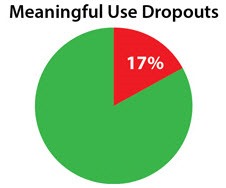
The Massachusetts Medical Society says it is working with several state agencies to develop recommendations on how to interpret and implement a state law that requires physicians to comply with EHR MU requirements in order to obtain licensure as of 2015. Depending on the interpretation, a nasty storm could be brewing, given the significant percentage of physicians either ineligible to participate in the MU program or simply opting out.

EMR record-keeping and duty hour limits have reduced the amount of time that doctors-in-training spend with patients to an average of eight minutes per patient, or about 12 percent of an intern’s day. Because of electronic documentation requirements, interns now spend almost half their days in front of a computer screen.

Inga large

E-mail Inga.

DOCtalk by Dr. Gregg 6/2/13

June 2, 2013 Dr. Gregg 2 Comments

_HIT Happens

Some days, dealing with HIT and EHRs leaves little to smile about. Those days are great for a little “_HIT Happens” observational humor.

Q: How many EHRs does it take to screw in a light bulb?
A: We may never find out because they won’t work together.

Q: What’s the best use for most EHRs?
A: Obtaining government incentive money.

Q: Why did the EHR cross the road?
A: Because MU said it had to.

Q: How are wisecracking yokels the same as EHR vendors discussing data migration?
A: Both commonly use the line, “You can’t get there from here.”

Q: What did the EHR say to the PM?
A: We’ll never know; the interface failed.

Q: How do you guarantee a loss of EHR data?
A: Migrate to a new EHR.

Q: When is an EHR like a “ball-busting” contagious disease?
A: When it has MUMPS.

Q: How do EHRs make doctors’ lives easier?
A: No…seriously…how?

Q: What do you get when you cross an HIT geek with a clinician?
A: An argument.

Q: Why are HIT experts and doctors so opinionated and egoistic?
A: No, seriously … why?

Q: What do you get when you have twelve HIT pros in a room?
A: Thirteen different opinions about the best way to manage an IT project.

Q: If Johnny has five EHRs and he gives Susie two EHRs, how many EHRs does Johnny have left?
A: Trick question: nobody’s stupid enough to have more than one EHR at a time.

Q: When are you likely to scream at your EHR?
A: Day 1, Day 2, Day 3, Day 4, Day 5, Day 6, (still counting …)

Q: How can you get an EHR vendor’s support team to answer your call for help?
A: You can’t, unless you have their address, some extra frequent flyer miles, and a baseball bat.

Q: What do you get when you take the “E” out of “EHR”?
A: Paper … tons and tons of paper.

Q: How do make an EHR crazy?
A: Ask it to manage immunization rules.

Q: Why did the EHR buy cool sunglasses and a Porsche?
A: Because it wanted to be HIPAA.

Q: Why was the EHR so popular?
A: Because it gave good UX.

Q: What do patient privacy and cloud-based EHRs have in common.
A: Nothing.

Q: Why is a locally hosted EHR better than cloud-based EHR?
A: Baseball bats are ineffective on clouds.

Q: Why couldn’t the EHR find true love?
A: Seriously? Have you ever used an EHR?

Q: When will EHRs achieve true maturity?
A: Stardate 500606.67

Q: What’s the best way to wrap up a long day in front of an EHR?
A: Again, it has to do with the aforementioned baseball bat…

From the trenches …

“We all have [_]hit on our shoes. We’ve just got to realize it so we don’t track it into the house.” – Karl Marlantes

Dr. Gregg Alexander, a grunt in the trenches pediatrician at Madison Pediatrics, is Chief Medical Officer for Health Nuts Media, an HIT and marketing consultant, and sits on the board of directors of the Ohio Health Information Partnership (OHIP).

News 5/30/13

May 30, 2013 News Comments Off on News 5/30/13

From Weird News Andy: “Re: Dr. gives up all insurance. Lots of great quotes here.” A physician in Maine stops accepting insurance but anticipates his practice will continue to perform well financially, despite losing several hundred patients. Thanks to WNA for pointing out several of the doctor’s more interesting comments, including, “I’m freed up to do what I think is right for the patients.” That testimony alone should help business, since few patients prefer doctors who do what’s wrong for the patient.

5-30-2013 5-29-00 AM

Sibley Heart Center Cardiology (GA) selects MediRevv to provide A/R management services for its 40 physician practice.

5-28-2013 4-14-16 PM

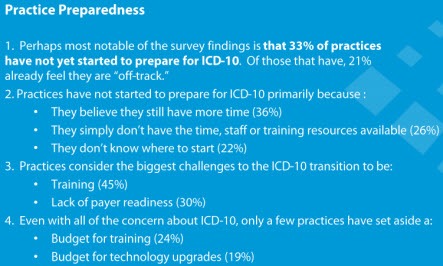
ADP AdvancedMD launches MyICD-10, a Website to help practices prepare for the ICD-10 that includes Webinars, articles and news on the new code set, and a recommended preparation timeline.

Fifty-four percent of physicians say they are “satisfied” or “very satisfied” with their EHR vendor, compared to 63 percent a year ago, according to a Zirmed-sponsored of 1,291 physicians. Only 57 percent of EHR adopters report that their systems have made them more efficient and just 43 percent report a return on their technology investment.

5-30-2013 5-31-21 AM

Advocate Physician Partners (IL), a care management collaboration with Advocate Health Care, implements its 500th independent physician on SynAPPs, Advocate’s cloud-based version of eCW’s EHR.

5-30-2013 5-34-01 AM

PDR Networks, a provider of patient drug safety and support services for EHR and e-prescribing platforms, will market OPTIMIZERx Corp.’s eCoupon financial support technology, which integrates with e-prescribing workflows.

Clyo Internal Medicine (OH) selects simplifyMD as its EHR provider.

5-29-2013 12-15-36 PM

Practice Fusion announces preferred billing partnerships with ADP AdvancedMD, CollaborateMD, and NueMD. Absent from the list is Kareo, which was a long-time Practice Fusion partner that launched a competing free EHR a couple months ago.

The Texas Medical Association, Dallas County Medical Society, and Harris County Medical Society establish Physician Services Organizations for Patient Care, which will bring together providers, health plans, and technology vendors to test and develop new care models for physician practices.

Medical practice software and billing service provider Encoda is awarded a patent for automated direct-to-payer RCM technology.

5-29-2013 6-02-54 PM

Almost one-third of physicians buying EHRs today are replacing EHRs, compared to 21 percent three years ago according to a study by Software Advice. The top reason for replacing a legacy system: dissatisfaction with current EHR.

Inga large

E-mail Inga.

Platinum Sponsors


Gold Sponsors


Subscribe to Updates


Search All HIStalk Sites


Recent Comments

  1. The article about Pediatric Associates in CA has a nugget with a potentially outsized impact: the implication that VFC vaccines…

  2. Re: Walmart Health: Just had a great dental visit this morning, which was preceded by helpful reminders from Epic, and…

  3. NextGen announcement on Rusty makes me wonder why he was asked to leave abruptly. Knowing him, I can think of…

  4. "New Haven, CT-based medical billing and patient communications startup Inbox Health..." What you're literally saying here is that the firm…

  5. RE: Josephine County Public Health department in Oregon administer COVID-19 vaccines to fellow stranded motorists. "Hey, you guys over there…

RSS Industry Events

  • An error has occurred, which probably means the feed is down. Try again later.