Intelligent Healthcare Information Integration 2/12/10

February 12, 2010 News 5 Comments

Of Mice and…Ducks

We recently left a long road behind us here in our little neck of the trenches. After years of what seemed like almost interminable “training,” one of my staff was caught adding a new network printer to her tablet PC — without any help!

Those of you reading this little saga are all pretty techno-hep and probably don’t think too terribly much of someone performing such a relatively minor and rather simple task. However, here it was celebrated with hoots and haws and all manner of revelry. You see, this was a signpost that we had left a years-long trail behind and were now embarking upon a different path — completely duck-free.

When we started our new, little high-tech, rural pediatric office back in 2006, I had a staff of three: a nurse, a receptionist, and a medical assistant. The receptionist knew just enough on the computer to be dangerous, my nurse didn’t even know how to turn a computer on (literally,) and, during one of our first group computer discussions, my M.A. asked if we would have to use a one of those “ducks, you know, those things you click” with our pen tablets.

We never ended up using any ducks, though we did enjoy a recurring chuckle over that comment. We did begin, from that day, a very long, slow path toward computer literacy which, at times, seemed almost interminable. It began with the basics.

One of the first tasks I assigned was quite simple: play solitaire. They were each given a pen tablet PC and told to take it home and practice playing simple games just to get the hang of using the pen or the TrackPoint. (We kept the focus off of ducks.)

That was a pretty fun way to start engaging their computing experience. Once they had some cursor awareness, we moved on into simple messaging using an in-house messaging system. E-mail was an easy extension from there and then we clicked right on into full-blown patient scheduling, sans paper and pen backup. So far, everything was just ducky.

Zoom ahead a bit on the time continuum and, after a few fits and failed starts with full-blown EHR usage, we became “paperless” and left our crumbled, old paper chart crutches for good. (I say that with only a momentary hesitation as, honestly, there are still days when I just want to grab a pen and scribble a couple of quick notes the old-fashioned way, committed geek though I am.)

Full EHR usage doesn’t mean we are free of performance struggles related to basic PC usage, just that I felt it was time we made the leap. Watching my nurse has, at times, been almost painful; she’s done pediatrics via pen and paper for 30 years. She is a sharp cookie, but PC-ing just doesn’t come naturally to her. She is never one to shrink from a challenge, though, so she continues to plug away. (She is the true salt of the earth and one of the greatest blessings of my life.)

Anyway, the other day I noticed she had a new printer in her “Devices and Printers” folder. I had recently upgraded an older printer, but I hadn’t yet had the chance to add it to her tablet. I asked our office manager (a PC-savvy youngster) if she had added that and she said my nurse had done it all by herself, without asking anyone! I looked over and saw my nurse grinning the biggest, proudest grin and I knew: we were officially beyond the era of the duck!

From the trenches…

“Not the cry, but the flight of the wild duck, leads the flock to fly and follow.” – Chinese proverb

 

Dr. Gregg Alexander is a grunt-in-the-trenches pediatrician and geek. His personal manifesto home page…er..blog…yeh, that’s it, his blog – and he – can be reached through http://madisonpediatric.com or doc@madisonpediatric.com.

News 2/12/10

February 10, 2010 News 1 Comment

From: Miss Lead “Re: NextGen acquisition. NextGen has acquired Opus Healthcare. Just announced internally.” Not officially confirmed via a formal press release but Mr. H verified with a solid source. Read more in HIStalk tomorrow. [Update from Inga: Yup, it’s true.]

nuhealth

NuHealth (NY) signs a $5 million contract with Allscripts to provide EHR, PM and ED solutions across its hospitals and employed physician networks. The health system will also establish data exchange between the Allscripts solutions and the hospitals’ Eclipsys Sunrise, Sunquest lab, and Amicus radiology systems.

Kaiser Permanente earns high satisfaction ratings for medical care and patient satisfaction, according to California’s Office of the Patient Advocate. The HMO attributes its high rankings in part to the use of EMR for tracking medical tests, making records available to all providers, and making information accessible via home computers.

The Senate is considering adding language to its current “Jobs Bill” that would allow some hospital-based physicians to receive ARRA subsidies. Current ARRA language excludes hospital-based physicians, much to the disappointment and anger of ER docs, pathologists, and physicians who practice in ambulatory facilities owned by hospitals. The proposed bill would still exclude subsidies for physicians who perform substantially all their services in an inpatient or ER setting, but, physicians who use ambulatory facilities owned by a hospital would become eligible. For details, see SEC. 620 under EHR CLARIFICATION.

Sequel Systems becomes the latest EHR vendor to “guarantee” its solution will be fully compliant with meaningful use certification criteria. The company says it will credit customers their monthly support fees during any period in which software modifications are  required in order to meet certification criteria. I’m looking forward to seeing how all these guarantees work out. How many providers are going to end up blaming their software vendor when they’re unable to use EHR in a “meaningful” way because the system slows them down too much?

Saint Vincent Catholic Medical Centers (NY) announce layoffs for 32 doctors as of the end of February. The physicians are specialists in ophthalmology, pathology, and neurology and the financially struggling hospital says they may be forced to shut down those departments completely. The hospital is losing money and heavily in debt. The biggest creditor is GE Capital, which is owed $300 million.

lytec

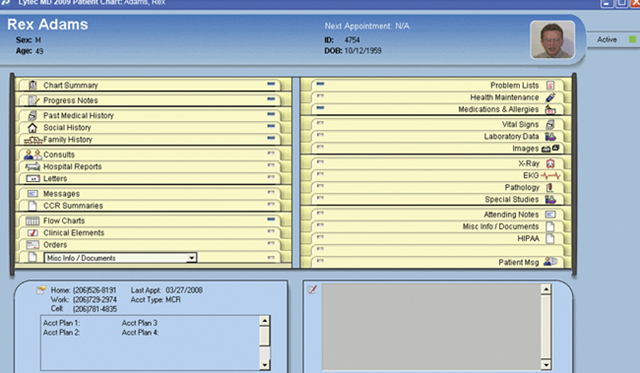
McKesson releases a new version of its Lytec MD EHR.The release includes Bright Note Technology, which I checked out at MGMA and thought was pretty slick. There’s also a Lytec Connect feature that leverages RelayHealth technology to provide secure communication between caregivers.

regulations

I have been periodically taking a look at the public comments on the latest Interim Final Rules. Some are quite specific, provide logical arguments, and are likely beneficial to all participating in the process to develop the Final Final Rules. For example:

In our 12 doctor Urology practice, we have been enthusiastic E-prescribers since we implemented our EMR almost 2 years ago. Virtually all of our prescriptions are now generated electronically, but not all of them are transmitted to the pharmacy electronically. there are several valid reasons for this:
1. The patient may request a paper copy of the prescription that he can send to a mail order pharmacy or PBM, which are currently not able to receive electronic prescriptions, at least from our EMR.
2. The patient may be given drug samples at the time of an office visit along with a printed Rx. This allows the patient to determine whether he or she can tolerate the drug prior to getting the prescription filled. Since it is not certain that the patient will be filling the Rx, it seems inappropriate to send an electronic Rx to the pharmacy in this scenario.
3. Some patients simply prefer a printed Rx. They may not have a regular pharmacy and may not know for sure where they want to fill the Rx. Also, for some patients, I think it helps them to have a physical reminder to go to the pharmacy.
Arguably a printed Rx generated by an EMR is just as legible an an electronically submitted Rx, and is also subject to the same decision support. Therefore I would suggest that the E-prescribing requirement should be modified in one of 2 ways – either allow providers to count electronically generated printed prescriptions as E-prescriptions, or lower the threshold for electronic transmission of prescriptions to something like 50%.

Some of the comments don’t necessarily offer solutions, but none-the-less provide useful insights about providers’ concerns:

Met this week with providers in the community and discussed timeframes for purchasing systems to meet meaningful use. The consensus was to hold off for at least 6 months. One factor was uncertainty created because there are no certified systems. Perhaps you should have grandfathered CCHIT certification to keep this moving. Another factor was dissatisfaction and discontinued use of the technology because of poor usability, reliability and impact to the providers productivity. Vendors need to substantiate required training time for providers and staff and disclose average time needed for the provider to become proficient. Regarding reliability would like mandated uptime guarantees and service level agreements that address timeliness of issue resolution with substantial penalties as standard contract language. Lastly some providers have home-grown systems that are innovative. With regulation defining meaningful and certified, these system may no longer exist. Would like to see exceptions for privately developed systems, i.e. non-commercial, to become acceptable in some manner without cost. I do not have the solutions on this but the concern is that commercial vendors will prioritize to meaningful use and innovations in technology for patient care may be precluded.

And, there are the ones that I would simply categorize as rants:

NOW THAT I’VE READ THE MEANINGFUL USE DEFINITION (25 STANDARDS / OBJECTIVES) THAT WAS RECENTLY PUBLISHED, IT SEEMS LIKE THE GOVERNMENT PULLED A FAST ONE (AGAIN) BY GETTING EVERONE EXCITED ABOUT THE OPPORTUNITY TO RECEIVE SIGNIFIANT DOLLARS TO PAY FOR THE IMPLEMENTATION OF EMR ONLY TO PULL THE RUG OUT FROM MANY PROVIDERS. WHY IS IT THE PROVIDERS WHO ALWAYS TAKE IT ON THE CHIN? WHY IS IT NOT THE EMR VENORS AND HIGHLY PAID CONSULTANTS, WHO HELP IMPLEMENT THE EMR PRODUCTS, BE HELD ACCOUNTABLE TO THE PROVIDERS WHO TOOK THE STEPS TO IMPLEMENT EMR BUT DID NOT KNOW THE CRITERIA THEY WOULD BE HELD ACCOUNTABLE TO UNTIL AFTER IT WAS TOO LATE. IT’S LIKE THE OLD ADAGE, READY FIRE AND SEE IF YOU HIT ANYTHING. TO INSIST THAT PROVIDERS ARE 100% COMPLIANT WITH THESE 25 STANDARDS 80 % OR WHATEVER THE CRITERIA IS FOR EACH OBJECTIVE IS NOT FAIR. IF PROVIDERS WOULD HAVE HAD THE CRITERIA WHEN THEY DESIGNED AND IMPLEMENTED THEIR WORKFLOWS, IT WOULD HAVE BEEN A MORE LEVEL PLAYING FIELD. I’M SUGGESTING THAT SOME CONSIDERATION BE GIVEN TO THOSE PROVIDERS WHO ALREADY IMPLEMENTED THEIR SYSTEMS AND ARE NOW STRUGGLING TO MODIFY SOME OF THEIR WORKFLOWS IN ORDER TO MEET THE NEWLY PUBLIZED MEANINGFUL USE CRITERIA. ALL THE VENDERS AND CONSULTANTS CARED ABOUT IS IMPLEMENTING BASED ON HOW THE PROVIDER WANTED TO OPERATE THEIR OFFICE AND NOT ACCORDING TO WHAT IS NOW NECESSARY IN ORDER TO MEET THE MEANINGFUL USE CRITERIA.

Best of luck Dr. Blumenthal.

inga

E-mail Inga.

News 2/9/10

February 8, 2010 News Comments Off on News 2/9/10

Sage Healthcare COO Lindy Benton resigned last week, days before Betty Otter-Nickerson is scheduled to start as CEO. Sage’s John Schoutsen shared this note with us: “Lindy has chosen to leave Sage and to pursue new opportunities. Lindy felt it would be best for Betty to start fresh and form her own, independent views of the business. We’re thankful for Lindy’s contributions while here and looking forward to Betty’s leadership.”

self

Self Regional Healthcare (SC) selects Allscripts EHR and PM for its 59 employed physicians. Self will also offer Allscripts as the preferred solution for its 200 affiliated physicians.

An Epocrates survey finds that 20% of doctors say they’ll be buying an iPad within a year, good news for the company since it has already committed to creating an iPad version of its drug information software.

Would you please help a gal out and complete our first ever HIStalk Practice Reader Survey? It will take but two minutes of your time and will help us with planning for the next year. We promise to read every single comment you take the time to write and will use the input to make sure we are providing readers the most valuable content. Many thanks.

I think I failed to mention this earlier, but HIStalk Practice had a record month in January. The number of visits doubled from a year ago and the e-mail subscriber count keeps going up. Which reminds me: please sign up for the e-mail updates (top right) so you never miss a thing. And if you are interested in joining the great list of sponsors to your left, let me know.

I’m not sure the world needs another EHR option, but new program is making its debut nonetheless. SharEHR is a SaaS solution that allows users to upload files or scanned paper and converts them to a PDF format. Documents can be shared, sorted, and searched. Actually, I wouldn’t really call it an EHR if that all it does. Surely no buyer would think a product like this offers enough to qualify for meaningful use, right?

Ingram Micro and NextGen Healthcare form a new distribution relationship that gives Ingram the right to recruit, train, and support new partners to provide NextGen solutions.

Four Michigan medical practices select mPay Gateway to provide point-of-care patient payment processing.

text4baby

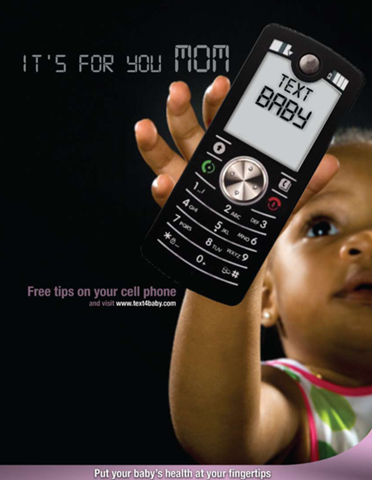
Federal Chief Technology Officer Aneesh Chopra announces the Text4Baby messaging service. The free service is supported by a public-private partnership, including most major wireless carriers. To join Text4Baby, an expectant mother only needs to text "baby," or "bebe" in Spanish, to 511411. Subscribers will get three text messages each week at no charge on content timed to a baby’s due date or date of birth and focused on a variety of topics.

Ascension Health becomes the first health system to agree to offer American Well’s Online Care to its patients. Using a phone or via the Web, patients will be able to connect with clinicians affiliated with Health Ministries of Ascension Health.

Dr. David Blumenthal says that he wants to “stretch” the healthcare community to qualify for financial incentives for health IT use, but not “break” the community. The national health IT coordinator also believes that health information management will become a core 21st century professional competency. Blumenthal, by the way, is one of the keynote speakers at HIMSS. Mr. H also invited him to our HIStalk party. If he no-shows, then I definitely plan to no-show his keynote.

Speaking of HIMSS, a couple of people supposedly in the know say that registrations for physicians and their administrative staff are up this year. ARRA-related concerns are behind the increase. I’ve asked the HIMSS folks to verify this and they said they’ll provide some specifics later in the week.

The Roaring Fork Valley Physicians IPA (CO) settles with the FTC on charges of price fixing. The 80-member IPA was accused of anticompetitive negotiating tactics against health insurers by orchestrating agreements to set higher prices and refusing to deal with insurers that didn’t meet its demands for higher rates. The settlement requires doctors to terminate any contracts with insurers reached using the price-fixing tactics. No mention of any more serious hand slapping, so maybe the IPA got off easy.

mass general

A telemedicine program at Massachusetts General is improving communications between attending physicians and ICU staff and helping doctors manager PICU patients round-the-clock. On-call attending physicians can examine patients from home and communicate with on-site staff using real-time video conferencing and robotic gear that includes digital cameras and medical scopes attached to patient beds.

A Texas hospital uses a “speed dating” model to match physicians and patients. The Doc Shop program at Texas Health HEB allows patients to spend 30 minutes talking to five or six doctors to find one that best meets the needs of the patient. The model also provides an unusual way for doctors to market and build their practices, sans the shadchan.

inga

E-mail Inga.

Intelligent Healthcare Information Integration 2/5/10

February 5, 2010 News 4 Comments

In Defense of Tablets

The good DrLyle recently sent a submission to these hallowed pages in which he stated, “…it is well known that the general idea of using a tablet in healthcare has tried and failed multiple times.” Hmmm…

Now, this isn’t the first I’ve heard of people poo-pooing the pen tablet as less than functionally desirable for doctoring duties. But, it inspired me to offer a defense of our little PT pals, a form factor which works in our office every single day.

Maybe having a desktop PC in every exam room works in an internist’s office, but when I see what the children do (and what the parents let them do) to our beautiful office space every, single day …Hoo Boy! I simply can’t imagine the condition of exam room PCs nor the cost of repair and replacement over time. We have video monitors in recessed wall boxes behind protective Plexiglas panels in each room for patient educational and PR purposes; even those have been pried into. The images of spilled goo and repeated poundings that a desktop would take in an exam room, if unattended by a staffer for even a few minutes, makes me shudder.

Currently, we use Lenovo X200 convertible pen tablets. They fly with Windows 7 and their battery life is much better than the Lenovo X41s we used previously. (Our EHR isn’t completely compatible with Windows 7/IE8, but the speed gain is worth the few glitches or inaccessible items. Besides, compatibility will be full-blown soon and we have a few XP machines around to access those items when infrequently necessary.) We often use them more as laptops than tablets; most of us prefer the regular keyboard and TrackPoint to the onscreen keyboard and pen. Still, the flexibility is there and we do employ all the different configurations at various times.

I haven’t yet seen a data input device — short of a scribe — that works as well as the old pen and paper in a busy, noisy pediatric office. Tablet pens, mice, TrackPoints, voice recognition, trackballs, regular or on-screen keyboards, handwriting recognition — all have their workflow problems. But the TrackPoint and keyboard combination, in our regular day-to-day chaos, works pretty well for us. Voice recognition is becoming a second choice away from the noisy hubbub, though I am admittedly slow getting going with it. (No excuse… just one of those cool things that keeps getting put off while life pressures edge it from the top of my To Do pile.)

It isn’t perfect, our little pen tablet arrangement. But, desktops wouldn’t be either, at least in our world. Plus, we never have an issue with turning our backs upon our patients to address the PC, something a desktop might require and which could sometimes be dangerous with our “rambunctious” clientele.

For now, I stand by — and with — our pen tablets.

From the trenches…

“I know that you believe you understand what you think I said, but I’m not sure you realize that what you heard is not what I meant.” – Robert McCloskey

Dr. Gregg Alexander is a grunt-in-the-trenches pediatrician and geek. His personal manifesto home page…er..blog…yeh, that’s it, his blog – and he – can be reached through http://madisonpediatric.com or doc@madisonpediatric.com.

News 2/4/10

February 3, 2010 News 1 Comment

Twenty New York medical practices leverage their city-funded EMRs to identify and contact patients needing follow-up care. The Panel Management Program is privately funded with $1.5 million from Pfizer.

McKesson offers special financing programs for physicians adding its PM or EHR solutions, including Practice Partner, Lytec MD and Medisoft. Options include 0% interest for 12 months with 25% down or a $1000 rebate for the first provider and $500 for each additional provider in the practice. McKesson also announces its new interoperability platform,  Practice Partner Connect, which is part of Version 9.3.3 of the Practice Partner EHR/PM solution.

maine state

Maine politicians debate passing a $10 million bond to help establish low-interest loans for physicians switching to EMRs. Republican opponents say they don’t want to pass any bond initiatives this year, preferring to defer the decision until 2011 when a new governor and Legislature come on board. One legislator says, “If it’s a good idea now, it can certainly be a good idea next January with the next governor and the next Legislature taking a look at what we should be responsibly borrowing for.” Besides, once the doctors get the money it will take them no time at all to purchase an EMR, implement it, and achieve meaningful use in time to qualify for stimulus funds.

Capario partners with AdminHealth and EHR Live to promote Capario’s revenue cycle management services. AminHealth is a provider of PM and EHR software, while EHR offers an open source EHR.

Diverse Technologies will provide sales representation for Pulse Systems in 10 Western states.

twin cities

The 79-physician Twin Cities Orthopedics (MN) selects Identityware’s Indigo MD to provide secure identity management and SSO. The solution includes the use of a biometric device that works with the Identityware software.

MacPractice is ready to move several applications to the iPad, including the MacPractice Interface for iPad. The interface sounds like a tweaked version of MacPractice’s existing iPhone application that takes advantage of the iPad’s larger screen. Also on tap: MacPractice Kiosk for iPad and MacPractice Web Interface for iPad. MacPractice is also working on an iPad EMR/EHR application to integrate with its MacPractice MD application.

The folks at EHR Scope blog did an awesome job of summarizing our recent EHR executives series on the proposed meaningful use criteria. If you missed the series, the EHR Scope article succinctly outlines the bottom line opinion of each executive to each question. It’s interesting to see what vendors share similar philosophies on certain topics and who provided the more unique perspectives.

If you are on the fence about employing voice recognition, you might want to check out CMIO magazine’s overview of different options and potential benefits. The common themes are faster turn-around and better workflow. If you follow HIStalk you might have seen that Mr. H is a new Dragon Naturally Speaking convert and is trying to convince me it’s worth the $70 to get on board. Heck, I need faster turn-around times and better workflows as much as anyone so maybe I should pony up.

If you are still not convinced about speak recognition, Dr. Steven Schiff provides a compelling argument for employing EHR, along with voice recognition software:

It’s only by joining electronic health record technology with voice recognition that we can ensure patients are able to fully understand and participate in the digital care process. Moreover, this coupling will allow physicians full access to a patient’s story and enable them to base their decisions on both their knowledge of medicine and on the history of that specific individual.

In Haiti, Dr. Elizabeth Cote of Harvard Humane Initiative, demonstrates how volunteer physicians and nurses are using mobile technology to help patients. In this clip Dr. Cote inputs patient data using an iPhone and an digital medical assistant application called iCharts by Caretools.

The ONC wants to learn more about how EHRs affect patient satisfaction with their medical care and will solicit opinions from 1,700 patients. The ONC will survey patients from 84 primary care practices using EMRs.

inga

E-mail Inga.

Platinum Sponsors


Gold Sponsors


Subscribe to Updates


Search All HIStalk Sites


Recent Comments

  1. The article about Pediatric Associates in CA has a nugget with a potentially outsized impact: the implication that VFC vaccines…

  2. Re: Walmart Health: Just had a great dental visit this morning, which was preceded by helpful reminders from Epic, and…

  3. NextGen announcement on Rusty makes me wonder why he was asked to leave abruptly. Knowing him, I can think of…

  4. "New Haven, CT-based medical billing and patient communications startup Inbox Health..." What you're literally saying here is that the firm…

  5. RE: Josephine County Public Health department in Oregon administer COVID-19 vaccines to fellow stranded motorists. "Hey, you guys over there…