DOCtalk with Dr. Gregg 12/29/15

December 29, 2015 News 2 Comments

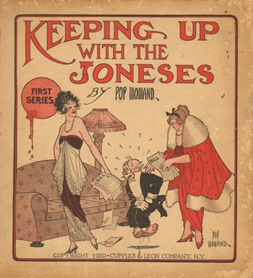
Keeping up with the Tech Joneses

The Joneses have been around a long time. Heck, I’d wager that Mr. and Mrs. Caveman even had their issues with keeping their boulders as polished and their campfire as bright as the those of the next door rock-dwelling clan. Given that, it probably shouldn’t be any real shocker to notice a sense of envy when a high tech-oriented doc (i.e., me) finds himself feeling the pull to get the latest and greatest gadgetry for his office when confronted with the wow and wonder of another office that has just installed the newest techno-marvel system or device.
image

It isn’t that we don’t have a pretty gadget-heavy office; we do. But in today’s rapid fire technology advancement world, what once was the best thing since sliced bread pretty quickly becomes crusty and stale, perhaps even a little moldy, when compared with HITland’s most recent baked goods.

Having a cutting-edge office, techno-wise, isn’t easy, especially if you don’t have a multimillion-dollar endowment fund, a clutch of support geeks upon whom to rely, and a research department to keep you up to date on HIT’s breaking trends. Plus, it gets even harder when best laid digital plans don’t deploy as predicted. A few cases in point:

  • Hardware: Faster processors, mucho more memory, higher rez monitors, touchscreens, tablets, better scanners, newer printers, higher bandwidth modems and routers, and on and on. (It wasn’t that long ago when “hardware upgrades” mainly involved newer pens, and those were typically free in bulk from drug reps!)
  • Operating Systems: Windows Server 2003 and 2005, XP, Vista (yes, we used Vista), Windows 7, Windows 8 – lots of updates in a relatively short time. (Thank goodness that Windows 10 is free.) I remember when, less than two decades ago, “operating system upgrades” were newer charts, nicer paper. and maybe sturdier clipboards. The upgrade costs were oh-so-nominal.
  • Associated Software (Server, Security, Productivity, etc.) Versions 1.0 to X.X: Upgrades, upgrades, upgrades. The software does get better, but the verdict is out on whether the seemingly endless cash drain is matched by the “improvements.”
  • Patient Portal, Part 1: Back near the beginning of this century, we bought a not-inexpensive EHR that included a patient portal. (This was at a time when very few folks were even talking about such things, when “patient-centered” medical care was mainly the mantra a few “radicals” trying to change the doctor-as-God healthcare model.) That portal wasn’t very pretty – it was actually butt-ugly – but we were promised that it was “on the dev timeline” for improvement. Considering how lovely the rest of the EHR was, we thought it would advance and so also purchased two touchscreen monitors. (This was back in Windows XP days, when touchscreens were relatively uncommon.) These touchscreens were for patients to use at our reception area to log in and access/update their patient data. Fast-forward some years, and that EHR system was acquired-acquired-acquired-sunsetted without one further tweak to the portal. Purchased, but never used.
  • Patient Portal, Part 2: After moving onto a new EHR, we found ourselves again with an included patient portal that, despite the beauty and remarkable workflow of the main system, was not very attractive and wasn’t very functional for our use. (I think it was lower priority, mostly built to address MU.) Thus, we set about finding an absolutely beautiful standalone patient portal that was perfect for our families. Only a year or two later and this system was also acquired and sunsetted. More time, money, and energy invested on a very brief, short-term return.

Recently having visited a nice, new large-group practice with all the techno bells and whistles, I’ve felt a real pang to purchase and deploy sleek, new gadgets and find a new system with a really good patient portal. But, beside the immediate financial impact, workflow disruption, and time costs involved with such changes, several nagging thoughts continue to halt my “keeping up with the Joneses” ambitions:

  • Does the “latest and greatest” really have a measureable enhancement on patient care? That is, are we not doing something now for those we serve that better tech would then allow?
  • Does there ever come a point where the investment in HIT slows, or at least decreases?
  • How much of my kids’ college funds (or of my retirement!) am I willing to keep giving away to keep up with the techno-Joneses?
  • Having the “most high-tech rural pediatric practice” was great when we started, but just how important is it to maintain the cutting edge …  and is “the cutting edge” cutting anything except my bottom line?

image

From the trenches…

“Me? Jealous of you? Bless your little delusional heart.” – Rotten eCards

dr gregg

Dr. Gregg Alexander, a grunt in the trenches pediatrician at Madison Pediatrics, is Chief Medical Officer for Health Nuts Media, an HIT and marketing consultant, and sits on the board of directors of the Ohio Health Information Partnership.


Contacts

JenniferMr. H, Lorre, Dr. Jayne, Dr. Gregg, Lt. Dan

More news: HIStalk, HIStalk Connect.

Get HIStalk Practice  updates.
Contact us online.
Become a sponsor.

JennHIStalk

Readers Write: Assessing Telehealth Adoption in Physician Practices

December 23, 2015 News Comments Off on Readers Write: Assessing Telehealth Adoption in Physician Practices

Assessing Telehealth Adoption in Physician Practices
By Miranda Moore and Megan Coffman

image image

At a time of rapidly evolving technologies – from Uber to Amazon – more physicians are considering how they can use technology to help their patients access care outside of the traditional, office-based face-to-face visit. One way may be through telehealth services. Exploring how physicians are currently using telehealth services is important in setting the stage for assessing the degree to which telehealth services can improve patient care and outcomes, and reduce the cost of care.

In 2014, the American Academy of Family Physicians (AAFP) surveyed 5,000 family physicians randomly selected from the 2014 AMA Physician Masterfile, receiving 1,557 responses (a 31-percent response rate). The survey asked 30 questions to assess demographics, practice characteristics, their attitude towards telehealth, the barriers they see to using telehealth, how they use telehealth, and their beliefs about telehealth.

The Robert Graham Center analyzed the survey results and produced this report. After adjusting the sample to ensure the estimates computed were representative of family physicians across the US, only 15 percent of surveyed family physicians reported using telehealth services in the last 12 months.

The majority of family physicians expressed positive feelings about telehealth. When asked to agree or disagree with statements regarding telehealth, 78 percent either indicated they strongly agreed or agreed that “telehealth improves access to care for my patients,” while 68 percent agreed that “telehealth improves the continuity of care for my patients.”

Considering family physicians believe telehealth could benefit their patients, it is surprising that there are so few family physicians who used the service in the past year. When asked to identify the barriers to using telehealth in their practice, over half indicated that lack of training (54 percent) was a barrier. Additionally, over half of the family physicians listed the lack of reimbursement by insurers (53 percent) as a barrier. Other financial barriers were the cost of equipment (45 percent) and potential liability issues associated with the use of telehealth (41 percent).

Telehealth represents an important avenue to meet the needs of patients. However, more research is needed to identify and quantify the risks, benefits, and costs of telehealth services.

Miranda Moore is  economic & health services researcher, and Megan Coffman is policy research administrator at the Robert Graham Center for Policy Studies in Family Medicine and Primary Care in Washington, DC.


Contacts

JenniferMr. H, Lorre, Dr. Jayne, Dr. Gregg, Lt. Dan

More news: HIStalk, HIStalk Connect.

Get HIStalk Practice  updates.
Contact us online.
Become a sponsor.

JennHIStalk

News 12/22/15

December 22, 2015 News Comments Off on News 12/22/15

Top News

image

The House and Senate pass S. 2425, a bill that provides blanket hardship exemptions that will allow practices and hospitals attesting to Meaningful Use to avoid 2017 reimbursement penalties.


HIStalk Practice Announcements and Requests

image

The news cycle has slowed to a crawl as we approach December 25. This will be the last regular update until business resumes on January 4. I hope everyone has a very merry Christmas and happy New Year! Feel free to drop me a note describing the latest technology you find under your tree or in your stocking on Christmas morning.


Announcements and Implementations

image

Medfusion launches a Spanish-language patient portal.


Government and Politics

image

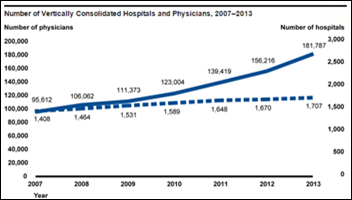
GAO recommends that HHS should consider paying the same Medicare rates for evaluation and management office visits at physician practices and hospitals in order to prevent the current shift of services from lower-paid practice settings to higher-paid hospital settings. The recommendation, made at a time when hospitals are gobbling up practices at seemingly unprecedented rates and raising service prices accordingly, comes with the caveat that any savings had as a result of the equalized payment should be poured back into the Medicare program.

image

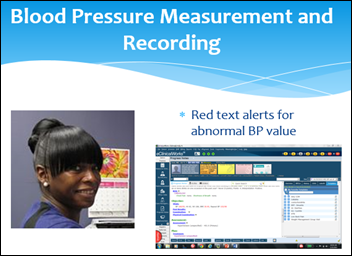
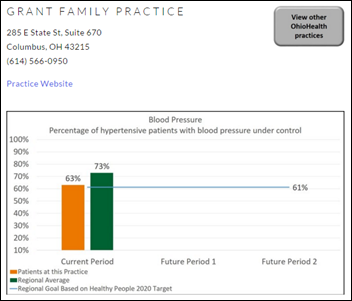
Green Spring Internal Medicine (MD) wins the ONC EHR Innovations for Improving Hypertension Challenge, a two-phase competition run in conjunction with the Million Hearts Initiative that honors practices that have successfully used clinical decision support to implement evidence-based blood pressure treatment protocols.


Telemedicine

image

The Federation of State Medical Boards convenes the second meeting of the Interstate Medical Licensure Compact Commission in Salt Lake City. The group, which now includes 12 states, is working to establish a process that will enable physicians to become licensed quickly and easily in member states.

image

The local news touts the success of the Southwest Medical Associates (NV) NowClinic, a two year-old telemedicine service set up in partnership with American Well. The medical group has performed 1,300 consults so far via the virtual clinic. 


Research and Innovation

image

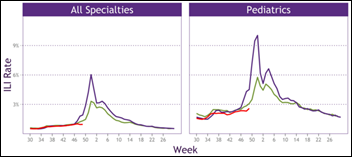
Athenahealth posts the latest flu statistics culled from the diagnoses of over 23,000 primary care physicians. Flu rates remain lower than in years past, with just under 1 percent of office visits resulting in flu-related diagnoses for the week ending December 12. Pediatric visits are also down compared to 2014 and 2013 rates.


Other

image

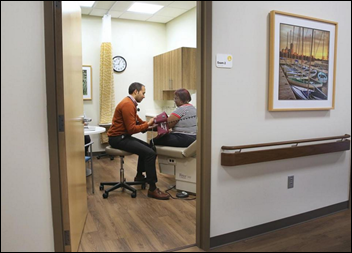
The Boston Globe looks at the non-technology side of primary care chain Iora Health, which emphasizes physician eye contact during EHR charting, and exam room layout of side-by-side chairs for face-to-face conversations.

The DoJ looks into the likelihood that Lyft was involved in the May 2014 data breach at Uber. An internal Uber investigation found that an Internet address potentially associated with the breach was traceable to Lyft Engineering Manager Chris Lambert. The federal look-see comes just as Lyft is in talks to raise up to $1 billion. No word yet on whether Lyft will look to enter healthcare as Uber has attempted to do over the last two years.


Contacts

JenniferMr. H, Lorre, Dr. Jayne, Dr. Gregg, Lt. Dan

More news: HIStalk, HIStalk Connect.

Get HIStalk Practice  updates.
Contact us online.
Become a sponsor.

JennHIStalk

News 12/21/15

December 21, 2015 News Comments Off on News 12/21/15

Top News

image

OrbiMed launches a new venture capital fund, OrbiMed Private Investments, with nearly $1 billion in partner commitments. The fund will target healthcare IT, medical devices, diagnostics, and biopharmaceutical companies in North America and Europe. Past healthcare IT investments include Practice Fusion, Sikka Software, TigerText, and Treato.


Webinars

Here’s the video of Wednesday’s webinar, “A Sepsis Solution: Reducing Mortality by 50 Percent Using Advanced Decision Support,” sponsored by Wolters Kluwer Health and featuring guest presenter Rick Corn, VP/CIO of Huntsville Hospital (AL).

Contact Lorre for webinar services. Past webinars are on our HIStalk webinars YouTube channel.


Announcements and Implementations

image

The Healthcare Collaborative of Greater Columbus launches ourhealthcarequality.org to offer consumers a look at Ohio-based physician performance data. The website includes data on nearly 200 physicians and advance-practice nurses on three measures, plus national goals.


Acquisitions, Funding, Business, and Stock

image

21st Century Oncology, a chain of treatment centers based in Florida with locations throughout the US and Latin America, pays nearly $20 million to settle fraud charges stemming from a whistleblower lawsuit. The whistleblower and former 21st Century medical assistant brought to light a spate of medically unnecessary tests ordered between 2008 and 2012 that were then billed to Medicare and Tricare. The individual will receive $3.2 million for bringing the matter to light.


People

image

Jaime Ojeda (Point of Care Decision Support) joins Meridian Medical Management as general manager and executive vice president of its PrecisionBI division.


Telemedicine

image

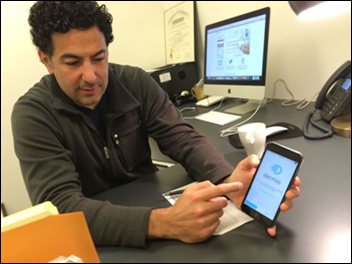
Dave Soleymani, MD develops the Dermio secure messaging app to offer patients an easier way to correspond with him about skin ailments. A video consult version is in the works.


Government and Politics

image

More than 6 million people sign up for January 1 coverage at Healthcare.gov, the deadline for which was extended by two days. The federal government expects over 10 million users to sign up for coverage through the entire enrollment period, which lasts through January.


Research and Innovation

image

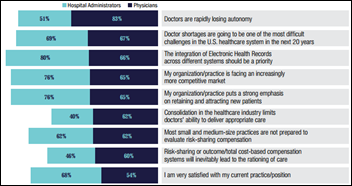
Booz Allen Hamilton’s annual healthcare perceptions study finds that over half of the 1,000 consumers surveyed believe the sharing of PHI is essential to better coordinating and managing care amongst their providers.On a less tech-y note, 24 percent of the 400 physicians surveyed are optimistic about the direction in which healthcare is heading, a stat that remains unchanged from last year.


Other

image

Fox River Counseling Center (WI) alerts 509 patients of a data breach that resulted from the theft of an employee’s unencrypted laptop. The stolen data included the usual personal stats, plus more sensitive medical histories, diagnoses, mental status interviews, psychological testing results, and work-capacity statements. The center has since updated its encryption software.

Security incident response times need improvement: This amusing video depicts the Galactic Trade Federation’s decision to hire a cybersecurity consulting firm to ensure rebels can’t hack the Death Star.


Sponsor Updates

  • Medicity is positioned in the Leaders category in the 2015 IDC MarketScape.

Blog Posts


Contacts

JenniferMr. H, Lorre, Dr. Jayne, Dr. Gregg, Lt. Dan

More news: HIStalk, HIStalk Connect.

Get HIStalk Practice  updates.
Contact us online.
Become a sponsor.

JennHIStalk

Population Health Management Weekly Wrap Up 12/20/15

December 20, 2015 News Comments Off on Population Health Management Weekly Wrap Up 12/20/15

image

Kaiser Permanente announces plans to open a medical school in Southern California. Classes will begin in 2019, and will likely accommodate up to 50 students. “We have the opportunity to help train future physicians on 21st century medicine and be on the cutting edge of all the changes we are experiencing,” says CEO Bernard Tyson. “Our model of care is best for the current and future diverse populations in this country.” The organization has noted there will be a strong focus on population health management, team-based approaches to patient care, and patient engagement.

image

Health analytics company Pulse8 licenses population health management tech vendor Altruista Health’s Chronic Illness and Disability Payment System to better calculate its risk adjustment analytics for Medicaid, Medicare Advantage, and private payers.

image

KLAS Research ranks Atlanta-based Wellcentive as one of the top five vendors of population health management technology.

Greenway Health embarks on the second phase of its population health project with Vanderbilt University Medical Center (TN). Funded by the Patient-Centered Outcomes Research Institute, the next phase builds on the data warehouse development and clinical trials recruitment conducted in 2014. Patient recruitment is expected to increase to 3,000 by October 1, 2016 and to 5,000 the following year. The project will also aim to increase the number of Greenway Health provider sites connected to the data warehouse, growing to nearly 2,000 by 2017.

Pennsylvania-based Pocono Health System and Lehigh Valley Health Network agree to a full-asset merger that will take effect in the first half of 2016. The new entity will develop a “hospital of the future” tentatively named Pocono Medical Center, as well as open additional ambulatory health centers. LVHN representatives see the merger as LVHN part of its commitment to providing more integrated care to the Pocono region through population health management, including sharing a common EHR. LVHN announced it will spend $200 million on Epic over the next four to six years. PHS seems to be an EClinicalWorks shop, so it seems likely the Epic assets played a part in merger talks.


Contacts

JenniferMr. H, Lorre, Dr. Jayne, Dr. Gregg, Lt. Dan

More news: HIStalk, HIStalk Connect.

Get HIStalk Practice  updates.
Contact us online.
Become a sponsor.

JennHIStalk

Platinum Sponsors


Gold Sponsors


Subscribe to Updates


Search All HIStalk Sites


Recent Comments

  1. The article about Pediatric Associates in CA has a nugget with a potentially outsized impact: the implication that VFC vaccines…

  2. Re: Walmart Health: Just had a great dental visit this morning, which was preceded by helpful reminders from Epic, and…

  3. NextGen announcement on Rusty makes me wonder why he was asked to leave abruptly. Knowing him, I can think of…

  4. "New Haven, CT-based medical billing and patient communications startup Inbox Health..." What you're literally saying here is that the firm…

  5. RE: Josephine County Public Health department in Oregon administer COVID-19 vaccines to fellow stranded motorists. "Hey, you guys over there…