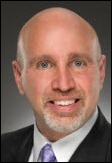
Michael Brozino is CEO of simplifyMD of Alpharetta, GA.
Tell me about yourself and the company.
I’ve had the good fortune to work with very large companies and much smaller companies. After working for Kodak in their digital imaging division for 10 years, I took a risk during the dot com boom with PACS start-up ALI Technologies.
I learned a lot about the importance of company culture. We had some extremely passionate people driving performance for both the customers and the company. The complete alignment on the vision and execution required resulted in an acquisition by McKesson and number one market share. I spent another nine years with McKesson in a number of challenging and rewarding roles ranging from launching new products to running the marketing department.
It’s been an interesting switch to go from the largest health IT company in the world to something much smaller, but I really like being able to establish a culture that is passionate about connecting with customers and finding new ways to solve their challenges. It’s such a nimble environment. We can talk directly with customers and then turn around and integrate their comments and needs into the product.
simplifyMD was formed seven years ago and remains privately held. We have a brand promise of a simple experience that is foundational to everything we do, both externally and internally. It is core to our culture. We serve an established customer base of dozens of practices that range from one to 75 physicians per organization across a number of specialties.
I’m very proud of the fact that we’ve had a 100 percent success rate for our physician base that chose to attest for Meaningful Use Stage 1. It confirms that we’re meeting the physicians’ needs for an EHR and providing the support they need to complete attestation, all while meeting our brand promise of simplicity.
Which companies are your most direct competitors and why do you think your offerings are superior?
There are hundreds of EHR companies out there, ranging from monolithic to freeware. We fall about in the middle with a cloud-based SaaS offering that takes a lot of the burden off of a physician or practice manager. We like to say that it’s “your forms, your charts, your workflow,” and we mean it.
The key to our success is that we make the process of EHR adoption easy. You’ll see the word “simple” in so many things that we say when talking about the simplifyMD EHR solution. We’ve done everything we can to make it simple to buy, simple to learn, and simple to use.
What we’ve seen with so many EHRs is that they require a great deal of attention from the physician during the exam process. Instead of focusing on the patient experience, the physician is staring at a screen and interacting with hardware.
simplifyMD lets doctors be doctors. They can interact with patients and focus on the patient’s needs rather tending to the computer. simplifyMD requires virtually zero clicks during a patient encounter but still allowed us to facilitate 100 percent MU attestation for practices that desired to do so. Our approach is truly unique and remarkable because it doesn’t force a technology-focused workflow onto a practice or physician.
Everybody talks about product usability and the ONC seems interested in transparency in that area. What efforts does the company make in terms of usability and how do you see market demand affecting that?
Typically EHR systems have been created by programmers who know what data is required but ignore how a practice actually operates. They set up a rigid system to collect and process information and then are surprised that physicians resist adhering to a new set of rules and procedures. I believe that’s why you hear so much about physician frustration with EHRs.
We took the opposite approach. By letting a practice use its existing forms and workflow, we eliminate the need to learn a new system and speed adoption. We continue to listen to the customer and update the software every 90 days based upon requested usability enhancements. So rather than forcing physicians to adapt, we help them adopt.
The fact that we are the easiest to use EHR on the market is confirmed by our customers, multiple product reviews, and even KLAS. Usability is our lifeblood. Practices use their existing charts and forms and follow their existing workflow, which makes adoption easier. Physicians can still use paper if that’s preferred and write, type, or dictate to complete forms. Yet the system captures deep outcomes data on patients for analysis and inclusion in larger research data sets.
Do you believe all specialties are adequately represented in Meaningful Use and in EMR design?
If you ask a specialist, they will probably say that Meaningful Use is insensitive to their discipline’s specific needs. In reality, it’s very difficult to address every aspect of every specialty. From an EMR design standpoint, there are some very good systems that focus solely on a specialty area, such as radiation oncology, that have very complex workflows. That complexity also means lengthy installs and high price tags. At simplifyMD, we strongly believe that there are aspects of workflow and information use that are unique to specialties and we serve 30 different medical disciplines.
What makes each specialty unique is the type of body area, specific diseases, and conditions it focuses on, and the reason they’re special is that their workflows for diagnosing and treating are different. Because we allow each practice to use their own forms, their own workflows, and their own specialty-specific charts, we’re able to adapt to the specialty rather than asking them to adapt to our technology. simplifyMD also makes multi-product and device integrations easier, so in those rare cases when our solution can’t adapt to their specific requirements, we simply integrate with their unique devices and software extensions.
Some have speculated that further Meaningful Use stages will consolidate the EMR market as less-capable vendors either stop trying to keep up or sell out to a competitor. How do you see that playing out?
When new market opportunities open up you see a lot of activity from a wide range of companies, and healthcare is no different. The promise of obtaining incentive pay brought a lot of new companies into the EHR marketplace, many of whom had no experience in the heavily regulated healthcare market. They slapped a label on some data collection software and called it an EHR.
Practices made their decisions based on the three Ps: panic, promises, and price. They knew they needed to get to attestation and they were in a state of panic. A lot of companies were making a lot of promises, which vaporized during actual use. And since everyone is looking for a good deal, it was natural to select the low price solution.
Now they are reluctantly looking at replacement products and it’s a much wiser marketplace. After being forced to adapt to how their EHR software worked, physicians are seeking a solution that allows them to maintain their practice’s workflow while still moving towards Meaningful Use Stage 2 certification.
The opportunistic smaller solutions providers are starting to fade away. The large companies that added healthcare to their product set are either seeing success and will continue to develop their solutions, or will find the regulatory environment so stifling they’ll sell off that portion of their business. I believe that in two years there will definitely be fewer, but much better companies selling EHR solutions.
How does your company address privacy and security issues given your cloud-based platform?
Based on the preference expressed by a customer, we support both cloud-based and on-premise deployments. Our basic privacy requirements are founded, of course, on existing HIPAA regulations as well as the new Omnibus rules recently released. simplifyMD’s technical security strategy starts with banking-style authentication and encryption that follow NIST controls such as sophisticated firewalls and security training for our staff. On top of that we added Department of Defense style anti-hacking tools.
Realizing that there is no 100 percent guaranteed security solution, we built deep auditing and tracking tools in addition to the HIPAA-compliant security foundation so that if there ever is a data leak or spill, we can find out which customers are affected and meet our reporting requirements quickly.
What does your five-year plan for the company look like?
Our formula for success sounds simple, but in actuality can be difficult to implement. First, you start with a solid product that customers really need – and we certainly have that at simplifyMD. Next you deliver what you promise. We’ve seen so many practices that are disillusioned because the promises they heard during the sales process weren’t fulfilled by the product. We just don’t do that. And finally, you support the heck out of it.
Our current focus is on Meaningful Use Stage 2 certification and development work is well underway. All requirements will be met over the next two releases. And because we push those releases out automatically through our cloud-based platform, the impact on our customers will be minimal.
Probably one of the hottest topics in the field of EHR is how to facilitate patient access and interaction with their personal health information. That’s an area that we plan to address in the future, focusing on how to simplify the process for both patients and physicians.
Another industry hot button is the integration of mobile technologies into EHRs. The need to maintain security while facilitating bi-directional communications is a challenge and one that we are currently tackling.
What will not change is our culture. We will continue to be a passionate group of people focused on creating customers for life. We do that with outstanding service coupled with a product that is easy to learn, easy to use, and meets the evolving needs of our customers.










The article about Pediatric Associates in CA has a nugget with a potentially outsized impact: the implication that VFC vaccines…