Home » News » Recent Articles:

News 1/10/12

January 9, 2012 News Comments Off on News 1/10/12

1-9-2012 2-32-04 PM

The Miami paper profiles CareCloud, an up-and-coming provider of a cloud-based PM solution. The company has hired 30 people in the last five months (110 total employees) and raised $20 million in new VC funding. CEO Albert Santalo says the company is not yet profitable, though it grew revenues about 600% in 2011. The basic solution is $499 a month. It also offers an RCM option based on a percentage of collections and just rolled out an EHR.

US health spending grew 3.9% in 2010, which was only .01 percentage points faster than the 2009 rate and the second-slowest rate in 51 years. The slower growth is blamed on high unemployment, loss of private health insurance coverage, lower median incomes, and higher patient deductibles and co-pay. Total 2010 spending was $2.6 trillion, or $8,402 per person.

1-9-2012 3-55-35 PM

At the same time healthcare spending is falling, payer reimbursements are declining. The average commercial payer reimbursements for new and established office visits fell 2.86% in 2011, though Medicare paid more than commercial payers for almost all office visits.

1-9-2012 3-43-52 PM

Physician RCM provider MDeverywhere partners with collection agency Transworld Systems to jointly promote their services.

1-9-2012 3-59-00 PM

Pediatric Orthopaedic Associates (GA) selects SRS for its 12 providers.

Wayne Physical Medicine (NY) and LC Internal Medicine Clinic (LA) choose Waiting Room Solutions’ PM/EMR solution. Waiting Room Solutions also just partnered with UnityFax to offer its clients integrated inbound fax service.

1-9-2012 3-59-53 PM

The 46-provider Northeast Georgia Diagnostic Clinic contracts with MediRevv for AR management.

1-9-2012 4-02-27 PM

The American Academy of Pediatrics and Sanofi Pasteur introduce vaccine packaging technology that includes a 2D scan for tracking lot numbers and expiration dates. Pediatricians will no doubt be sending enhancement requests to their software vendors to integrate 2D scanning with their EMR application.

The number of physicians employed by hospitals has grown by 32% since 2000. Hospitals employ 212,000 physicians, or about 20% of all physicians.

Inga large

E-mail Inga.

DOCtalk by Dr. Gregg 1/7/12

January 7, 2012 News 3 Comments

“No Soup for You!”

The Soup Nazi. Another Seinfeld expression that has penetrated modern cultural phraseology.

I’m guessing there are very few folks unfamiliar with the Seinfeld phenomenon whereby so many turns of phrase have eked into our communal awareness and lingo from just one TV show, albeit one very cleverly written TV show.

Thus, due to this social phenomenon, I could not help but conjure up the Soup Nazi’s “No soup for you!” when discussing the upcoming HIMSS Annual Conference & Exhibition with a friend the other day.

clip_image002

“What in the heck do soup and HIMSS have in common?” you might wonder.

Well, remember when Elaine thought she was ordering from the Soup Nazi? She commented that he looked “exactly like Al Pacino, you know, Scent of a Woman, hoo-ahh, hoo-ahh!” only to have her order for some yummy soup rebuffed with a Gestapo-esque, “No soup for you!”

Similarly, my desire to attend this year’s conference has been “no soup for you-ed” by HIMSS and its schedule change. There’s just no way that I could afford to pay both the costs of attending AND the costs for being away from the office during the majority of a work week. Not unless I use HIMSS as my vacation. (Uh… no… I don’t think so.)

Previously, it was hard enough to attend on the weekend and a Monday or Tuesday. Time away from the office is time when no income is being generated, losing thousands of dollars as bills pile up and still paying staff to man the fort. But, it was doable and worthwhile, especially to be able to attend all the HIStalk fun – i.e., HIStalkapalooza, et al.

I get that HIMSS is more and more oriented toward the vendor world and the large provider institutions, despite the fact that over half of healthcare is still delivered in smaller communities by smaller practices. It makes more sense for them to have their salaried folks come during their regular work week than to pay their people extra to travel/work on the weekend. But for me and, I’m suspecting, most of my small trench ilk, that is the exact opposite logic for our needs.

Then, on top of being “no soup for you-ed” on the event timing, the HIMSS meetings seem to me to have pretty much taken on a “big boys” focus. (No gender discrimination intended.) It makes me sort of miss TEPR – Toward the Electronic Patient Record – Conferences that, while not as well run as HIMSS, had a much greater end user focus with a nice blend of vendor “ooo” and “ahhh” mixed in with meetings and talks that were more useful for us onesy-twosies.

I’m still a HIMSS member, but I feel my membership has been a bit rebuffed just as were Elaine’s comments to the Soup Nazi.

Realizing how late it is to be whining about this and realizing , too, how little effect my whine will have, I nevertheless felt compelled to throw this out into the Internet air, just a mini-bitch on behalf of us little guys who so often get left out of the “soup.”

From the trenches…

“Do you ever get down on your knees and thank God you know me and have access to my dementia?” – George Costanza

Dr. Gregg Alexander, a grunt in the trenches pediatrician at Madison Pediatrics, is Chief Medical Officer for Health Nuts Media, directs the Pediatric Office of the Future exhibit for the American Academy of Pediatrics, and sits on the board of directors of the Ohio Health Information Partnership (OHIP).

News 1/5/12

January 4, 2012 News Comments Off on News 1/5/12

From WatchDog “Re: Appeals. Thought you might want to remind your readers that the Affordable Care Act included a new provision for appealing the PQRS and e-prescribing programs. The informal process goes into effect now for the 2011 year.”  Good to know. Finding details on the appeals process on CMS Website  isn’t exactly easy, but I think I finally found the right link. If you think a mistake was made on your PQRS or e-prescribing data, you can contact the QualityNet Help Desk to request a review.

Doctor’s Medical Center (FL) selects Vitera Healthcare Solutions’ Intergy Meaningful Use Edition for its 23-physician practice.

1-4-2012 11-11-37 AM

The local paper reports that more than 28,500 patients have access to Buffalo Medical Group’s (NY) patient portal, which is based on Epic’s MyChart. The 100 physician practice recently announced the availability of MyBMGChart from iPhones and Android-based smartphones.

Pacific Eye Specialists (CA) picks SRS EHR for its 10 provider group.

Practice Fusion updates its e-prescribing software, including changes to improve the overall workflow, make medication searches easier,and  simplify drug and allergy interaction alerts

iPractice Group achieves Gold Status as a partner in Greenway Medical’s Business Alliance program.

CareFirst BCBS is offering a free version of Medical Home Builder 2.0 software from the American College of Physicians for practices participating in its PCMH program.

1-4-2012 5-50-23 PM

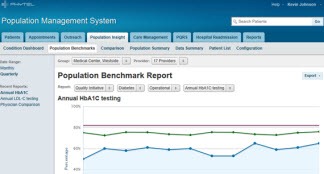
NCQA approves  the use of Phytel solutions to meet certain NCQA requirements for PCMH recognition.

1-4-2012 5-48-05 PM

Welch Allyn CEO Julie Shimer announces she will retire at the end for 2012.

The American Academy of Urgent Care Medicine partners with Quest National Services to offer its members Quest’s billing and EMR solutions.

1-4-2012 4-30-13 PM

A local paper profiles Dr. Kurt Frederick (TX) and his extensive use of Twitter and other social media tools. Frederick contends that more providers will use social media tools in the future as compensation becomes more closely tied to keeping patients well. In addition to engaging patients on Facebook with fun posts, such as his “Are You Smarter Than a Medical Student?” series, Frederick also shares personal details of his life, which he believes creates a bond with patients.  Frederick’s philosophy:

Patients want to know what we read; what we think about things. They want to know about our families.

Inga large

E-mail Inga.

News 1/3/12

January 2, 2012 News Comments Off on News 1/3/12

1-2-2012 5-06-45 PM

ZirMed will offer its RCM solutions to the outpatient surgery and ambulatory care provider customers of  AmkaiSolutions.

1-2-2012 5-07-57 PM

The 21 providers at Rockford Orthopedic (IL) receive checks totaling $378,000 from CMS for their meaningful use of eClinicalWorks EHR.

1-2-2012 5-08-51 PM

ManagementPlus donates $140,000 in software to the People’s Health Clinic (UT), giving providers access to its EHR 5.0 software.

1-2-2012 11-42-34 AM

Emdeon appoints Rich Amico VP of information technology and IT principal for its Institutional Provider Services unit. He was previously SVP of business technology for Healthways.

1-2-2012 11-47-16 AM

EMR/PM provider CareCloud hires pediatrician Juan J. Reyes, MD, MBA as director of clinical technologies.

ProHealth Care (WI) will add several hundred physicians to its Epic system by the end of 2012 as part of a lease program for area independent physicians.

Solid advice for practices considering a cloud-base system: include both pre- and post-implementation expenses when calculating the total cost of ownership. Some extras to consider include implementation and consulting fees, Internet connectivity, network requirements, ongoing maintenance, technical support, conversion fees, and replacement costs for outdated hardware.

1-2-2012 5-03-35 PM

I am back from that slower-paced part of the world that Mr. H labeled the “Land Without Broadband.” After the first day in the 3G-less world, I gave up on everything but the most basic e-mail and quit trying to scour the Internet for HIT news. Instead, I read a couple of books, got a little sunshine, and drank a bit of wine (ok, more than a bit, but that’s what vacations are for, right?) I’m happy to be back at it and contemplating what 2012 will bring. My insights for HIT in the New Year are not particularly unique, but I predict we’ll continue to see practices merge with larger practices or health systems as providers look for ways to reduce overhead and align themselves in preparation for ACOs and similar care models. Also, as smaller practices disappear, so will several of the smaller niche vendors who realize that the continued development of their product is economically unfeasible in light of shrinking customer bases and new government requirements. Finally, more cash-strapped providers will embrace cloud-based, hosted, and/or “free” EMRs in hopes of achieving Meaningful Use objectives.

1-2-2012 5-01-46 PM

The other big New Year’s tradition is, of course, resolutions. Many of mine are the same as last year, including 1) lose five pounds, 2) exercise at least three times a week, and 3) eat healthily. I’m thinking this should be the year I add, “keep off the five pounds all year long,” but then I might be forced to give up my secret indulgence: dark chocolate espresso beans.

Inga large

E-mail Inga.

Bowtie Confidential: What I Expect in 2012 12/28/11

December 28, 2011 News 1 Comment

As a consultant who spends many hours flying (or more likely, sitting in airports waiting to fly) to various parts of the country to meet with clients, I have ample time on my hands for reflection. Over the past few weeks, I have reflected on how I have spent my time over the past year in client-related work and where I see my time being spent in 2012.

It is clear that there are three major areas where clients want my help. The first is related to Meaningful Use. Three years ago, these clients were asking for my assistance to select an EMR. Now, they are looking for help with implementation of the system they purchased, system maximization, or the amelioration of some problem that is preventing them from successfully attesting to CMS for Meaningful Use dollars.

The second area is ACOs – should they participate, what they need to do to be successful, what IT will they need in place, etc.

The third area is ICD-10. In this particular area, people would like me to convince the feds that conversion is too expensive, too time consuming, too complicated, too (you fill in your choice of adjectives). For this article I will concentrate on the first two topics; the third I will handle next time (maybe the feds will listen to your cumulative prayers and delay implementation so I will need a different topic).

I have always been fascinated with numbers and thought that I would share some very interesting figures put out by our friends at CMS over the past few weeks. I will also be showing you some interesting factoids related to ACO development.

The first set of statistics is related to Meaningful Use and the incentive payments that have been made thus far. These numbers are supplied by CMS and are current through the end of November 2011.

CMS is on schedule to disperse approximately $2 billion in payments to physicians and hospitals (in their terminology – EPs – eligible providers). More than 155,000 physicians have registered to participate in this program, with a 3:1 ratio of physicians participating in the Medicare program compared to the Medicaid program. From those registered participants, slightly more than 21,000 have completed their attestation.

Think of what this means. Fewer than one in seven physicians who have registered have gone on to the attestation process. There will surely be an attestation stampede in 2012 with the final date for qualifying for full first year funding being October 1, only 90 days prior to the end of calendar year 2012. I think that it is safe to predict that tens of thousands of physicians will be submitting their attestation in the second half of 2012. What does this mean for payment speed to these providers? Your guess is as good as mine.

From the 21,000 physicians who have submitted their attestation, 444 were unsuccessful. This says something very positive about the early adopters. On the hospital side, 769 hospitals completed attestation and not one was unsuccessful.

One last set of statistics that may be of interest to you: from the entire universe of physicians, the number of physicians who have registered is 28%. This is 5% less than the generally accepted EMR adoption rate of 33%. On the hospital side, 58% of all hospitals have registered to participate in this program.

According to a recent survey by UnitedHealth Group, only 60% of physicians know what an ACO is. From this group, 28% indicated that they were considering joining/forming an ACO. That translates into the fact that less than 20% of the physicians surveyed are planning to participate in an ACO in some way.

A study by Leavitt Partners indicates that there are 164 identified ACOs spread across 41 states. The states with the most ACOs are CA, MI, OH, TX and WI. States with the no ACOs include AL, AK, AR, DE, DC, ID, KS, MS, NV, ND, RI, VT and WV. These ACOs are being sponsored by hospitals, hospital systems, insurers, joint ventures between insurers and hospitals/hospital systems, etc. Nearly 100 of these ACOs are sponsored by hospital systems, 38 by medical groups, and 27 by insurers.

As I mentioned, multiple physician and hospital organizations are asking me, “Should we participate in an ACO?” My response is usually the same – look at the competitive marketplace, ask yourself if you have several million in cash sitting around collecting dust, an underutilized IT shop, etc. What is your relationship with the medical staff, or conversely, the hospital CEO – do you trust each other to be business partners going forward? Where are you going to find real-time case management services?

The decision to participate in an ACO is a serious and far-reaching decision. Have you done your economic, political, and organizational homework to maximize your chances of success?

Unless you can answer affirmatively to all of these questions, I would be extremely cautious about moving forward.

I spent a part of my afternoon today speaking with a financial analyst from one of Wall Street’s best-known firms (yes, there are still a couple of them still around). The topic of conversation was how quickly will ACOs grow and what will their market penetration be in 2016.

This individual had no doubt that ACOs are here to stay and wanted to know which model would be the dominant player in five years. I tried to explain to him that his view was not a sure thing; that providers are, in most ways, risk averse. Telling a Wall Street venture capitalist that someone is risk averse is not a pleasant thing to do.

I rattled off the usual litany of issues – that of the nine original demonstration projects only one (Marshfield) made a reasonable profit for their efforts. That it was going to be hard enough for physicians to partner with hospitals, but for physicians and hospitals to partner with insurance companies might still be a stretch. That the level of capital that needed to be invested to make ACOs truly functional is unreachable for most provider organizations that I work with, etc.

I don’t think that I was successful in getting my point across. He explained that “The Street” saw this as the next big thing. For anyone who has had their retirement plans delayed or have had to continue working to pay for their kids college, betting on Wall Street’s vision of the ‘next big thing’ should be interesting, to say the least.

12-28-2011 7-39-24 PM

Don Michaels, PhD is vice president, strategic and advisory services, for Hayes Management Consulting and teaches healthcare IT for the Harvard School of Public Health.

Platinum Sponsors


Gold Sponsors


Subscribe to Updates


Search All HIStalk Sites


Recent Comments

  1. The article about Pediatric Associates in CA has a nugget with a potentially outsized impact: the implication that VFC vaccines…

  2. Re: Walmart Health: Just had a great dental visit this morning, which was preceded by helpful reminders from Epic, and…

  3. NextGen announcement on Rusty makes me wonder why he was asked to leave abruptly. Knowing him, I can think of…

  4. "New Haven, CT-based medical billing and patient communications startup Inbox Health..." What you're literally saying here is that the firm…

  5. RE: Josephine County Public Health department in Oregon administer COVID-19 vaccines to fellow stranded motorists. "Hey, you guys over there…