Recent Articles:

News 5/14/13

May 13, 2013 News 1 Comment

5-13-2013 4-42-17 PM

Texas State University selects eClinicalWorks EHR and Patient Portal and the Health & Online Wellness PHR smartphone app for its student health service.

McKesson Specialty Health launches the oncology-specific iKnowMed Generation 2 EHR.

Emdeon announces Q1 results: revenue up 6.9 percent to $305.7 million; adjusted income down 3.1 percent to $76 million.

The number of patient visits to doctors’ offices fell 0.9 percent in 2012, which represents a lower level of decline compared to two years ago. I didn’t have access to the full report, but I am sure there is some correlation between lower utilization rates and the 30 percent jump in annual average out-of-pocket costs for commercially insured consumers under the age of 65 to $1,146.

5-13-2013 1-35-39 PM

The average annual net revenue generated last year by primary care physicians on behalf of their affiliated hospitals for referrals, admissions, procedures, and tests was $1.57 million. That compares to $1.43 million generated by specialists. Authors of the Merritt Hawkins-sponsored survey suggest that the nine percent increase in revenues generated by primary care providers since 2010 may be the result of the recent trend toward hospital employment of physicians.

Malo Clinic Center for Ambulatory Surgery (NJ) contracts with PriorityOne Group for IT implementation and integration, including hardware and EHR/PM software procurement and deployment.

5-13-2013 1-54-48 PM

Athenahealth completes its $168.5 million purchase of the Arsenal on the Charles complex in Watertown, MA, which includes 29 acres, 11 buildings, and 760,000 square feet of office space.

The AMA board of trustees issues a report that evaluates ICD-11 as an alternative to moving to ICD-10. The conclusion:

Our AMA harbors serious concerns and reservations with the significant burden of the ICD-10 mandate and will continue to convey these points to policymakers in Washington. However, given the even greater complexities and uncertainties with moving directly from ICD-9 to ICD-11, the Board of Trustees believes skipping ICD-10 and moving directly to ICD-11 is fraught with its own pitfalls and therefore, based on current information available, is not recommended.

The AMA, by the way, grew its membership ranks 3.2 percent last year to 224,503, or, about 27 percent of all actively practicing US physicians.

Proposed legislation in Texas would allow licensed healthcare providers to collect or verify patient information with a swipe of a patient’s driver’s license.

5-13-2013 2-32-44 PM

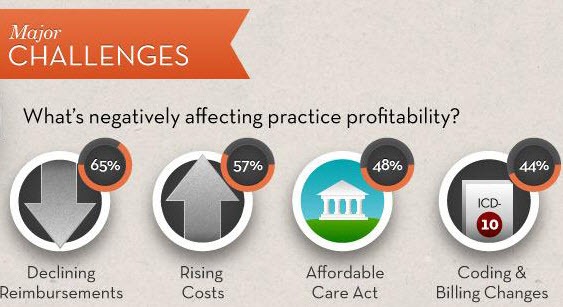
As the federal government pushes for EMR adoption, auditors and lawmakers are simultaneously worried that the enhanced billing features in EHRs may be contributing to the increased rate at which physicians bill for higher-level service codes. Between 2002 and 2010, the percentage of Level 4 or Level 5 established patient office visits increased from 25 percent to 41 percent. The HHS Office of Inspector General says the trend reflects better coding education and an increased proportion of Medicare beneficiaries with chronic conditions.

5-13-2013 3-05-46 PM

An eight-country survey of physicians finds that 93 percent of US physicians report using an EMR. E-prescribing rates were highest (65 percent) among US providers, as were rates for entering patient notes into EMRs (78 percent.) While the majority of doctors in all countries report EMR and HIE have had a positive impact on their practice, US doctors were the least likely to report that their use reduced organizational costs.

5-13-2013 3-15-46 PM

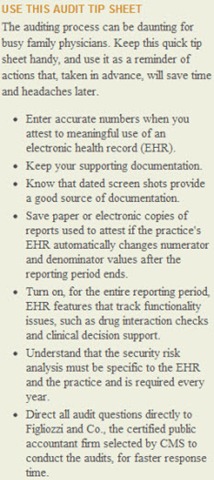
ONC looks at how RECs have helped nurse practitioners and physician assistants with EHR adoption. Some key stats:

  • About 50 percent of all primary care NPs and 44 percent of primary care PAs are getting help from a REC
  • 80 percent of NPs and PAs enrolled with a REC use an EHR
  • REC-enrolled NPs and PAs have received more than $168 million in incentive funds from CMS.

5-13-2013 4-03-38 PM

Please join me in welcoming PerfectServe as HIStalk Practice’s newest Platinum sponsor. The company offers the PerfectServe Practice call management process, an automated after-hours call routing process designed around an individual practice’s workflow, call schedule, and contact preferences. When a call comes in from a patient or colleague, PerfectServe responds based on the rules for that moment, assembles the correct call path, and then routes the call appropriately via any specified messaging device or phone. The need for operators to read and interpret instructions for each call is eliminated, as is the potential for human error. Pricing for unlimited after-hours usage starts at $119 per month and the company offers a 30 day risk-free trial. Thanks to PerfectServe for supporting HIStalk Practice as well as HIStalk and HIStalk Connect.

Inga large

E-mail Inga.

News 5/9/13

May 8, 2013 News 1 Comment

5-8-2013 3-03-08 PM

Surescripts releases its 2012 National Progress Report on e-Prescribing, which showed a 38 percent jump in e-prescribing routing from 2011. Other highlights:

  • 489,000 (69 percent) of office-based physicians actively prescribed in 2012, compared to 390,000 in 2011.
  • Nearly half of patient visits generated an electronically delivered medication history, up from 31 percent.
  • 98 percent of chain pharmacies and 85 percent of independent pharmacies accepted e-prescriptions.
  • Internists led other specialties in e-prescribing rates at 93 percent, followed by cardiologists (85 percent), family practice physicians (84 percent), and endocrinologists (84 percent).


5-8-2013 3-28-38 PM

The 75-physician Tennessee Oncology selects Navigating Cancer’s Patient Engagement Portal.

5-8-2013 4-19-42 PM

Allscripts will add 350 new jobs over the next five years in Raleigh, NC as it consolidates its US engineering centers. State officials will extend up to $5.35 million in incentives if Allscripts meets investment and hiring goals, plus maintains the 1,266 jobs currently in Raleigh. The company is expected to invest $2.8 million to expand its Raleigh facilities.

5-8-2013 3-30-25 PM

CMS creates a timeline for aligning quality measurement and reporting for multiple initiatives. CMS notes that for 2013, individual EPs can implement the PQRS-EHR Incentive Program Pilot. By 2014, CMS says the PQRS EHR reporting options will align, including CQMs, reporting criteria, and the reporting mechanism in the 2013 physician fee schedule and Stage 2 of the MU program. CMS has provided additional timelines for eligible hospitals and for group practices.

J.M. Winston Radiology Associations (PA) contracts with McKesson Revenue Management Solutions for billing and compliance services.

5-8-2013 1-42-29 PM

PerfectServe launches DocLink, a HIPAA-compliant network for texting, voice messaging, and physician-to-physician communication.

Amarillo Legacy Medical ACO (TX) selects eClinicalWorks Care Coordination Medical Record to advance its ACO objectives and coordinate care among its 100+ provider members.

5-8-2013 3-48-08 PM

A former director for Tennessee-based EHR developer MedRx Systems is indicted for stealing more than $60,000 from the company in 2011. Roger Finchum, Sr. is accused of making a cash withdrawal from the company’s checking account and using a company check card to purchase food, drink, fuel, snacks, and groceries. A quick Google search reveals that Finchum has been accused of participating in various scams in recent years.

Inga large

E-mail Inga.

Readers Write: Regarding the Nightmare on EHR Street

May 7, 2013 News 3 Comments

Regarding the Nightmare on EHR Street
By Frederica Krueger

I find it ironic that the AMA is complaining about the fact that physician documentation in an EHR is "pure torment." Perhaps they believe in the “Hypocritic oath?”

The reason for this documentation torment is the need to record multiple pieces of information that the physician asked or reviewed but that don’t end up contributing to the synthesis of the clinical picture or the plan of evaluation and treatment. Cluttering up notes with such information is often made worse by the formatting afforded by the EHR. It also detracts from EHR usability and patient safety.

The irony is that the underlying cause of this nightmare is the E&M coding system used to bill for clinical services.

And, that the E&M codes are part of the CPT system that is developed and sold by … the AMA!

The E&M coding system was cumbersome and inane long before EHRs became readily available. In the past, it was just too much trouble to document everything that you actually did to meet the E&M requirements and too hard to keep track of all the arcane rules. But everyone naturally assumes that a computerized system should help remind you of these confusing requirements and facilitate recording of the irrelevant info that was already needed for billing purposes.

With EHRs, there is a much greater focus on appropriate recording and coding at the physician level. It’s not surprising that physicians attribute the documentation horrors to the EHR rather than the CPT.

If the AMA really wanted to do something about the torment of EHR documentation, it would:

  1. Stop developing (and selling) the CPT manual. In other words, the AMA should put its money where its mouth is.
  2. Advocate for a common sense approach to determine whether physician documentation is or isn’t "fraudulent" rather than the current Checklist Menu approach.
  3. Recognize that most physicians are just trying to do right by their patients, and that they could do this much more efficiently — EHR or not — without having to deal with the E&M coding system. The crooked physicians will figure out how to scam the system anyway, so why waste time and money and frustrate the rest of us with E&M codes?

Despite the fact that I’ve gone for 30 years of medical practice without joining the AMA, I would sign up in a microsecond as a way of expressing my gratitude if the AMA eliminated (and got insurers and CMS to eliminate) all use of the E&M coding system.

While they’re at it, it would be nice to get rid of the RUC, RVUs and the RBRVS system, but that is less relevant to EHR torture per se.

News 5/7/13

May 6, 2013 News Comments Off on News 5/7/13

5-6-2013 3-08-49 PM

During a CMS Listening Session, AMA board of trustees Chair Steven Stack, MD says EHRs create “an appalling Catch-22 for physicians.” Stack criticized the federal mandate to implement EHR under threat of monetary fine while simultaneously accusing practices of cloning records and committing fraud when using template-based EHRs to create near-uniform physician documentation. While acknowledging efforts by ONC to improve usability, Stack also noted that “documenting a full clinical encounter in an EHR is pure torment.”

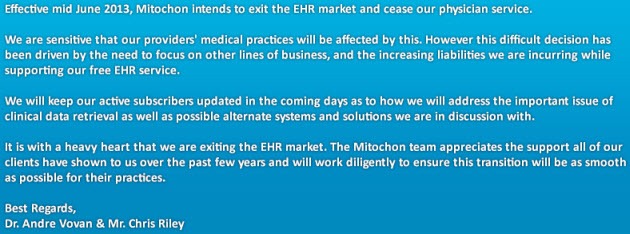
American Medical News investigates legal issues facing Allscripts following the company’s announcement to discontinue sales and support of its MyWay product. Anesthesiologist Robert Joseph, MD, initiated a class-action lawsuit late last year on behalf of the 5,000 physicians who purchased the MyWay product, contending the software was so difficult that his practice’s revenues fell 50 percent in a year and caused his office manager to quit. Allscripts declined to return Joseph’s money or let him out of his contract, instead offering him a free upgrade to its Professional platform. Since the original suit was filed, a judge has denied Allscripts’ motion for dismissal. Allscripts filed an appeal, the appeals court ruled in favor of the physicians, and the suit has been allowed to move forward. Meanwhile, Cardinal Health 200 LLC filed a separate suit, saying it paid Allscripts $5 million for 1,250 licenses for MyWay only to learn that it would not be enhanced to support ICD-10 and MU. Cardinal contends it is unable to resell its remaining 994 licenses since Allscripts is discontinuing support. Cardinal also charges that the Professional product is more expensive and difficult to license, implement, and support.

5-6-2013 3-16-54 PM

Physical Rehabilitation Network will deploy NextGen Healthcare’s EHR, PM, PatientPortal, and NextPen products across its 100+ locations and use NextGenRCM Services for revenue cycle management.

5-6-2013 6-58-20 PM

Greenway reports Q3 results: revenue up 3 percent, adjusted EPS $0.01 vs. $0.08, beating earnings estimates of –$0.02  but falling well short of revenue expectations. The company blames a faster-than-expected shift to subscription-based pricing. Shares are near their 52-week low.

5-6-2013 3-18-15 PM

Nearly 600 Medical College of Wisconsin physicians will use SA Ignite’s MU Assistant this year to attest to Meaningful Use using Epic.

5-6-2013 10-28-17 AM

CareCloud reports its 13th consecutive quarter of revenue growth and the addition of over 100 clients in Q1, giving the company a client base of almost 3,000 providers.

5-6-2013 10-43-57 AM

DigiChart changes its name to Artemis, which the company says “better reflects our mission and vision for the future.” In case you can’t keep your Greek gods straight, Artemis is the goddess of fertility and childbirth, which sounds appropriate for a company that targets its EHR and patient engagement solutions to the OB/GYN market.

5-6-2013 11-11-22 AM

Online physician network Doximity introduces an iPad app.

DocuTAP, a provider of EHR/PM technology for urgent care providers, raises $11.9 million in Series B funding from Bessemer Venture Partners.

Aprima Medical Software will interface its EHR/PM system with the Homecare Homebase platform.

RCM provider National Medical Billing Services appoints Lewis Custer (Quest Diagnostics) as SVP of operations.

Inga large

E-mail Inga.

DOCtalk by Dr. Gregg 5/5/13

May 5, 2013 Dr. Gregg 2 Comments

Dumbing Down and Smartening Up

Both sides of the healthcare provider/consumer “aisle” are talking about patient engagement and patient empowerment these days. The most interesting part of the recent momentum around these agenda items is that there doesn’t seem to be a whole lot of consensus on exactly what those two terms mean nor how they should be addressed.

On the patient empowerment side, people are talking about putting more emphasis on patient-centered care, making the patient the center of healthcare rather than having the provider or the institution or the insurance company or the technology vendor at the focal point. This seems like a no-brainer considering that the definition of “health” according to Merriam-Webster is “the condition of being sound in body, mind, or spirit.”

I’m not sure how anyone could see health and its care as anything other than a very personal, “patient-centered” issue. After all, body, mind, and spirit are unique to the individual. But, debates continue around who controls a person’s health data and how much access or input a person is allowed into their own care.

On the patient engagement issue, most people are focused on tech tools allowing providers to connect with patients and patients to connect with their health care data. This is important, but it seems to me that it’s not unlike the idea of giving everyone an iPad, but one with a DOS-like user interface. How “engaging” would that be? In other words, what good are patient engagement tools if the information and user experience (UX) aren’t “engaging?”

One thing seems clear: people on both sides are talking about making complex health information easier for non-medically trained people to understand. The impact of helping people to understand their health issues has been validated in numerous studies; when people understand their health issues (i.e., when their health literacy is higher), their health outcomes are better.

I’ve long been an advocate of simplifying medical information into “human-ese” to give patients the best chance of understanding complex medical information. I learned this years ago when making my own patient newsletters, back in the days when “desktop publishing” and “WYSIWYG” word processing were big buzzwords. (Yikes! Self-dating!!) Taking complicated health issues and trying to make them easy to understand and hopefully engaging for non-medically trained folks – and to do so for several such topics all on one side of a single piece of paper – was quite the challenge.

But, there are two sides to every aisle. The needs for understandable medical information in lay terms for lay people are quite different from the needs of providers for using medically complex jargon to communicate profession to professional.

The contentions of those who oppose “dumbing down” medical information have some valid arguments. If all of our medical documentation is to be available via patient portals and their ilk, providers fear that taking time to write all their notes in terms simple enough for patients to understand will take an ungodly amount of time. (And, providers’ time is precious enough as it is, what with all the coding and bullet points and mouse clicks and all!) Plus, some providers fear that the communication of professional concepts will be hampered, impeded even, if all of the complex medical terms used in patient records must be broken down into lay terms. (Imagine trying to sum up the tauopathy known as progressive supranuclear palsy – PSP, the cause of actor Dudley Moore’s death – into layman’s language when including it in a differential diagnosis!)

Me? I truly see both sides. I want my patients empowered; making things understandable for them helps that process. But, I also don’t want to see the simplicity of complicated conceptual discourse via sophisticated technical jargon fall prey to vocabulary Luddism.

It would seem that both sides of the aisle are correct. How we address this with a workable meet-in-the-middle approach is the real question. Bringing everyone onto a level health education and medical vocabulary playing field seems silly. Both of these so-called “smartening up” and “dumbing down” approaches have significant hurdles and/or negative impacts.

Thus, I propose a solution for which I’m far too uneducated (and, given my previous self-dating, likely far too old!):

  • How about we set Watson, or a whole herd of smart humans and lesser computers, to the task of smartening up natural language processing to the point where I, as a doctor, can type any confoundedly complex medical lingo I want into a patient’s medical record and their patient portal spits out an NLP-derivation in regular old human-ese?
  • Oh … and could we also task some UX experts to present that information in patient portals that are actually visually pleasing and truly engaging?

Just a dumb thought, from the trenches…

“I may be dumb, but I’m not stupid.” – Terry Bradshaw

Dr. Gregg Alexander, a grunt in the trenches pediatrician at Madison Pediatrics, is Chief Medical Officer for Health Nuts Media, an HIT and marketing consultant, and sits on the board of directors of the Ohio Health Information Partnership (OHIP).


Platinum Sponsors


Gold Sponsors


Subscribe to Updates


Search All HIStalk Sites


Recent Comments

  1. The article about Pediatric Associates in CA has a nugget with a potentially outsized impact: the implication that VFC vaccines…

  2. Re: Walmart Health: Just had a great dental visit this morning, which was preceded by helpful reminders from Epic, and…

  3. NextGen announcement on Rusty makes me wonder why he was asked to leave abruptly. Knowing him, I can think of…

  4. "New Haven, CT-based medical billing and patient communications startup Inbox Health..." What you're literally saying here is that the firm…

  5. RE: Josephine County Public Health department in Oregon administer COVID-19 vaccines to fellow stranded motorists. "Hey, you guys over there…

RSS Industry Events

  • An error has occurred, which probably means the feed is down. Try again later.