Home » News » Recent Articles:

News 10/22/09

October 21, 2009 News 1 Comment

Aprima Medical Software announces its EHR and PM systems are compatible with Microsoft Windows 7. Seems like new Microsoft updates always get everyone in a tizzy as companies figure out the nuances of the new O/S to ensure it works with the latest application software. I must say I will not be purchasing and loading the Windows 7 upgrade on the day it is released (October 22nd.) I’ll stick with Vista for now, with all the flaws I’ve already uncovered.

icd-10 conversion

The American Academy of Professional Coders introduces an online ICD-10-CM code conversion tool that converts ICD-9-CM codes to ICD-10-CM codes (and vice versa). The tool is free and looks pretty easy to use, even for someone who knows nothing about coding (like me). Note that the site doesn’t provide any sort of data conversion of your existing files, but advises you which ICD-10 codes will take the place of the current ICD-9 scheme.

A Canadian medical office experiences every practice’s worst EMR nightmare: the permanent loss of patient data. Fairview Medical Clinic in Alberta loses all its electronic patient records from 2004 and 2005 when it switches EMRs. Ouch.

komen

Here’s a great, feel-good story. Gateway EDI donates $10,420 to the Denver affiliate of Susan G. Komen for the Cure. At last week’s MGMA meeting, Gateway EDI pledged to donate $5 for every attendee who allowed the company to swipe their card. Because attendance numbers were down over last year, card swipes also fell 17% from last year. So, Gateway threw in some extra money to help a great cause.

The teleradiology market is expanding slower than it was a few years ago. Off-hours teleradiology services increased from 15% to 44% from 2003 to 2007, but appears to be leveling.  The fastest growth is in small, city-based practices that don’t serve hospitals.

Perhaps the slowed growth is tied to inadequate reimbursement from private insurance, as this article suggests. Proponents of new digital and mobile technologies are encouraging new policies that “recognize the virtues” of telemedicine.

By the way, teleradiology company Virtual Radiologic upgrades its vRad Enterprise Connect product work with new mobile device and speech recognition support.

More and more doctors are saying voice recognition software is now ready for prime time. Updates to products such as Nuance’s Dragon NaturallySpeaking have made speech recognition more accurate and robust, making them an increasingly popular EMR input option.

welch

TransforMED, a wholly-owned subsidiary of AAFP, partners with Welch Allyn to help physicians pick their EHR vendor. Even though my initial (cynical) reaction was that practices would only be directed to vendors offering connections to Welch Allyn’s devices, the offering actually looks pretty good. Welch Allyn breaks out its EHR Prep-Select Program into three tiers, based on how much help each practice thinks its need. And, the consultants have solid experience. I’d be curious to hear feedback on their services.

Epocrates announces that its drug reference will run on BlackBerrys.

University Children’s Eye Center (NJ) selects SRS’s hybrid EMR product. The Eye Center’s physicians are on faculty at RWJU and St. Peter’s University Hospital.

Nuesoft Technologies launches a new EHR offering, NueMD. It is CCHIT-certified but only for 2007 standards (why not go all the way if you are building a new product?) The EHR fully integrates with Nuesoft’s PM product to comprise NueMD Complete.

vscan

GE introduces a cool new ultrasound device it claims could become the “stethoscope of the 21st century.” The pocket-size device, which is about the size of an iPhone, includes a video screen and has an attached wand with a sensor.

inga

E-mail Inga.

News 10/20/09

October 19, 2009 News Comments Off on News 10/20/09

GE announces ugly Q2 numbers, which included a 20% drop in earning for the healthcare division. The company as a whole reported a 17% decline in revenue and EPS of $.26 vs. $.54.

cdw          cerner

You know the ambulatory EHR business is heating up when the big hospital guys are hustling to get a piece of the action. Cerner partners with CDW Healthcare to promote its PowerWorks product, marking the first time that Cerner has teamed up with a national channel partner to offer its complete ambulatory suite of products. And, Healthcare Management Systems, another seasoned hospital vendor, announces a new ambulatory EMR/PM offering called HMS Ambulatory EMR. Of course HMS plans to tightly integrate the product with its inpatient offering (just like Cerner seamlessly integrates all its products). It’s not as if the hospital vendors are just now realizing the importance of aligning with the ambulatory world; rather, everyone seems to be angling for the best possible market position in anticipation of a flood of EMR sales.

Cardinal Health strikes a deal with Orchard Software to distribute Harvest LIS and Pathology Diagnostic IS, which are typically sold in physician offices. Cardinal’s sales force will provide additional feet on the street trying to sell the Orchard products. Yet another example of a big healthcare player that probably paid little attention to the ambulatory world a year ago.

I recently accompanied a family member to a doctor’s appointment and of course took note of the technology in place. We were at a large, single specialty clinic and my family member’s doctor used an EHR, complete with pretty graphs to take home. However, the practice as a whole did not have an EHR, which is curious. As we waited in the exam room, I overheard the front desk calling to remind patients of their upcoming visits. We were handed a paper prescription as we checked out.  And, when the follow-up appointment was made, the receptionist used a NCR duplicate reminder form. I asked what the other copy was for and was told it would go in the patient’s chart. Alas, a reminder that HIT has a long way to go in many practices.

athenahealth completes its $22.3 million all-cash purchase of Anodyne Health Partners.

iowa hs

Iowa Health System and Allscripts launch ePrescribe Iowa, in which physicians will be offered a free Web-based e-prescribing tool.

A New York Times article says that time pressures, mandatory multitasking, and real-time attention demands (including EMRs) are burning out doctors who no longer have any contemplative time.

There is likely correlation between those stresses and the decline of physician-owned practices. The NEJM estimates the number of doctors owning at least part of a practice has been declining 2% annually for the last 25 years. Financial realities and quality of life issues contribute to this trend. However, I can remember growing up in a world when single families owned the corner grocery store, or a local garage, or the pharmacy. Perhaps the big hospital chains are simply the healthcare version of Walmart and CVS.

UnitedHealthcare and Centura Health (CO) select three rural health clinics for its telehealth pilot program. The clinics participating in the Connected Care program will have the ability to link with remote medical specialists using audio/video technologies and health resources.

Researchers find that in some cases a patient’s de-identified data can be re-identified based on correlating anonymous information left in cyberspace. The researchers were able to re-identify private Netflix data, leading privacy advocates to suggest the same thing can be done with medical information. Privacy rights advocate Dr. Deborah Peel points out there are currently no federal laws prohibiting re-identification. Before anyone tries to re-identify my private data, I’d like the record to reflect that The Sound of Music is my all-time favorite flick.

webvisit1

Regional health insurer MVP Health Care announces plans to reimburse 22,000 physicians using RelayHealth’s webVisit consultations. MVP is partnering with IPA Mohawk Valley Medical Associates (NY) to offer physicians immediate reimbursement and subsidies to defray deployment expenses for the RelayHealth service.

Surescripts says it is adopting a new version of a technical standard being recommended as part of the HITECH act. The new standard allows physicians to use EHR software to electronically access prescription information from pharmacies and health plans. Interestingly, CMS has yet to adopt the standard — though Surescripts is ready, just in case.

inga

E-mail Inga.

From MGMA 10/14/09

October 13, 2009 News 2 Comments

mgma center

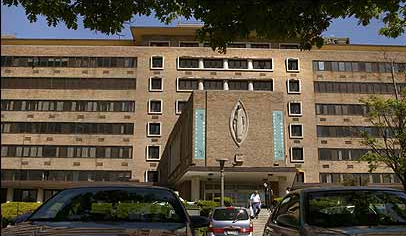
What is missing from this picture? If you guessed a crush of people, you are correct! I took this shot in the early afternoon, while most attendees were hunkered down in the educational sessions. Admittedly, during the breaks, attendees made their way to the exhibit hall. Attendees were offered a free lunch and had to walk to the back of the exhibit hall to reach the food, so that obviously gave traffic a boost.

Speaking of the free lunch: like a free EMR, free isn’t always cheap enough. Barbeque sandwiches and corn on the cob. I pitied an exhibitor who had barbeque sauce splash all over her white shirt. I’m sure it was plenty tasty, but it looked a bit too messy and was not what my palate had in mind.

The best session I sat in was “HITECH Action Plan: EHR Incentive Payments and Practical Implementation Issues.” Rosemarie Nelson, who is a principal at MGMA Health Care Consulting Group and an obviously seasoned presenter, offered straightforward advice for administrators looking to move to EHR and qualify for stimulus funds. Some of the tidbits were very simple, but perhaps not something every practice knows: standardize over customize, get a lawyer to review your EHR contract, find a non-techie doctor to be a champion. Her co-presenter was attorney David Schoolcraft, who also supplied good commentary. Based on the questions from the audience, it’s obvious there is still a lot of confusion about what it will take to get stimulus funds. And, I would guess the majority of people in that room (maybe 300?) did not have an EMR in place. In an attempt to stress urgency and warn practices that meaningful use won’t happen overnight, Nelson pointed out that going to EMR was a bit like have a baby: no matter how hard you try, it still takes nine months.

I noticed that sessions that covered financial strategies were packed. I didn’t sit in any, but obviously the money side of the practice is a top priority for administrators at the moment.

nextgen screen

I know I mentioned this already, but NextGen has a cool-looking booth. I said spaceship before, but I am changing that to space station. And I was mesmerized by the screen used by the demo guy. (Sorry the above picture is a bit blurry. I was trying to be sly and I didn’t get up quite close enough.) The screen is just like an iPhone and totally touch screen. I have seen them before, but I have to say that anyone a little bit techie can be easily sucked into watching just because the technology is so fun.

A reader sent a note informing me that I should have named the MED3OOO guys to the best dressed list. They had some sort of “come bond with us” theme and all the guys were dressed up in tuxes, a la James Bond. I also noticed a couple of Bond girls (the kind Mr. H would appreciate).

Futurist Mark Anderson helped sponsor the Digital Physician Educational Pavilion, which got screwed with a lousy booth location. The premise was to have two different communities set up and demonstrate interoperability, including how practices with different EMRs can connect via an HIE application. It looked like about 10 different vendors participated. However, their space was past all the regular booths, and not even near where they were serving the free lunch. It’s too bad because it had the potential to be a great educational tool for participants.

bear

As I reflect on what I learned over the last couple of days, I fear that a lot of practices are not going to be ready for 2011 stimulus money — and that may be a conscious choice on their part. The money incentives and penalties may not be enough to effect change. And, doctors may not finding the products that allow them to maintain productivity, regardless of effect on quality of care. There are still plenty of seemingly successful vendors that are pushing products that automate some processes that aren’t full-blown EMRs, and they’ll continue to have some short-term success. With the current economic environment and uncertainty in healthcare legislation, practices are going to be holding their pocketbooks close for a little bit longer. If a practice has the money and inclination for change, there is plenty of innovative technology (from some of the  big-name players as well as lots of little guys).  No doubt it’s still a pretty dynamic and exciting time to be in HIT.

inga

E-mail Inga.

From MGMA 10/13/09

October 13, 2009 News 1 Comment

Mr. H chastised me last night for not providing adequate trinket and fashion updates, so I’ll start out with the really important  stuff.

Fashion: a lot of function over fashion, especially given how sprawling the convention center is. Thankfully ,there are some golf carts (sponsored by RelayHealth, I believe) that will take you from one end of the center to the other. However, a few brave souls would make my mother proud and have worn some stylin’ pumps. I think I saw particularly lovely pair at either the eClinicalWorks or Sage booth.

trinket

Trinkets: I am looking over my stash of goodies collected yesterday. The pocket-size Sudoku game, courtesy of MPV, should be fun. The horse beanie baby was from Zirmed (they are based in Lexington, hence the horse theme). The wad of money pictured above is actually a tightly wrapped tee shirt with a $1,000,000 bill on the cover (the lady at Intuit booth told me I’d look like a million bucks in the shirt). The exercise tube from IntegrityRehabGroup doubles as a water balloon launcher (you can never have too many of those.)

In addition to all the goodies I picked up, there are far more items that I have failed to win, such as iPods, iPod Touches, a Caribbean cruise (courtesy of Capario), a car (from Navicure), and a Tiffany’s necklace (a transcription service – don’t recall the name).

srs booth

Monday afternoon I noticed a three-deep crowd in front of the SRSsoft booth and was impressed that so many people wanted a demo. Turns out they were giving out $500 and you had to be present to win (I didn’t win, but a very excited woman was being hit up to take her crowd to dinner.)

I’ve asked many folks for their impression of the meeting thus far, and what they think the buzz is. The down economy seems to be a big concern, with practices feeling the crunch more than ever (lower reimbursements, lower patient volumes, higher overhead). Vendors have said that, unlike years past, they don’t have people asking for demonstrations with the intent to actually make a purchase decision in the near term. The EMR vendors especially have mentioned this. On the other hand, several vendors claim the best thing about the meeting is the opportunity to network with other vendors. I saw perhaps half a dozen booths that had a vendor name displayed but the vendor was a no-show. Sign of the economic times, I suppose.

I did see some new technology worth a mention. Last month Intuit announced the launch of Quicken Health Bill Pay and yesterday Allscripts announced it signed on as a reseller. Essentially Intuit pulls A/R data from a practice’s system and as soon as a patient owes money, they are sent an e-mail. The patient can click on the e-mail to find easy-to-understand details on what is owed, what insurance paid, and what procedures were done. Then, they can pay online. The service is $25/doctor/month. It’s very user-friendly, in the same way Quicken or Turbo Tax is. Good stuff.

McKesson is announcing today Bright Note Technology, which works with their ambulatory EMR products to help populate the chart note. The aspect that sounds particularly intriguing is that it works with Dragon Naturally Speaking and actually translates the dictation into searchable patient data. I’m heading over to the Nuance booth this afternoon to check it out.

I also looked at a product called Shareable Ink, which is a new company started by PatientKeeper co-founder Stephen Hau. Their product uses a digital pen to capture billing and EHR data on a printed form. Using wireless or Bluetooth technology, the data can then be uploaded into a billing or EHR system. I think the product has the potential to be a hit with specialties such as anesthesia and ER, where doctors are still clinging to their paper records.

Off to check out some educational sessions this a.m. By the way, if you see one of the HIStalk sponsor signs, please be sure to tell the vendor thanks for their support!

inga

E-mail Inga.

From MGMA 10/12/09

October 12, 2009 News Comments Off on From MGMA 10/12/09

I arrived in Denver late Sunday afternoon. Fortunately, the snow from Saturday had all melted away.

I arrived at the convention center in time to hear Ezekiel Emanual, MD, PhD, the bioethics chair for the NIH and a senior advisor at the White House OMB on health policy. His talk focused on the need for the industry to move towards high-touch medicine, e.g., spending more time with patients, better care coordination, etc. Once we get the payment system figured out, the high-touch model will lead to lower costs. Not too much original stuff, but he was an engaging speaker.

I then hit the opening reception, which seemed pretty well attended (as happens most any time you provide free drinks). I was never quite sure what the theme was, but there were a couple women on tall stilts dressed as birch trees (I couldn’t get a shot without looking too conspicuous, darn it).

Monday morning I walked though about half the exhibit floors. Vendors said that Sunday was pretty slow, but busier today. Official total attendance, by the way, is about 4,500, including 2,150 paid attendees. MGMA says the numbers are down 21% from last year, which is similar to what other associations are seeing.

Thank you, Eclipsys, for being the first booth I saw displaying an HIStalk sponsorship sign! I did notice that SRSsoft also had the magnets available to hand out. I personally think they are a must-have souvenir, so stop by the booths of our sponsors to pick one up.

By far the busiest booth seems to be the MGMA bookshop. Who would have thunk?

NextGen has the same booth they had at HIMSS, which is this modern, almost spaceship-looking thing with cool lights. I’ll try to take a picture. GE has a very large space that looked a bit empty. The problem with a big space is that if it is not crowded, it really looks empty.  If you have a good location, maybe a small booth is not a bad thing. It’s a lot easier to look crowded and make others wonder what the buzz is all about.

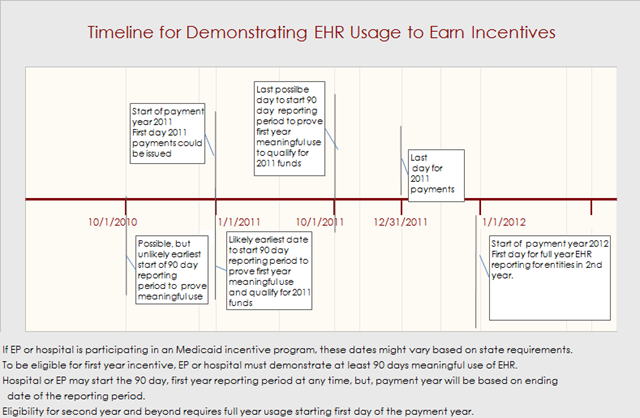
Speaking of buzz, I haven’t heard much of any so far, although perhaps I did hear MGMA’s thoughts on what practices are doing as it relates to EHR/meaningful use/ARRA. MGMA thinks that perhaps 75% of its members do not have EHRs yet. Many are sitting on the sidelines waiting for more clarification on meaningful use.

I was surprised to learn that many practices really don’t understand how the whole stimulus funding process works. Seems to be some confusion that you have to buy an EHR out of pocket, install it, and then prove meaningful use, rather than simply apply for grant money up front.

And, even though you would expect the whole ARRA/EHR issue to be what the buzz is all about, at least at this conference, the RCM vendors are still getting their share of booth traffic.

More updates to come.

E-mail Inga.

Platinum Sponsors


Gold Sponsors


Subscribe to Updates


Search All HIStalk Sites


Recent Comments

  1. The article about Pediatric Associates in CA has a nugget with a potentially outsized impact: the implication that VFC vaccines…

  2. Re: Walmart Health: Just had a great dental visit this morning, which was preceded by helpful reminders from Epic, and…

  3. NextGen announcement on Rusty makes me wonder why he was asked to leave abruptly. Knowing him, I can think of…

  4. "New Haven, CT-based medical billing and patient communications startup Inbox Health..." What you're literally saying here is that the firm…

  5. RE: Josephine County Public Health department in Oregon administer COVID-19 vaccines to fellow stranded motorists. "Hey, you guys over there…