Home » News » Recent Articles:

Intelligent Healthcare Information Integration 1/19/09

January 18, 2009 News Comments Off on Intelligent Healthcare Information Integration 1/19/09

The Big “O”

"O." No, not Oprah. Not Overstock.com. Not even the big "O."

"O" as in Obama. A short jaunt around the web HIT postings, blogs, and news items these days quickly provides an overview of the impact of "O" on the current state of healthcare IT. For an industry that appeared to have become somewhat stalled with abysmal reports on EHR adoption; standardization that seemed be slowing product innovation; and CHINs, RHIOs, and HIEs (with a few exceptions) failed or failing, the promises of the great and powerful "O" were like a shot of B12.

The incoming "O" has made lots of promises about advancing HIT, including megabucks and another of those "chicken in every pot" type remarks to provide an EHR for every American by 2014. (Believe that one?) Fifty billion dollar promises and a president who wants us all to electronify has been like the jolt of lightning awakening Dr. Frankenstein’s lifeless monster.

While it is encouraging that the new administration will have a much greater understanding and focus upon the importance of IT for healthcare, it seems O’s broad HIT promises have many abuzz that HIT is now poised to become an “overnight” success. (Like so many “overnight” success stories, it has admittedly been some quarter century we have been trying to achieve HIT stardom.)

Don’t get me wrong – I am all for the impact of the O-factor. The almost unbridled optimism that seems to have developed (even in some die-hard, conservative Republicans) for what the new administration may bring is quite contagious. The fact that O isn’t even in office yet and has already begun to steer the course of our country is quite impressive. The fact that so many initiatives seem to be under consideration is (and I don’t use the word cavalierly) awesome. Our country — cripes, the whole world — needs this optimism. We have some pretty major messes and we need some can-do folks at the helm.

What concerns me is the little “o”s, the folks who take what the big O says and immediately apply it to their personal agenda. Everyone sees the glory road to success as being whatever route leads past their own door. At the recent eHealth Initiative 5th Annual Conference in Washington, D.C., many vendors, politicos, and HIT proponents seemed quite enthralled that the 50 Big Ones promised by O over the next five years was the stimulus needed to finally push HIT past the tipping point. Of course, most of them also had a pretty specific idea about where that money needed to go to achieve the tip, usually somehow related to their current ambitions or agendas.

So, do I have my own agenda? Am I another little “o”? Of course. But, I’m trying to maintain a certain amount of historical perspective, too. The past 25 years have shown us that pushing HIT on both physicians and the general public is somewhat akin to pushing mules. You don’t get too far too fast. Merely telling a mule why they must move doesn’t work too well, either. Changing people’s expectations, processes, and workflow requires carrots, not whips, and turning those changes into habits is a derivative of time.

Hopefully, O and his people know this and just won’t throw those ever scarcer dollars to the little "o"s in hopes that what they’ve done before will somehow now work just because there’s money to burn. Yes, oh yes, we do need healthcare information integration and the technology it requires. But, what we really need are some disrupters to take advantage of this opportunity, to provide some innovative thought and leadership, and to figure how to turn “pushing mules” into riding race horses.

greggalexander 

Dr. Gregg Alexander is a grunt-in-the-trenches physician and admitted geek. He runs an innovative, high-tech, rural pediatric practice in London, OH, and can be reached at doc@madisonpediatric.com.

An HIT Moment with … Gregory Spencer, MD

January 15, 2009 News 1 Comment

An HIT Moment with ... is a quick interview with someone we find interesting. Gregory Spencer, MD is an internist and chief medical information officer at Crystal Run Healthcare in Wallkill, NY.

Describe your practice and what changes, good and bad, that your EMR brought about since it was installed several years ago. 

gregoryspencer When our group was founded 13 years ago, we were a single-site medical practice with nine providers and 35 employees. We have grown 20-fold since then and are currently are a 170+ provider multi-specialty group with nearly 1,000 employees and 11 sites. We are opening an ASC this summer. Our growth was mostly from hiring individual physicians and not from mergers of existing groups.

We bought NextGen in 1999. The changes  in the EMR since that time have been massive and positive. Initially, the NextGen product was more of a tool kit to help you develop your own EMR. Now there is an extensive template set that comes off the shelf with the product.

The company has grown almost as quickly as we have. They had a rough patch a few years ago where their sales staff outpaced their support functions. They have improved and are doing much better in that regard. NextGen’s product also had issues with speed and scalability in the past, but this too seems overall better.

Practices that don’t have EMRs worry about the physician time they require and the perceived value they provide in return. What is your experience?   

EMRs require a lot of time and money to set up and maintain. Once you are facile, EMRs are a lot more efficient than handwriting, but not so much for those who dictate everything. 

The value EMR that can return is real, but is largely untapped by most users. Using as many bells and whistles that the product has is more important than you think. Population management is just starting to be done, as an example.

The predominant value EMR returns is most not monetary. You could probably save money by throwing a bunch of low-level file clerks and transcriptionists at an office. You cannot do certain things without EMR, no matter how much money and people you throw at it.

Beyond your EMR and practice management systems, does your practice use other practice applications or connections to outside data sources or information exchanges?

Yes, lots of them. We have a home-grown patient portal for patients to request appointments, meds, etc. We use Televox to confirm over 1,000 of our patient visits a day. We extensively use MS Exchange and Outlook with BlackBerries for remote clinical communication. 

We have Orchard for our laboratory information system and are in the process of implementing Carestream as a RIS/PACS  We use Citrix both within the office as well as for remote access via its web VPN. We have our own data warehouse that we use for business intelligence as well as clinical purposes.

What do new doctors coming into the practice think when they see the technology?  

We have hired 27 doctors in the last six months and will hire another 20 more by the summer. New hires uniformly consider the EMR a positive and often is a deciding factor in selecting our practice. We have merged with a few other groups. Established physicians definitely have a harder time with the EMR. 

Have patient outcomes or patient satisfaction been affected by using an EMR?  

Yes. We have demonstrated improved rates of mammogram, PSA, and other clinical parameters with a care manager program that uses the EMR. We track patient satisfaction, but have no "before/after" data for comparison.

News 1/15/09

January 14, 2009 News Comments Off on News 1/15/09

From Musing: “Re: EMR economic incentives. Let’s say I am convinced that Congress and Obama will get their acts together and come up with some kind of economic stimulus package that includes an HIT component. If I am a doctor, why would I want to spend my dollars today if Uncle Sam might be willing to help with at least a portion of it a few months down the line?” Quite the conundrum, but you will probably find out soon one way or the other.

A patient sues her doctor for failing to provide a sign language interpreter for her office visits and wins a $400,000 settlement. In light of that, a provider of American sign language relay services decides it’s a great time to announce its LifeLinks package, which provides remote translation services. To use the service, the practice sets up a computer with a webcam. When needed, the physician and patient receive face-to-face video access to interpreters and sign language specialists. Clients pay only for the specialists’ time.

A physician shares details of how an employee embezzled $50,000 from her over a three-year period. I’m always amazed how often this occurs. The stories always seem similar: the doctor is consciously providing the best quality care in a busy practice and defers all business activity to a trusted employee. If someone is determined and greedy, they’ll figure out a way to outsmart even the best computer system.

A Canadian woman files suit against Purdue Pharma for $31 million, claiming she became addicted to their drug OxyContin. She’s applied for certification as a class action on behalf of all OxyContin users in British Columbia.

Economic conditions lead to an increase in bartering goods for medical services. A couple of Maryland doctors have been bartering with patients since opening their practice three years ago and believe it has helped grow their business. Typical exchange items include office supplies, staff meals, plumbing work, and other goods and services.

tepperly 

AAFP President and family practice physician Ted Epperly is a fan of electronic medical records. "I’m a big proponent. We’ve had an EHR in our practice here in Boise for four years. It’s revolutionized my practice. I’m more efficient. I make fewer errors. My data are more retrievable. I can give feedback to both my practice and that of my colleagues and the residents I’m fortunate enough to be able to train."

To your right: enter your e-mail address in the Get Instant Updates box to be the first to know when we write something new. Just below that, click the Email This to a Friend graphic to recommend HIStalkPractice to friends and colleagues (thank you!) And, a little further down, you can search both HIStalkPractice and HIStalk in one easy Google box, finding out whether we’ve ever mentioned you.

Is EMR not the silver bullet after all? Booz Allen Hamilton and the Federation of American Hospitals release a report that concludes HIT emphasis needs to be on improving electronic communication among patients and providers rather than getting EMRs installed. Among other key points, the report recommends focus should be on e-Rx, electronic results, and medical imaging. Also, payments should tie to desired outcomes. In addition, patients need access to their records and have a way to communicate with their physician about them.

HHS announces rollout of an improved version of the Surgeon General’s family health history Internet site called My Family Health Portrait. It was built to follow data exchange standards that will allow it to exchange information with practice EMRs.

lv 

A Las Vegas physician who planned to retire soon is shot dead in her medical office exam room by an 80-year-old patient who then killed himself. Police have not determined a motive.

The ambulatory care sector adds 14,000 jobs in December, despite the country’s overall loss of 2 million jobs. Hospitals added 12,000 positions and long-term care/home-health grew by 2,000.

The State of California investigates Kaiser Permanente and the protocols it uses in its call centers. The investigation stems from complaints of mishandled calls that compromise patient care. The state wants copies of the call scripts that Kaiser’s unlicensed staffers use to make medical decisions. Kaiser claims the scripts are proprietary.

City employees in Warwick, RI receive free enrollment in a PHR program that gathers basic health information into one secure place and releases it to appropriate healthcare providers. The ER Card is developed and controlled by the individual, containing only the information they choose to enter. The patient is responsible for keeping it up to date and the record will not include doctors’ notes. The city seems pretty proud of this great new employee benefit. Perhaps they haven’t heard of the little company in Redmond, WA that offers a similar free service via the Internet.

The doctors at Johns Hopkins University’s Wilmer Eye Institute know all about HealthVault, since HealthVault’s Be Well Fund is underwriting their automated patient reminder trial. Wilmer Eye will use MEMOTEXT to send glaucoma patients customized reminders via e-mail, text message, or phone call, reminding them to take their medications. The trial is designed to measure if automated reminders improve adherence to prescribed medication regimes.

tubb

President Bush’s physician, like several other members of his administration, gets a last-minute obscure government job, appointed to finish a term on the US Air Force Academy’s Board of Visitors.

Staff working the ED at Waseca Medical Center (MN) wear white coats and stethoscopes, but they aren’t doctors. The hospital interprets state regulations requiring physician assistants and nurse practitioners to be supervised by a physician as meaning it’s OK to have that doctor available by telephone if needed. A 2007 survey said that one in seven rural hospitals staffed their EDs entirely with PAs and NPs.

daschle

Incoming HHS Secretary-designate Tom Dashchle wants Congress to shift the nation’s healthcare model to emphasize wellness and prevention by providing more support for primary care doctors. "Every country starts at the base of the pyramid with primary care and works their way up until the money runs out. But the United States starts at the top of the pyramid and works its way down until the money runs out, resulting in a lack of primary care and wellness."

Ben Brown with KLAS Research claims that healthcare’s speech recognition market is on the verge of a "long-term growth curve of adoption.” Brown predicts adoption rates will continue to climb because speech recognition provides a “clear” ROI. Also, look for it to be increasingly integrated with EMRs.

The Agency for Healthcare Research and Quality launches a Web site that advises clinicians and consumers on emerging drug therapies. The site also provides access to education and information resources designed to improve healthcare quality, safety, and effectiveness.

clip_image006

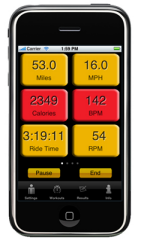
Here’s a cool new iPhone application for the pathologist on the run. The Institute for Medical Informatics, Rikshospitalet, Oslo University Hospital develops a remote application for the review of pathology images on the Apple iPhone.

The Duke Endowment awards $99,000 to Caswell Family Medical Center for the purchase of an EMR. Caswell Family is a five-provider practice in North Carolina.

Former MedComSoft VP Mary Torrance joins Electronic Healthcare Systems to serve as EHR consultant for the CareRevolution product.

Telephone equipment maker Nortel Networks files for Chapter 11 bankruptcy protection .

E-mail Inga.
E-mail Mr. HIStalk.

Joel Diamond 1/14/09

January 13, 2009 News 2 Comments

I love the pick-up line from The Wedding Crashers: "Some people say that we only use 15% of our brains. I say that we only use 15% of our hearts." Interacting with many of my colleagues who have adopted an EMR in their practices, it seems that most of them use only 15% of what should be the system’s capabilities.   

I recently asked a friend of mind why he hasn’t utilized many cool features like e-prescribing and a patient portal. He sheepishly answered, "To tell you the truth, I am just too damn busy. I wish that there could be some way that this technology would just make me feel like I was making a bigger difference in people’s lives and let me spend more quality time with patients."

With this in mind, I read last week’s National Research Council on Healthcare IT report with keen interest (BTW, Mr. HIStalk did a great job of summarizing the report).

The council’s esteemed panel recommended to "organize incentives, roles, workflow, processes and supporting infrastructure to support and respond to opportunities for clinical performance gains. Focus on identifying, prioritizing and managing changes in process and workflow."

Wow … that is so much more impressive than my friend’s quote!

I hope they didn’t spend too much money concluding what every front-line practitioner considers obvious. Let’s face it, most physicians are tremendously dedicated and work long hours. Any down time is spent squeezing precious extra minutes with patients, following up on tests, and calling families. Occasionally, there is even time to do preventive health.

To be fair, I would say that the technical accomplishments to date represent 15% of our needs. Let’s start working on the other 85%.

joeldiamond

Joel Diamond, MD is chief medical officer at dbMotion, adjunct associate professor at the Department of Biomedical Informatics at the University of Pittsburgh Medical Center, and a practicing physician at UPMC.

News 1/13/09

January 12, 2009 News 2 Comments

From Dr. Old-timer: “Re: Obama’s EMR plans. Do you think that Obama read the National Research Council Report before he suggested that all medical practices are computerized within the next five years? Does he understand that no one is quite sure the overall effect on quality and costs? If I understand the basics of the report correctly, it sounds like we lack adequate functionality in our existing products. So we need better products, need money to build those products, need money in the hands of providers to buy those products … all in the next five years. It will never happen.” Clearly we need to see a roadmap that details how Obama and team plan to get there and how to pay for it. But, I have to agree that five years is a tight timeline. First, I have my doubts that Congress can act quickly. In these post-bank and automotive bailout times, I don’t see anyone agreeing to pass out money without a plan that includes specific goals and plenty of oversight. And don’t forget the privacy folks will want to issue their stamp of approval. If and when Congress passes a plan, who is going to administer the money and to whom? Will vendors need to rewrite software to meet new governmental requirements? It’s all a big mountain to climb.

From Early Adopter: “Re: Practice Fusion. While I am glad Dr. Thakkar found an EMR that works for him, I would never take a similar risk. About 10 years ago I found a slick EMR product developed by a local start-up and got a great deal for being one of their first clients. They, too, were ‘eager’ for my feedback and making the product better. However, two years after going through all the pains of implementation, the company went bust. My current vendor converted all they could, but there are definite gaps. Sure, I like the idea of a free EMR and I don’t mind the ads. I even like ease of use and speed. But I will never again go through the hassle of implementing any software if I am not confident in the vendor’s business model and long term viability.” If you missed Dr. Thakkar’s positive comments on PracticeFusion, you can read them here.

surgeongeneral

The acting Surgeon General announces the release of a new version of "My Family Health Portrait," yet another personal health record, but this one’s from the government. I think they goofed in putting the password to the Tuesday media conference in the press release for the whole world to see, although I don’t expect too many eavesdroppers to jump on. Given the number of misspellings and grammar errors on the site itself, maybe that’s not surprising.

Two US Senators introduce the Health Information Technology Act of 2009, which they hope will serve as a blueprint for addressing health care issues in the upcoming economic recovery package. The HIT Act would establish grant money for health care providers to purchase (or lease) HIT systems. The grants would target safety-net and rural providers. Maybe it will be more successful than the HIT Acts of 2005, 2006, 2007, and 2008. None of those bills ever passed.

Solo practitioners are being especially hard hit by economic conditions, according to an LA Times report that profiles the failed practice of a primary care practitioner in Beverly Hills. She hasn’t been able to pay herself for almost a year, spent $40,000 of personal savings and $15,000 in credit card debt to keep the practice going, and finally closed the practice to work for a Johns Hopkins-affiliated practice. She said patients stopped coming when the economy went sour and those who did often stiffed her on their co-pays.

Kentucky’s lieutenant governor, who is a physician, says the state will announce a collaboration of three state universities that plans to study whether healthcare IT is a good investment. While some of the state’s interest may be because Kentucky’s incidence of heart disease, obesity, and diabetes is among the top few states, the LG admits that the main plan is to get a piece of the billions the Obama administration may spend on healthcare technology.

Texas Health Resources Organization for Physicians (THRP) and MedSynergies Inc. create a new management services organization called Texas Health MedSynergies (THM) to offer physicians revenue management cycle services and other business functions. Texas Health’s goal is to “enhance engagement between physicians and our hospitals” and give providers more time for patient care. The pricing structure was not disclosed. Will the pricing be attractive enough to make it worthwhile for a physician to consider, or will the doctors prefer to keep their money matters as removed as possible from the hospital?

projectswipe

MGMA announces its Project SwipeIT initiative, aimed at advancing the adoption of standardized patient health insurance ID cards with machine-readable information. MGMA claims the industry wastes as much as $1 billion annually as a result of non-standardized cards. If every retail establishment can read every credit card in our wallet, and every ATM in the world can read our debit cards, how hard could it be to standardize an insurance ID card? As I patient, I roll my eyes every time a doctor’s office has to photocopy it.

practiceone

Concierge Medicine of Las Vegas chooses PracticeOne.

In addition to shortages in primary care physicians, look for a shortfall of over 1,000 gastroenterologists by 2020. As the demand for colorectal cancer screening grows, so does the demand for gastroenterologists. The shortage could limit the nation’s ability to implement national guidelines for cancer screening.

clip_image002

The 33-physician Michigan Cardiovascular Institute (WI) selects Sage Intergy PM and EHR. 

mdrx

Long-time Misys Vision client Physician Associates LLC (FL) selects the Allscripts Enterprise EHR solution for its 80-physician practice. The CIO of Physicians Associates calls the decision a “no-brainer” since they liked their Vision product and the Allscripts EHR. (Don’t you know that made Glen smile?) Allscripts also announces that Tully-Wihr Company, in conjunction with Ray Morgan Company, signed an agreement to resell the Allscripts MyWay EHR/PM to 100 physicians. In addition, Excela Health (PA) contracts with Allscripts for its 115 employed physicians. MDRX stock (blue) is looking good against the Nasdaq (red) in the six-month stock price chart above.

MD-IT, a provider of medical documentation services and software for physician offices, closes on $11 million Series B funding from PE firm J. Burke Capital Partners, LLC.

An article in the current Annals of Family Medicine questions whether consumer drug advertising really works. Patients asked doctors about a specific new drug in only 3.5% of visits, far less than the 15.8% found in a similar study five years ago. The researcher isn’t sure if it’s because patients no longer trust drug companies or whether poor and non-English speaking patients decline because of drug cost and lack of advertising exposure, respectively.

A Texas woman sues her doctor for telling her she can’t get a handicapped parking sticker just because her arms and legs go to sleep, the rudeness of which, she claims, caused her to have a heart attack right in his office. A week earlier, she had sued her attorney for being sarcastic with her and the month before, she sued President Bush because mismanagement of the local housing authority may cause her to lose her home. The kicker is her recommendation to the doctor: he should get psychiatric help.

As we start our second full week of HIStalkPractice, we want to thank all you early adopters, especially those taking the time to provide us great feedback. This week, we will roll out our first guest writer, Dr. Joel Diamond, a part-time practice family physician and an experienced EMR user. He also serves as CMIO for healthcare interoperability company dbMotion. We think he is smart and funny and we know you will, too. We are also lining up an EMR implementation guru to provide great advice and commentary on maximizing the use of EMR. In addition, look for upcoming HIT Moments that highlight assorted other physicians and industry gurus. Make sure you have signed up to receive your HIStalkPractice updates – and hang on for the ride!

E-mail Inga.

E-mail Mr. HIStalk.

Platinum Sponsors


Gold Sponsors


Subscribe to Updates


Search All HIStalk Sites


Recent Comments

  1. The article about Pediatric Associates in CA has a nugget with a potentially outsized impact: the implication that VFC vaccines…

  2. Re: Walmart Health: Just had a great dental visit this morning, which was preceded by helpful reminders from Epic, and…

  3. NextGen announcement on Rusty makes me wonder why he was asked to leave abruptly. Knowing him, I can think of…

  4. "New Haven, CT-based medical billing and patient communications startup Inbox Health..." What you're literally saying here is that the firm…

  5. RE: Josephine County Public Health department in Oregon administer COVID-19 vaccines to fellow stranded motorists. "Hey, you guys over there…