Recent Articles:

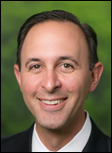
HIStalk Practice Interviews Halee Fischer-Wright, MD President and CEO, MGMA

October 5, 2017 Interviews Comments Off on HIStalk Practice Interviews Halee Fischer-Wright, MD President and CEO, MGMA

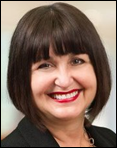
Halee Fischer-Wright, MD is president and CEO of MGMA.

image

You’ve been with MGMA since 2015. What did you set out to accomplish, and how have your goals for the organization changed?

As I was being recruited in 2015, I recognized that MGMA – a remarkable organization with a fantastic brand – was really struggling to find its relevance in the healthcare world that had changed pretty dramatically in the five to seven years prior to my arrival. It’s one of those things where you can’t keep doing the same thing and expect the same results in a world that has undergone a dramatic shift. I knew I had to create a vision when I came in. I also knew the transition for a 90 year-old organization was going to take more than your standard 90 to 180 days. It’s really going to be between a three- and seven-year process.

The first thing that I focused on was actually finding relevance. Where is MGMA relevant in this day and age? That day and age was in March of 2015. I really spent the first year digging into that. Aside from that, there were other operational issues related to how you manage and operate a non-profit association and bring it up to speed with other industries. What I set out to accomplish that first year was to identify where our relevance is and really clean up the operations of the organization. I think we did an outstanding job with that.

Now, as we move into my third year, the goals have shifted. Year three is really looking at opportunities now that we’re clear on what our vision is, which is that MGMA wants to move from being the organization that reports on group medical practice to leading group medical practice. To do that, we have to shift some of our business functions, and we have to really change how we do business, which is, in full transparency, parallel to the growth processes going on right now at almost every other organization within healthcare. That’s what we’re focused on right now.

Let’s shift gears a bit and discuss MGMA membership, particularly small and independent practices. What do you perceive their biggest challenges to be, especially as they relate to technology?

According to our statistics, somewhere in the neighborhood of 40 percent of practices are in the small to medium-sized practice range, defined as less than nine providers. That’s quite a few practices across the country. We’re talking about practices that aren’t just in rural areas. These can be practices in urban areas as well. As we saw between 2010 to about 2015, there was a lot of consolidation with healthcare systems purchasing the small to medium practices. That has slowed down over the last two years. In fact, we’ve seen divestiture staring to occur. That begs the question, why do healthcare systems decide to divest practices and what do practices struggle with? I would say there are two really big things that practices struggle with, and they go hand-in-hand. First, it is the regulatory reporting burden and the shift of the payer landscape as far as how do physicians report on quality.

The other part is related to EHRs and the promise that it would make practices more efficient, and allow them to deliver higher-quality medicine and spend more time with their patients. We’ve actually seen them have the opposite effect. EHRs, because they’re not engineered specifically for the end-user, end up being really a business application. Because of that, it’s really interfered with the practice of the art of medicine. We’re seeing physicians becoming increasingly burnt out and patients becoming increasingly less satisfied. We’re now at a crisis point where physicians aren’t happy and patients aren’t happy. Our federal regulators can’t afford to pay any more money. Something needs to change. That really is the reason that I wrote the book Back to Balance.

 Are you going to be signing copies of it at the conference?

Of course I am!

Speaking of the conference (which kicks off on Sunday, October 8), how will help physician attendees address those issues? 

There are a couple of ways we’re doing that. First of all, I think our advocacy office is second to none. There’s no healthcare association that has better insight into how healthcare regulations affect the day-to-day operations of a practice. What the pros are. What the cons are. How to work within the regulations to still deliver high-quality, patient-centered care. We’ll be doing quite a few sessions with our governmental affairs office in DC. That’s number one. Those tend to be some of our most popular offerings at annual conference.

We’re also offering sessions on practice operations. There’s a lot that we can do in medical practice to streamline operations to make patients and physicians much more satisfied. If you don’t ever get the opportunity to leave your practice and think about how things should be different, you don’t get the opportunity to see how others can do it. We’re offering that. We have several educational tracks at our annual conference to really offer those insights that allow practices to bring something tangible home and put it into place. That’s probably what I’m the most proud of. We’ll also offer several CME sessions that really link the business of medicine to clinical practice as well.

Did you have any input into getting actress Viola Davis as a keynote speaker?

Yes. It’s really interesting. The topic of women in leadership has been a really hot topic over the last 18 months regardless of what your political ideology is. I think, in healthcare, we’re a bit down in the mouth. We’re really feeling victimized. There’s so much uncertainty. To bring in someone who can talk about how their circumstances really would have set them up to be unsuccessful, and even to be a victim, and how she triumphed in the face of great adversity, is really important for an organization like ours. I hope our attendees should really hear her story and come away inspired to move things forward, and to bring change into their own lives, even in a small way.

Circling back to technology, what has MGMA members excited?

Programs and software developed by end users are where people are focusing. We’re coming to a point in our technology that we’re moving towards interoperability. We believe that, within the next couple of years, we’ll see the government really regulate that interoperability, which will take care of a lot of the headaches that we currently experience. Where we have not seen a lot of improvement is in end-user design. We’re now seeing other players from other industries, i.e. Apple, starting to stick their toe into healthcare. That elegance of design focus and end-user focus, I think, is going to transform the relationship of technology in healthcare. I think it will require someone from outside of our industry to bring that expertise.

One of the things I talk a lot about is the fact that with healthcare, we expect incremental change. We’re happy with 2 percent, 3 percent, 4 percent. It really requires disruptive innovation. Who best to lead that than our partners in innovation in the Silicon Valley to really point out to us where we can be disrupted for the benefit of all? I do believe that’s coming.

Do you think companies like Apple and Amazon will either develop their own EHRs or partner with existing EHR vendors?

I’m going to say something completely controversial, and I’ll get pummeled for it. The aspiration of the EHR is fantastic. The application of the EHR has not lived up to anybody’s expectations. I’d like to see alternatives to an EHR. In a cloud-based system with sharing of data, maybe even some blockchain technology, it looks very different than what we’ve come to know as kind of a bread-and-butter EHR. That’s where I feel the disruption needs to occur. It’s something that we haven’t even envisioned yet that would come through and just, basically, everyone would say, “Yes, this is what we’re missing.”

Honestly, I think about my iPod. I didn’t know I needed an iPod, but since I got one I couldn’t live without it. Speaking as someone who had well over a thousand CDs, the idea of condensing all that into something that fit in the palm of my hand … At first, I thought this is ridiculous and it can’t be done. In all fairness, I can’t imagine what my life would be like without it. I think we’re going to have that same experience with EHRs and some of the new technology that’s being developed.

MGMA recently released its annual practice operations survey. Did any of the results surprise you?

I think they will surprise some patients. According to our survey, the wait time for patients has improved. I think, if you speak to any patient, that does not feel like the case. It’s actually down an average of 20 minutes between the waiting area and the exam room. The other thing is that, in scheduling, physician-owned practices see patients sooner than hospital-owned practices. I think that’s really interesting. That’s an insight that could be really useful for patients who are trying to decide how to choose their care.

What’s even more shocking are the results around patient portals. I went to a conference in 2005 where they talked all about patient portals and how they would give patients the ability to take their personal records with them anywhere they go. It hasn’t happened. Only 30 percent of patients who visit hospital-owned practices use the portal. Whereas, if you’re in a small physician practice, less than 10 percent use portals. The function that people like the most is online payments and communicating with providers. Less than 5 percent are using it to schedule appointments, which is really probably its biggest strength.

The other thing I found really interesting are the patient satisfaction results. Three-quarters of practices measure patient satisfaction. That’s quite a few, but I don’t see that commensurate with improvement in patient satisfaction. Clearly, the axiom of you get what you measure is not actually occurring in measuring patient satisfaction. Only about 27 percent of patients that go to a practice are satisfied with their experience.

How can physicians act on those survey results, especially when it comes to online scheduling adoption and patient satisfaction?

In the book Back to Balance, I point out that just because we measure it in healthcare doesn’t mean we actually do anything about it. I actually practiced medicine this way. I practiced for 19 years. The question I found myself asking was, if this test isn’t going to cause me to change what I’m doing already, I’m not going to order the test. In the same way, I would tell people, if you’re not going to do anything about patient satisfaction, stop measuring it. The irony in this is, let’s talk about quality measures in medical practice. According to our data, every physician, on average, spends about $37,000 measuring quality. Not to improve things. They just spend it to report it.

A better way to look at it is to ask physicians, what are you doing that is not adding value? I think a great place to start with things like this are patient satisfaction surveys or portals. They are tangible and there isn’t a lot of judgment around them. These are just things we have. Then physicians need to ask themselves if they’re doing anything with these results. If not, then stop doing it. Where can they invest their energy and effort that will move the bar on patient satisfaction or on enhancing portal usage? Those are the crucial things that I don’t think physicians have ever had the time to consider. Physicians are so burdened with all the things we need to do that we haven’t had the time to lift our heads up and ask those questions. If we stop doing things that don’t add value, we’ll find the time.

Finally, what advice do you have for conference attendees? Any tips and tricks for getting the most out of their experience?

I would advise people to really map out their strategy and be realistic. It’s one thing to take a look at our website and map out 14 sessions to attend. What I would ask people is, are you really going to attend 14 sessions over three days? If you’re not, then seek out the ones that you feel you can attend, engage in, and bring something back home to put in to practice. I think there’s always that balance between personal development and enhancing the practice. I’d ask people to really consider before they attend what they want to do for personal development, and then what they can bring back to their practice to really prove the value of attending the conference.


Contacts

Jenn, Mr. H, Lorre

More news: HIStalk, HIStalk Connect.

Get HIStalk Practice updates.
Contact us online.
Become a sponsor.

Jenn_125

News 10/4/17

October 4, 2017 News Comments Off on News 10/4/17

Top News

image

Rock Health’s latest report puts digital health funding for 2017 at $1.2 billion, making it the biggest year yet for such investment since the company began tracking figures. The total includes 268 deals across 261 companies, with $334 million from 17 deals involving EHR and clinical workflow technology companies.


HIStalk Practice Announcements and Requests

image

Check out HIStalk’s Must-See Exhibitors Guide for MGMA 2017. Map out your trip to the exhibit hall using the guide, which includes descriptions of the products and innovations (and giveaways!) our sponsors plan to showcase. We’ve also included contact information for sponsors that will be walking the show floor.


Webinars

image

October 17 (Tuesday) noon ET. “Improve Care and Save Clinician Time by Streamlining Specialty Drug Prescribing.” Sponsored by: ZappRx. Presenter: Jeremy Feldman, MD, director, pulmonary hypertension and advanced lung disease program and medical director of research, Arizona Pulmonary Specialists. Clinicians who treat pulmonary arterial hypertension can spend an average of 20 minutes to prescribe a single specialty drug and untold extra hours each month completing prior authorization (PA) paperwork to get patients the medications they need. This webinar will describe how Arizona Pulmonary Specialists automated the inefficient specialty drug ordering process to improve patient care while saving its clinicians time.

October 19 (Thursday) noon ET. “Understanding Enterprise Health Clouds with Forrester:  What can they do for you, and how do you choose the right one?” Sponsored by: Salesforce. Presenters: Joshua Newman, MD, chief medical officer, Salesforce; Kate McCarthy, senior analyst, Forrester. McCarthy will demystify industry solutions while offering insights from her recent Forrester report on enterprise health clouds. Newman and customers from leading healthcare organizations will share insights on how they drive efficiencies, manage patient and member journeys, and connect the entire healthcare ecosystem on the Salesforce platform.

October 26 (Thursday) 2:00 ET. “Is your EHR limiting your success in value-based care?” Sponsored by: Philips Wellcentive. Presenters: Lindsey Bates, market director of compliance, Philips Wellcentive; Greg Fulton, industry and public policy lead, Philips Wellcentive. No single technology solution will solve every problem, so ensuring you select the ones most aligned to meet your strategic goals can be the difference between thriving or merely surviving. From quality reporting to analytics to measures building, developing a comprehensive healthcare strategy that will support your journey in population health and value-base care programs is the foundation of success. Join Philips Wellcentive for our upcoming interactive webinar, where we’ll help you evolve ahead of the industry, setting the right strategic goals and getting the most out of your technology solutions.

image image

November 8 (Wednesday) 1:00 ET. “How Clinically Integrated Networks Can Overcome the Technical Challenges to Data-Sharing.” Sponsored by: Liaison Technologies. Presenters: Dominick Mack, MD, executive medical director, Georgia Health Information Technology Extension Center and Georgia Health Connect, director, National Center for Primary Care, and associate professor, Morehouse School of Medicine;  Gary Palgon, VP of  healthcare and life sciences solutions, Liaison Technologies. This webinar will describe how Georgia Heath Connect connects clinically integrated networks to hospitals and small and rural practices, helping providers in medically underserved communities meet MACRA requirements by providing technology, technology support, and education that accelerates regulatory compliance and improves outcomes.

Previous webinars are on our YouTube channel. Contact Lorre for information on webinar services.


Announcements and Implementations

image

The Cohen Veterans Network selects AI-driven clinical decision support from Raiven Healthcare to optimize treatment for veterans within its network of 11 mental health clinics.

image

In an effort to enhance transparency and accountability, medical marijuana technology company Alternate Health adds blockchain ledger technology to its newly rebranded CanaPass Patient Management System.

image

MRI of Woodbridge (NJ) selects RCM and PM services from Healthcare Administrative Partners.

EClinicalWorks adds a self-service option for customers to connect with CommonWell and Carequality.


People

image

VillageMD names Michael Pape (US Congress) head of growth strategies and business development in Kentucky.

image

Seth Darmstadter (Michelman & Robinson) joins Outcome Health as general counsel.


Government and Politics

Abdul Haq, MD pleads guilty to charges related to his involvement in a $19 million Medicare fraud scheme that involved a number of Detroit-area providers, all of whom seem to have colluded on prescribing Medicare beneficiaries medically unnecessary controlled substances, requiring them to undergo medically unnecessary procedures in exchange for prescriptions, and fraudulent billing, among other crimes.


Telemedicine

image

Griffin OB-Gyn Clinic (GA) will implement Women’s Telehealth services for maternal fetal medicine.

Premium Health Connections selects white-labeled technology from Teladoc to power its virtual consult offerings.


Other

Former US Surgeon General Vivek Murthy, MD points to the workplace is a big contributor to today’s loneliness epidemic, which he considers to be a public health issue due to its correlation with decreased life spans stemming from heart disease, depression, anxiety and dementia. “For better or worse, people understand the language of epidemics,” Murthy says. “I think of loneliness as an epidemic because it affects a great number of people in our country, but also because one person’s loneliness can have an impact on another person. This is not a condition that is developing in isolation. I talk about this as an epidemic because it’s far more widespread than people believe, and like many illnesses that are related to our mental and psychological state, it gets swept under the rug and exists in the shadows. That’s why I speak about this with the urgency that I do.”


Sponsor Updates

  • Nordic posts a podcast titled “How do I plan for a successful EHR go-live?”
  • AdvancedMD will exhibit at the American Society for Dermatologic Surgery October 5-8 in Chicago.
  • Aprima will exhibit at the American Osteopathic Association Conference & Exhibition October 7-9 in Philadelphia.

Blog Posts


Contacts

Jenn, Mr. H, Lorre

More news: HIStalk, HIStalk Connect.

Get HIStalk Practice updates.
Contact us online.
Become a sponsor.

Jenn_125

News 10/3/17

October 3, 2017 News Comments Off on News 10/3/17

Top News

image

WebPT acquires physical therapy-focused patient relationship management software startup Strive Labs for an undisclosed amount. WebPT has already begun to roll out the EHR-agnostic StriveHub PRM product to its EHR/PM customers. Strive Labs co-founders Scott Hebert and Ryan Klepps previously helped launch TheraVid, a developer of PT-prescribed Web-based rehab programs.


HIStalk Practice Announcements and Requests

Check out HIStalk’s Must-See Exhibitors Guide for MGMA 2017. Map out your trip to the exhibit hall using the guide, which includes descriptions of the products and innovations (and giveaways!) our sponsors plan to showcase. We’ve also included contact information for sponsors that will be walking the show floor.


Webinars

image

October 17 (Tuesday) noon ET. “Improve Care and Save Clinician Time by Streamlining Specialty Drug Prescribing.” Sponsored by: ZappRx. Presenter: Jeremy Feldman, MD, director, pulmonary hypertension and advanced lung disease program and medical director of research, Arizona Pulmonary Specialists. Clinicians who treat pulmonary arterial hypertension can spend an average of 20 minutes to prescribe a single specialty drug and untold extra hours each month completing prior authorization (PA) paperwork to get patients the medications they need. This webinar will describe how Arizona Pulmonary Specialists automated the inefficient specialty drug ordering process to improve patient care while saving its clinicians time.

October 19 (Thursday) noon ET. “Understanding Enterprise Health Clouds with Forrester: What can they do for you, and how do you choose the right one?” Sponsored by: Salesforce. Presenters: Joshua Newman, MD, chief medical officer, Salesforce; Kate McCarthy, senior analyst, Forrester. McCarthy will demystify industry solutions while offering insights from her recent Forrester report on enterprise health clouds. Newman and customers from leading healthcare organizations will share insights on how they drive efficiencies, manage patient and member journeys, and connect the entire healthcare ecosystem on the Salesforce platform.

image image

November 8 (Wednesday) 1:00 ET. “How Clinically Integrated Networks Can Overcome the Technical Challenges to Data-Sharing.” Sponsored by: Liaison Technologies. Presenters: Dominick Mack, MD, executive medical director, Georgia Health Information Technology Extension Center and Georgia Health Connect, director, National Center for Primary Care, and associate professor, Morehouse School of Medicine;  Gary Palgon, VP of  healthcare and life sciences solutions, Liaison Technologies. This webinar will describe how Georgia Heath Connect connects clinically integrated networks to hospitals and small and rural practices, helping providers in medically underserved communities meet MACRA requirements by providing technology, technology support, and education that accelerates regulatory compliance and improves outcomes.

Previous webinars are on our YouTube channel. Contact Lorre for information on webinar services.


Announcements and Implementations

image

OptimizeRx integrates its prescription savings messaging with EHRs from Aprima and ISalus.

image

CareCloud partners with investor and global payments technology company First Data to develop Breeze, a mobile patient intake and payment system that also incorporates access to First Data’s marketplace of 300 business apps.


People

image

Kidney- and dialysis-focused healthcare technology company Cricket Health names Danny Shapiro (Home Care Assistance) chief business officer.

image

Richard Morel, MD (WestMed) joins CareMount Medical – New York’s largest independent multispecialty medical group – as deputy CMO.


Acquisitions, Funding, Business, and Stock
image

US Physical Therapy saw operations at 81 of its 567 outpatient PT clinics affected by the recent spate of hurricanes, with 7,1000 patient visits cancelled to the tune of $635,000 in lost revenue.

image

MTBC uses a $6 million public offering of non-convertible preferred stock to help fund its recent acquisition of MediGain, a medical billing company headquartered in Dallas. The company reports it has signed contracts with physicians in 42 states for its new voice-enabled TalkEHR.


Telemedicine

image

Teladoc updates its mobile app with specialty consult services and technology from Best Doctors, which it acquired in July.


Government and Politics

A former Hewlett-Packard Enterprise employee faces a federal indictment related to charges of computer fraud. The allegations contend that Hossein Heydari purposefully shut down Oregon’s Medicaid computer system for 24 hours in retaliation for being let go as part of a workforce reduction. Heydari, who has pleaded not guilty, provided technical support for Oregon’s system, as well as those of three other states.


Research and Innovation

image

An evaluation of complaints from cancer outpatients and their families finds that management issues (48 percent) and relationship issues (41 percent) rank higher than those related to quality and safety. The authors particularly hone in on the importance of clear lines of communication, patient-staff dialogue, and humanness and caring in the cancer patient’s journey. The study seems to emphasize the fact that genuine human interaction during treatment means more to patients than whether or not their care is powered by the latest, heavily marketed AI.

image

An MGMA survey conducted with help from Navicure finds that practices are outpacing their hospital counterparts when it comes to healthcare pricing transparency: Nearly eighty percent of ambulatory organization respondents provide cost estimates on demand, versus 69 percent of hospital survey-takers. Despite strong patient interest in electronic billing options – and the fact that 27 percent of practices already offer online bill pay – 77 percent of practices still send their patients paper statements.


Other

Northwestern Children’s Practice produces a totally 80’s flu vaccine promo video. Kudos to them for incorporating a “Say Anything” reference.


Contacts

Jenn, Mr. H, Lorre

More news: HIStalk, HIStalk Connect.

Get HIStalk Practice updates.
Contact us online.
Become a sponsor.

Jenn_125

HIStalk’s Must-See Exhibitors Guide for MGMA 2017

October 3, 2017 Uncategorized Comments Off on HIStalk’s Must-See Exhibitors Guide for MGMA 2017

Check out HIStalk’s annual list of sponsors exhibiting at this year’s MGMA conference in Anaheim, CA. Map out your trip to the exhibit hall using the guide, which includes descriptions of the products and innovations (and giveaways!) our sponsors plan to showcase. We’ve also included contact information for sponsors that will be walking the show floor in lieu of exhibiting.

image

AdvancedMD
Booth 1603

AdvancedMD strives to be the community of choice for independent providers by delivering an integrated workflow and personalized service to ensure the health of every practice and their patients. The company’s integrated suite of cloud solutions includes practice management, EHRs, telemedicine, patient relationship management, business analytics reporting, and physician-performance benchmarking – all backed by expert practice advocates. AdvancedMD also offers full-service RCM and serves an expansive national footprint of nearly 26,000 practitioners across 8,600 practices and 600 medical billing companies. Visit www.advancedmd.com.


image

Aprima
Booth 709

Aprima provides innovative EHR, PM, population health and RCM solutions for medical practices. For nearly two decades, the company has delivered quality solutions that have helped tens of thousands of users enhance patient care and satisfaction, as well as improve their practices’ bottom lines. Its EHR/PM solution sets the benchmark for ease-of-use, speed, and flexibility, thanks to its single application, single database, and customizable design that adapts automatically to individual physician workflows. Aprima has a proven track record of compliance with government initiatives such as Meaningful Use and ICD-10, has been awarded pre-validation status for NCQA PCMH recognition, and has been given the Frost & Sullivan 2017 Award for Product Leadership. The company is based in Richardson, TX and performs all development, support, implementation, and RCM services from within the US To learn more about how Aprima can help your practice, please visit us at MGMA booth 709. Click here to schedule a personal demo.


image

Experian Health
Booth 1235

Getting paid has never been easier. Getting paid quickly and accurately by payers isn’t rocket science — you just need the right tools for the job. Experian Health wants to positively impact your operations, your balance sheet, and the patient experience. We can provide you with the tools you need to: 

  1. Collect more from patients pre-service. 
  2. Provide self-service tools for patients. 
  3. Submit clean claims for efficient reimbursement.
  4. Negotiate better payer contract terms. 
  5. Effectively collect self-pay balances.   

Thousands of medical groups already trust Experian Health and our RCM, identity management, patient engagement, and care management solutions to help them make smarter business decisions, secure stronger bottom lines, and build better relationships with patients. Are you ready to lead the way in healthcare? Take the first step by visiting us at booth 1235. While there, register for a chance to win a $300 AMEX gift card. You can also visit us at www.experian.com/medical-groups, email experianhealth@experian.com or call us at 888 661 5657.


image

Meditech
Booth 1224

Tired of experiencing physician and staff burnout on account of your EHR? Looking for something more intuitively designed, more actionable, more … 21st century? Come visit Meditech at the MGMA 2017 Annual Conference (booth 1224) to see the first full scale EHR for post-Meaningful Use in action. Join Andrew Burchett, DO, medical information officer at Avera Health, and a team of Meditech ambulatory experts as we demonstrate how our Web EHR puts the flow back in your workflow. From physicians to nurses, billers to practice managers, you’ll witness how our Ambulatory solution connects all staff across your practice and beyond to support coordinated, patient-centered care. On Tuesday, October 10 at 3:30 pm, be sure to catch Burchett and Carol Labadini, associate vice president of client services at Meditech, during their session, “Coordinating Care and Engaging Patients with Team-Based Care,” where they’ll highlight Avera Health’s team-based approach for managing chronic patient populations.


image

PatientKeeper
Booth 1420

At MGMA17, PatientKeeper will introduce and demonstrate PatientKeeper Charge Capture – Office Edition, a fully hosted version of PatientKeeper specifically designed and priced to meet the needs of small and mid-size physician practices. PatientKeeper Charge Capture – Office Edition requires no IT infrastructure at the practice – physicians just enter their charges from any PC, tablet, or smartphone at the point of care, in the office, or anywhere in between.


image

PMD
Booth 1303

PMD develops powerful software for doctors and healthcare professionals. PMD allows healthcare teams to provide more efficient and coordinated patient care, while also capturing valuable data for reimbursement on their services. Healthcare providers can record and securely share information on patient encounters from their smartphones right at the point of care. Through charge capture, secure messaging, care coordination, and quality registry, PMD provides healthcare teams with the tools to collaborate and communicate securely so that patients are given the most appropriate and timely care necessary. PMD is compatible with IOS (IPhone + IPad), Android, and Web apps. PMD provides free interfaces with most major EHRs, and hospital information and medical billing systems. The PMD team is committed to developing the best solution and providing superior customer service. For more information, contact PMD or swing by booth 1303!


image

Saturn Care

To schedule a meeting:

Contact: Phil Heifetz 
pheifetz@saturncare.com

Saturn Care’s clinically proven Chronic Disease Management Program (CDMP) acts like the ‘Easy Button’ for primary care when it comes to the challenging task of managing diabetes and related chronic conditions. CDMP creates a one-click, one-screen patient dashboard, accessible from inside the primary care practice’s EHR, that gives an instant snapshot of clinical and behavioral status. It also includes a broad set of Web-based care planning and educational tools for care managers and other members of the team, and a patient-facing mobile app.


image

Versus Technology
Booth 303

It’s time to RETHINK the status quo of patient flow. Versus, a Midmark company, helps you understand and align your operations. How long do processes take? Where are your bottlenecks? How can you improve throughput? The Advantages Clinic automated patient flow system uses real-time locating system (RTLS) technology to provide accurate, unbiased operational data. Together with our lean consulting and clinical workflow expertise, the result is sustainable performance improvement. We’ve helped medical groups eliminate their waiting rooms, expand capacity and access up to 75 percent, increase provider productivity by 88 percent, and improve both provider satisfaction and the patient experience by more than 200 percent. Visit booth 303 for a LIVE demonstration of our patient flow technology. Or, hear direct from one of our clients in education session D06, “Using RTLS Technology to Actively Manage Practice for Performance Improvement,” presented by Rodney Haas, principal, organizational performance management for University of Minnesota Physicians.


Contacts

Jenn, Mr. H, Lorre

More news: HIStalk, HIStalk Connect.

Get HIStalk Practice updates.
Contact us online.
Become a sponsor.
Jenn_125

News 10/2/17

October 2, 2017 News Comments Off on News 10/2/17

Top News

image

CMS reminds physicians that it’s not too late to participate in the first year of MIPS. Data collection for the 2017 transition year must begin today. Physicians can submit data for a full year, data for at least a consecutive 90-day period, or a minimum amount of less than 90 days. Don’t forget that CMS offers free technical assistance to providers working in small, underserved, and rural practices.


HIStalk Practice Announcements and Requests

image

I’m getting back up to speed this week after taking a bit of time off to enjoy some end-of-season sun and sand. My visit to the more southern part of the North Carolina coast marked the first time I’ve ever seen beach-front houses with roofs strapped down, and pools swallowed whole courtesy of last year’s Hurricane Matthew and chronic erosion. After this year’s hurricane season, I’m 99 percent sure I’ll never own a house on the beach.

image image

That being said, I did find time to publish two interviews with physicians working in very different environments. I hope you’ll check them out. Volunteers in Medicine Clinic Executive Director Raymond Cox, MD discusses the role data access plays in caring for the working poor. PeakMed Direct Primary Care founder and CMO Mark Tomasulo, DO shares his thoughts on the ways health insurance reform are driving the DPC business model.


Webinars

image

October 17 (Tuesday) noon ET. “Improve Care and Save Clinician Time by Streamlining Specialty Drug Prescribing.” Sponsored by: ZappRx. Presenter: Jeremy Feldman, MD, director, pulmonary hypertension and advanced lung disease program and medical director of research, Arizona Pulmonary Specialists. Clinicians who treat pulmonary arterial hypertension can spend an average of 20 minutes to prescribe a single specialty drug and untold extra hours each month completing prior authorization (PA) paperwork to get patients the medications they need. This webinar will describe how Arizona Pulmonary Specialists automated the inefficient specialty drug ordering process to improve patient care while saving its clinicians time.

October 19 (Thursday) noon ET. “Understanding Enterprise Health Clouds with Forrester: What can they do for you, and how do you choose the right one?” Sponsored by: Salesforce. Presenters: Joshua Newman, MD, chief medical officer, Salesforce; Kate McCarthy, senior analyst, Forrester. McCarthy will demystify industry solutions while offering insights from her recent Forrester report on enterprise health clouds. Newman and customers from leading healthcare organizations will share insights on how they drive efficiencies, manage patient and member journeys, and connect the entire healthcare ecosystem on the Salesforce platform.

image image

November 8 (Wednesday) 1:00 ET. “How Clinically Integrated Networks Can Overcome the Technical Challenges to Data-Sharing.” Sponsored by: Liaison Technologies. Presenters: Dominick Mack, MD, executive medical director, Georgia Health Information Technology Extension Center and Georgia Health Connect, director, National Center for Primary Care, and associate professor, Morehouse School of Medicine;  Gary Palgon, VP of  healthcare and life sciences solutions, Liaison Technologies. This webinar will describe how Georgia Heath Connect connects clinically integrated networks to hospitals and small and rural practices, helping providers in medically underserved communities meet MACRA requirements by providing technology, technology support, and education that accelerates regulatory compliance and improves outcomes.

Previous webinars are on our YouTube channel. Contact Lorre for information on webinar services


Announcements and Implementations

image

Richland Medical Center, a multispecialty medical group in Richland Center, WI, selects Aprima’s EHR and PM system.

image

HealthLynked adds over 880,000 physician profiles to its consumer-facing medical record and appointment scheduling service.


Acquisitions, Funding, Business, and Stock

image

The Texas Medical Association offers physicians whose practices are in federally declared Hurricane Harvey disaster areas relief funds through its Disaster Relief Program. According to the association, 65 percent of affected physicians had to close their offices temporarily, and 35 percent had to cut back on availability. “We want physicians to be able to apply for support as quickly as possible so we can send funds to them as fast as we can,” explains TMA President Carlos Cardenas, MD. “Their … patients are struggling, their staffs are hurting, and they are straining to get their practices get up and running again, so we want to help ease those burdens.” 

After severing ties with John Muir Health System (CA), Muir Medical Group IPA decides to merge with Hill Physicians under the Hill Physicians Medical Group brand. Both IPAs are in the process of expanding their Epic utilization.

Downers Grove, IL-based DuPage Medical Group kicks off its new Catalyst Program, which provides residents with a final-year stipend in exchange for agreeing to work at DMG after graduation. “The Catalyst Program will be instrumental in creating a world-class network of top-tier residents and bringing them into the DMG family of physicians,” says Chief Development Officer Henry Tobie, “especially at the early stages of their medical careers. This program is vital to our long-term organizational growth, and we see it as a win-win for the resident as well as our patients.”


People

image

Gigi Sorenson (Northern Arizona Healthcare) joins telemedicine software and hardware company GlobalMed as director of clinical integration.

image

First Healthcare Compliance, a Wilmington, DE-based compliance program management software vendor, promotes Sheba Vine to VP and general counsel.

Just days ahead of its annual convention in Los Angeles, AHIMA announces it is in need of a new CEO. VP of Policy and Government Relations Pamela Lane has served as interim CEO since Lynne Thomas Gordon left the association in July.


Telemedicine

image

MedExpress opens its second telemedicine center as part of a new urgent care clinic in Marion, VA. The company, an offshoot of Optum, plans to open a third telemedicine site when it opens a new clinic in nearby Franklin later this year.

image

MyTelemedicine rolls out new virtual consult offerings for employers that include around-the-clock physician access, prescription savings, consultations with counselors and specialists, and patient advocacy services.


Government and Politics

image

The Kansas Board of Pharmacy will use a $178,000 grant from the DoJ to provide quarterly prescribing benchmarking reports culled from its K-TRACS PDMP to every prescriber in the state. The board is working to integrate the six year-old PDMP with users’ EHRs for faster lookups.


Other

image

HITRUST and the AMA partner to offer cybersecurity workshops to small practices. The first will take place in Dallas on October 9 in conjunction with HITRUST’s Community Extension Program.


Sponsor Updates

  • Versus Technology will exhibit at MD Expo October 5-7 in Orlando.
  • EClinicalWorks will exhibit at Health 2.0 October 1-4 in Santa Clara, CA.
  • Intelligent Medical Objects Senior Software Engineer Yunwei Wang becomes the first to successfully complete the Health Level Seven International inaugural HL7 Proficiency Exam.

Blog Posts


Contacts

Jenn, Mr. H, Lorre

More news: HIStalk, HIStalk Connect.

Get HIStalk Practice updates.
Contact us online.
Become a sponsor.

Jenn_125

Platinum Sponsors


Gold Sponsors


Subscribe to Updates


Search All HIStalk Sites


Recent Comments

  1. The article about Pediatric Associates in CA has a nugget with a potentially outsized impact: the implication that VFC vaccines…

  2. Re: Walmart Health: Just had a great dental visit this morning, which was preceded by helpful reminders from Epic, and…

  3. NextGen announcement on Rusty makes me wonder why he was asked to leave abruptly. Knowing him, I can think of…

  4. "New Haven, CT-based medical billing and patient communications startup Inbox Health..." What you're literally saying here is that the firm…

  5. RE: Josephine County Public Health department in Oregon administer COVID-19 vaccines to fellow stranded motorists. "Hey, you guys over there…