Recent Articles:

News 7/31/17

July 31, 2017 News 1 Comment

Top News

image

Modernizing Medicine plans to add 838 jobs and double its office space when it moves into new headquarters in its hometown of Boca Raton, FL. The EHR vendor, which employs 550, will use $6 million in government incentives to create the jobs by 2022 in exchange for investing $15 million in the region. Founded in 2010 by Dan Cane and Michael Sherling, MD after they met at a local physician practice, the company’s news comes just two months after news of a $231 million investment from Warburg Pincus. “Now our big focus is around the patient,” says Cane, “on mobile devices [to] access records and telemedicine experience; more information and power down to the patient.”


Webinars

None scheduled soon. Previous webinars are on our YouTube channel. Contact Lorre for information on webinar services.


Acquisitions, Funding, Business, and Stock

image

EClinicalWorks says 1,000 providers selected its EHR in June, its strongest month so far this year.

image

Amazing Charts users are temporarily unable to e-prescribe due to technical difficulties at NewCrop, its e-prescribing software vendor.


Announcements and Implementations

image

California Retina Consultants rolls out email security services from Identillect across its 10 locations in Central California. I’m honestly surprised I haven’t seen more press releases from vendors touting new cybersecurity customers – though perhaps new customers don’t care to broadcast their latest security measures to hackers waiting to pounce.


Telemedicine

image

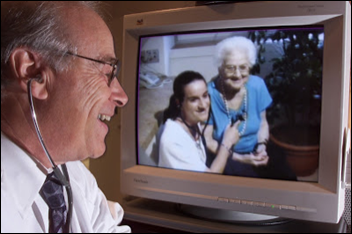
Doctor on Demand looks to grab a hold of the now more telemedicine-friendly state of Texas with $10 video visits for citizens of the Lone Star State through September 3.


People

image

Miriam Paramore (Lucro Solutions) joins EHR-integrated prescription savings software company OptimizeRx as president.

image

TeamHealth hires Philip McSween (Baker Donelson) as EVP, general counsel, and corporate secretary.


Government and Politics

image

CMS releases pediatric core measures – one of eight sets that comprise the Core Quality Measures Collaborative, which aims to streamline quality measures across providers, payers, and other stakeholders.


Research and Innovation

Coordinated Care Organizations in Oregon seem to be making headway when it comes to ensuring mothers-to-be on Medicaid receive timely prenatal care. A look at CCO effectiveness in that particular area found that more women began receiving such care in their first trimesters as opposed to the year before the model began. There’s still more work to be done, however. Researchers also found that improvement in timeliness was more pronounced in white and Asian women, and those living in urban areas. The CCO model for Medicaid was launched in 2012, providing incentives to providers who meet benchmarks related to ED visits, EHRs, cancer screenings, and prenatal care.


Other

image

The New York Times looks at the developing world of empathy gadgets like the SymPulse, a blood pressure cuff-like device that enables the wearer to feel tremors akin to those experienced by Parkinson’s patients. Devices are also being developed to mimic the symptoms of emphysema, psychiatric conditions, and diabetic nerve disease – all to help caregivers and even physicians better understand and empathize with patients.

image

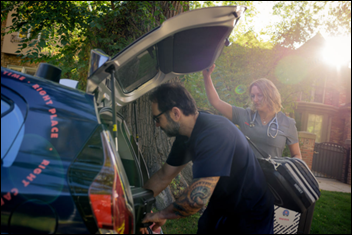
This takes multitasking to an entirely new level: Amanda Hess, DO delivers Leah Halliday Johnson’s baby despite being prepped for delivery of her second child (and clad in a hospital gown to boot). Hess heard from her own hospital room that Halliday’s baby was in distress, threw a cover over her gown, and went to help out while the on-call physician made his way to the hospital. Hess’ contractions started just after she helped Johnson give birth to her daughter. Hess said that “It was a perfect way to get my own labor started.”


Contacts

Jenn, Mr. H, Lorre

More news: HIStalk, HIStalk Connect.

Get HIStalk Practice updates.
Contact us online.
Become a sponsor.

JennHIStalk

Population Health Management Weekly Wrap Up 7/30/17

July 30, 2017 News Comments Off on Population Health Management Weekly Wrap Up 7/30/17

image

Siv Raman, MD (Anthem) joins ZeOmega as chief analytics officer.

image

Privis Health hires Craig Jones, MD (ONC) for the role of CMO.

image

Cottage Health, a nonprofit health system based in Santa Barbara, CA, develops a Population Health Learning Lab that includes an interactive county mapping and data tool, and an evaluation toolkit to help community and clinical stakeholders assess needs and collaborate on programs.

Allscripts will offer Conversa’s Conversation Platform as the patient-facing portion of its CareInMotion population health management platform to engage patients between visits. Allscripts will also make an unspecified investment in Conversa.

Hexaware will add Zynx Health’s evidence-based care plans and order sets to its CarrotCube population health management solution.

A Connance survey on the importance of SDOH data finds that nearly 100 percent of those surveyed want the data before a patient is released from the hospital so as to ensure they have all the resources they need (transportation, power, food, etc.) to make a full recovery. Many respondents noted that the type of SDOH data available today via EHRs and population health management programs is not enough – often arriving too late in the care process to make a real difference.

Three Florida-based ACOs — Central Florida AVO, Next ACO of Nature Coast, and Space Coast ACO – select the population health management solution of EClinicalWorks.


Sponsor Updates

  • Nordic opens a 6,000 square foot expansion of its Madison, WI office.
  • GE Healthcare names Catherine Estrampes president and CEO of GE Healthcare Europe.
  • Frost & Sullivan recognizes EClinicalWorks with the 2017 North American Frost & Sullivan Award for customer value leadership.

Blog Posts


Contacts

Jenn, Mr. H, Lorre

More news: HIStalk, HIStalk Connect.

Get HIStalk Practice updates.
Contact us online.
Become a sponsor.

JennHIStalk

News 7/27/17

July 27, 2017 News Comments Off on News 7/27/17

Top News

image

FDA Commissioner Scott Gottlieb, MD announces the voluntary Pre-Cert for Software Pilot Program, which seems to be a “fast lane” assessment and vetting process for digital health apps that, unlike more traditional medical devices, require updates and upgrades. Pre-certified companies will eventually be able to submit less information (some none at all) than is typically required before marketing their product. Companies interested in participating in the program can begin submitting statements of interest August 1.


Webinars

None scheduled soon. Previous webinars are on our YouTube channel. Contact Lorre for information on webinar services.


Acquisitions, Funding, Business, and Stock

image

Amazon seems to be assembling a team devoted to formally upping its presence in the health IT space; one that, for now, seems to be separate from the health and life sciences efforts of AWS. Dubbed “1492,” CNBC reports the Seattle-based group will initially focus on products and services related to EHR data and telemedicine, as well as creating apps for existing products like Echo.

image

Remote cardiac monitoring startup Signature Medical closes a $2.5 million Series A round led by Riot Ventures, Bose, and parent company Allied Minds. The company is working to refine its flagship AcoustiCare wearable, which uses proprietary acoustic and AI technology.


Announcements and Implementations

image

Privia Health doubles the size of its network in Georgia, increasing to 150 physicians since Privia Medical Group – Georgia launched in 2015. The Arlington, VA-based clinically integrated practice management company operates in six states, and has signed up 1,600 physicians since opening for business 10 years ago.

image

MyMipsScore adds a MIPS score simulation tool to its MIPS calculation app. Simulations can be run based on target performance rates for any of the program’s 217 quality measures.

image

Specialdocs Consultants helps PCPs in Connecticut transition to concierge practice models. Matrix Personalized Medicine, Darien Signature Health, and Glenville Medical Concierge Care make up the 6,000-plus such practices operating in the US today.


Research and Innovation

image

A WebPT survey of 5,200 rehabilitation therapists finds efficient documentation to be the most important feature of the 56.5 percent of those that use medical record software. Perhaps it’s because I live in a health IT bubble, but I find it surprising that 16 percent of surveyed therapists still document only on paper. Top overall challenges include burdensome documentation, declining reimbursement, and payer and government regulations.


Other

image

The local paper looks at educational outreach programs led by companies like Alosa Health and Axial Healthcare that help physicians and pharmacists better understand their opioid prescribing habits and rates recommended by the CDC. “We’re not out there to chastise them,” says Melissa Jones, RN of Alosa Health. “It’s a discussion. We’re a sounding board.” Reps like Jones may visit three to five practices a day, all in the name of promoting safe opioid prescribing practices, including alternatives.

image

HITRUST debuts the Community Extension Program to help providers all of types and sizes improve cybersecurity practices via the alliance’s assessments and programs. The free program will offer collaborative town hall events in 50 cities over the next year.


Contacts

Jenn, Mr. H, Lorre

More news: HIStalk, HIStalk Connect.

Get HIStalk Practice updates.
Contact us online.
Become a sponsor.

JennHIStalk

Readers Write: Guiding Principles for Designing a Useful Healthcare Mobile App

July 27, 2017 Guest articles 1 Comment

Guiding Principles for Designing a Useful Healthcare Mobile App
By Calvin Chock

image

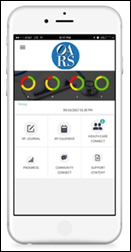
Healthcare mobile apps can provide many benefits to busy physicians. Roughly 80 percent of healthcare providers use smartphones and medical apps, and more than 25 percent rely on mobile apps to provide patient care. In discussing mobile app usage, physicians strongly voice the need for quicker and easier access to patient data. If a mobile app is well designed, enables efficient access to patient data, and is easy to use, it can serve as a powerful companion to an EHR. By following some basic guidelines during the concept and development process, a robust, user-friendly mobile app can be built that meets a physician’s need for quick and easy data access.

The methodology outlined here is specifically targeted towards large applications with hundreds of features, complex workflows, and a vast number of users interacting in different ways. For these complex applications, the challenge is to design a solution that is useful but that will also fit into a much smaller form factor. Often, the trade-off involves realizing the full application cannot be fully converted into a mobile app, and instead making a version that is less complex, sequestering a subset of valuable features that are not meant to replace the full application but instead complement it.

Guidelines for Developing Critical Elements Help Ensure Success

There are several basic elements that require much thought and consideration when building a mobile app from a complicated application such as an EHR. This includes the overall design and layout, the types of user interfaces, and user experience.

Follow Design Principles and Build a Strong Foundation

First and foremost, realize that it is unlikely that all the information in the application can be crammed into a tiny screen. Distil the information down by breaking it into smaller subsets using a few logical steps:

Build an inventory of workflows.

Physicians, nurses, pharmacists, and other key staff all have different screen sets. Take an inventory of the workflows for various users to find out what they do during the day. Watch, observe, study, and write down each user’s role and their distinct user pattern.

Determine which items on the list are a good fit for a mobile app.

Look at the subset list closely and decide which workflows make sense to put in a mobile app and which will be challenging or cumbersome due to the limited size. Also, review each one and ask yourself, “Was the user able to fully complete a useful task?” If the answer is yes, keep it on the list. If not, then consider whether that specific workflow is a good candidate for a mobile app.

For example, during office visits, physicians document a wide range of a patient’s medical details. This function is probably not the best candidate for an app due to the large number of data entry fields and content. Phones are not great data entry vehicles, so trying to type a lot of information in can be cumbersome and frustrating. In contrast, physicians spend a tremendous amount of time reviewing patient data and acknowledging this review was done.

An example of a typical day would include a review of hundreds of lab results, dozens of notes, and several new orders. Lists of data that require limited data entry lends itself well to a mobile app. This tedious and time consuming work can now be done outside of the office, which now gives physicians the flexibility to do this work on the go.

Rank each item’s value.

Of those workflows that you determine will work well on a phone, rank the value of each subset based on potential user utilization of the app or other factors.

Once the subsets have been ranked, establish one theme for the app’s purpose. Too many different themes are confusing. For example, if the main goal is to empower the user to perform tedious work on the go, then define that as the primary goal and rank the features based on achieving that goal.

Utilize the Minimum Loveable Product (MLP) concept. In many applications, there is a choice between speed of delivery versus quality. If the mobile app is meant to be a compliment to the main application versus a full replacement, then designing an MLP will allow you do deliver a solution quickly and with high quality. Start the design work of just the most valuable workflows first, building one highly usable feature at a time. As users rally around that one feature, they get eager for the next one. You won’t sacrifice quality, and will still deliver new features at a good pace.

Lastly, use smart phone features to your advantage. Incorporating Location Based Services can save the user time in filling out location-related data entry fields, notifications can provide important alerts to users while the app is not in focus, and the camera phone can be used to take photos of documents or patients for immediate upload.

Create a Great User Experience with a Simple Layout and User Interfaces

Once the main theme is selected and an initial set of features has been identified, the last step is to take the time to think about how the app will look and how the user will interact with it. Going from a wide screen to a tiny one is challenging, so screen element choices are critical to maintaining a high level of usability. Only essential information can be shown, and creative ways must be utilized to display information. For instance, instead of showing the full directory of a file system, a hierarchy can be represented by descending shades of a color, saving time and real estate.

Be consistent with elements used throughout the app. If a field is accepted by clicking a button or swiping left to right, the same method should be used on every single page. Having a consistent user interface is key to the learnability of an application.

Employ user-friendly interface elements, such as big toggle switches, buttons, swipes, or gestures. Entering a lot of data using a phone is frustrating, so limiting free text entry when possible is important.

Make the app look simple and easy to use so practice staff can absorb the view quickly. Avoid too many user interfaces, text, and other details, or the screen will look cluttered and confusing.

Finally, verify that the user interface design will work on the majority of phones users have. While phones today are standardizing, it is still important to check. Time and expense can be saved by building the app to support only the top two or three phones potential users have.

Calvin Chock is VP of product management and engineering at McKesson Specialty Health in The Woodlands, Texas.


Contacts

Jenn, Mr. H, Lorre

More news: HIStalk, HIStalk Connect.

Get HIStalk Practice updates.
Contact us online.
Become a sponsor.
JennHIStalk

News 7/26/17

July 26, 2017 News 1 Comment

Top News

image

The House Ways and Means Committee announces the Medicare Red Tape Relief Project, which will work to reduce legislative and regulatory burdens on Medicare providers. The three-stage project (the name of which is eerily similar to AMA’s Break the Red Tape campaign) is initially seeking feedback from stakeholders on how Congress can deliver statutory relief from current mandates, and how it can work with HHS Secretary Tom Price, MD and CMS Administrator Seema Verma to provide that relief. Feedback is due August 25.


HIStalk Practice Musings

image

I added a landline several days ago in an effort to take back my cell phone from certain members of my household whose friends love to call and chat for extended periods of time. It’s been about 10 years since I’ve had a home phone, and I had forgotten how many telemarketing calls they attract. It didn’t take me long to look up the particulars of adding my new number to the National Do Not Call List. The CDC, which tracks mobile phone and landline use in households as part of its focus on the health habits of American domiciles, reports that cell phone-only homes are now in the majority. Fun/sobering fact: Nearly 30 percent of wireless-only adults are binge drinkers, while “only” 18 percent of adults living in landline households drink heavily.


Webinars

None scheduled soon. Previous webinars are on our YouTube channel. Contact Lorre for information on webinar services.


Announcements and Implementations

image

ATI Physical Therapy (IL) develops an app to give its physical therapy patients access to their treatment plans and related content while on the go.

image

Digital health company Livongo Health will make its high blood pressure- and diabetes-related educational resources available to patients through its new membership in the American Heart Association’s Center for Health Technology and Innovation Tech Collaborative.

image

Radiology Associates (AR) selects enterprise imaging software from Mach7 Technologies.


People

image

Therapy Source hires Tracy Sippl (Cross Country Staffing) to head up its TheraWeb virtual therapy staffing services.


Telemedicine

image

The Memphis, TN-based Southern College of Optometry’s new paperless FocalPoint clinic rolls out telemedicine services from EyecareLive.

image

Telemedicine startup OmniaMD – founded by cardiologist Jorge Castellanos, MD and Lauren Timpe, RN opens for business in California.

image

Abundant Life Social Services (UT) will offer remote mental health therapy through white-label telemedicine services from Doxy.Me


Government and Politics

image

CMS adds new APIs and Github Repositories for developers working on QPP reporting.


Other

image

The majority of Wisconsin tech company Three Square Market’s 80 employees have agreed to embed RFID chips in their fingers to free up time when accessing the building and purchasing things at the on-site cafeteria. CEO Todd Westby has downplayed any concerns around privacy by pointing out that cell phones report “100 times” more data than do RFID chips.

image

The Onion publishes a funny piece on the damage Dr. Mario is doing to the practice of medicine:

“You see, unlike Dr. Mario, I’m constantly forced to make nuanced, complicated decisions. There are more than three germs out there. And there’s more to medicine than spinning pills in the air and lining them up according to color in columns of four or more. In my practice, I write prescriptions, conduct examinations, order diagnostic tests and scans, and break the bad news to terminally ill patients about how long they have to live. It really is an extremely difficult job.

Just yesterday I picked up my forceps and—being ever so careful not to touch the sides of the incision and get shocked—removed an ice cream cone from a man’s skull, successfully treating his brain freeze. For real doctors, it’s all in a day’s work.”


Contacts

Jenn, Mr. H, Lorre

More news: HIStalk, HIStalk Connect.

Get HIStalk Practice updates.
Contact us online.
Become a sponsor.

JennHIStalk

Platinum Sponsors


Gold Sponsors


Subscribe to Updates


Search All HIStalk Sites


Recent Comments

  1. The article about Pediatric Associates in CA has a nugget with a potentially outsized impact: the implication that VFC vaccines…

  2. Re: Walmart Health: Just had a great dental visit this morning, which was preceded by helpful reminders from Epic, and…

  3. NextGen announcement on Rusty makes me wonder why he was asked to leave abruptly. Knowing him, I can think of…

  4. "New Haven, CT-based medical billing and patient communications startup Inbox Health..." What you're literally saying here is that the firm…

  5. RE: Josephine County Public Health department in Oregon administer COVID-19 vaccines to fellow stranded motorists. "Hey, you guys over there…